
By Hassan Ado, Keffi
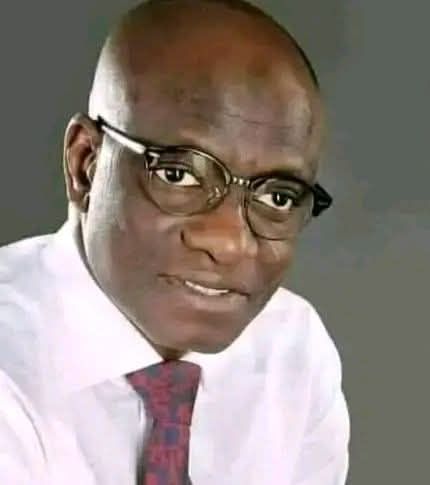
Senator Ahmed Wadada Aliyu, representing Nasarawa West, has carved a unique niche in Nigeria’s often rigid party-political landscape. His reputation as a “political enigma” stems from his ability to transcend partisan loyalties, cultivate cross-party appeal, and maintain unwavering relevance even as the ruling All Progressives Congress (APC) grapples with defections like that of Nasir El-Rufai.
It is an incontrovertible fact that Senator Wadada’s enduring influence remains a critical factor shaping his trajectory ahead of the 2027 Nasarawa governorship race.
Throughout his political sojourn, one thing that has remained constant is that Senator Wadada has transcend party politics, particularly in an era of partsanship. Political pundits agree that Wadada’s political brand thrives on personality over party.
Unlike former Kaduna State governor Mallam Nasir El-Rufai, whose recent defection to the Social Democratic Party (SDP) underscores the fragility of APC’s northern unity, Wadada has built a cult-like following that eclipses political party’s institutional reach in Nasarawa.
Senator Wadada is an embodiment of political party support irrespective of partsanship.
Analysts attribute this to his grassroots diplomacy and reputation as a bridge-builder across ethnic and religious lines in the state. While El-Rufai’s exit highlights APC’s vulnerability to elite discontent, Wadada’s supporters view him as a stabilizing force, insulated from intra party struggles.
It therefore follows that political detractors who are wary of Wadada’s towering political profile and reach, conjure up every manner of rhetoric trying in vain to cast aspersion on the relationship existing between the lawmaker and his friends who are from the ruling All Progressives Congress, particularly his longstanding friend, Dr. Aliyu Bello, whose relationship spans over four decades and is beyond politics.
Indeed, analysts further posit that Wadada’s cross-party appeal presents a strategic rejection of the country’s s hyper-partisan politics, rather than a survival tactic in a volatile environment.
What is even adding to his political clout is that Wadada is adroitly and fruitfully balancing loyalty and pragmatism in his relationship with both governments at the state and federal levels, a situation that appears disagreeable to his political rivals and traducers.
Though he won his election to represent Nasarawa West at the senate under the platform of the SDP, Wadada has his firm roots in the APC governments in Nasarawa State, as well as in Abuja.
He was not only the Financial Secretary of the defunct nPDP that merged with other parties in the alliance that gave birth to the APC, he equally played a critical role leading to the 2019 election that ushered in the incumbent governor of Nasarawa State.
After leaving the APC in circumstances that may best be described as hostile, Wadada has continued to sustain cordial relationships with the leaders of the party at the state level. Prior to his leaving the APC barely months to the election, he chaired the campaign council of the incumbent governor.
Recently, as a mark of respect, support for the government and development of Nasarawa State, Senator Wadada cut short his holiday in France to return to Nigeria and to perform his duty as a lawmaker to finally quash moves to relocate the headquarters of the North Central Development Commission from Lafia.
Political pundits posit that while El-Rufai’s ’s defection reflects growing frustration among APC’s northern founders over perceived marginalization and policy missteps (e.g., subsidy removal, naira volatility), Wadada has avoided public criticism of President Tinubu, instead positioning himself as a pragmatic loyalist.
This balancing act allows him to retain federal backing while distancing himself from unpopular policies. His silence on contentious national issues contrasts sharply with El-Rufai’s combative style, suggesting a calculated focus on local priorities.
While El-Rufai’s SDP move aims to disrupt APC’s northern dominance, Wadada’s non-confrontational approach may inadvertently strengthen Tinubu’s foothold in Nasarawa by neutralizing anti-APC sentiment.
Senator Wadada’s multifaceted approach addresses immediate needs while fostering long-term growth. His efforts in infrastructure, education, and healthcare aim to elevate living standards, while agricultural and youth initiatives stimulate economic resilience. Through legislative advocacy and partnerships, he ensures Nasarawa State benefits from national resources and policies.
Many argue that even his unrepentant critics would agree that Wadada has been actively leveraging his position to drive development across various sectors in Nasarawa State. For instance, he sponsored a motion for the upgrade of the Federal Polytechnic Nasarawa to a Federal University of Mining Technology.
Wadada’s enigmatic stature stems from his deliberate ambiguity. He embodies a paradox: an APC stalwart who operates like an independent, a federal lawmaker who acts like a local champion, and a Tinubu ally who avoids ideological alignment.
It is pertinent to state that for a grassroots mobilizer like Senator Wadada, and especially in an era of defections and voter apathy, his success hinges on maintaining this duality—a feat that may redefine Nigerian politics if replicated elsewhere.
His election into the senate barely some months after he left the APC signifies that his resilience underscores a growing voter preference for pragmatic leaders over party machines. And as 2027 approaches, his ability to navigate political party divides while addressing systemic inequities stands him out as an enduring statesman.
Ado, a public affairs analyst, writes from Keffi, Nasarawa State.
 nasarawaeye.com