

By Rayyanu Bala
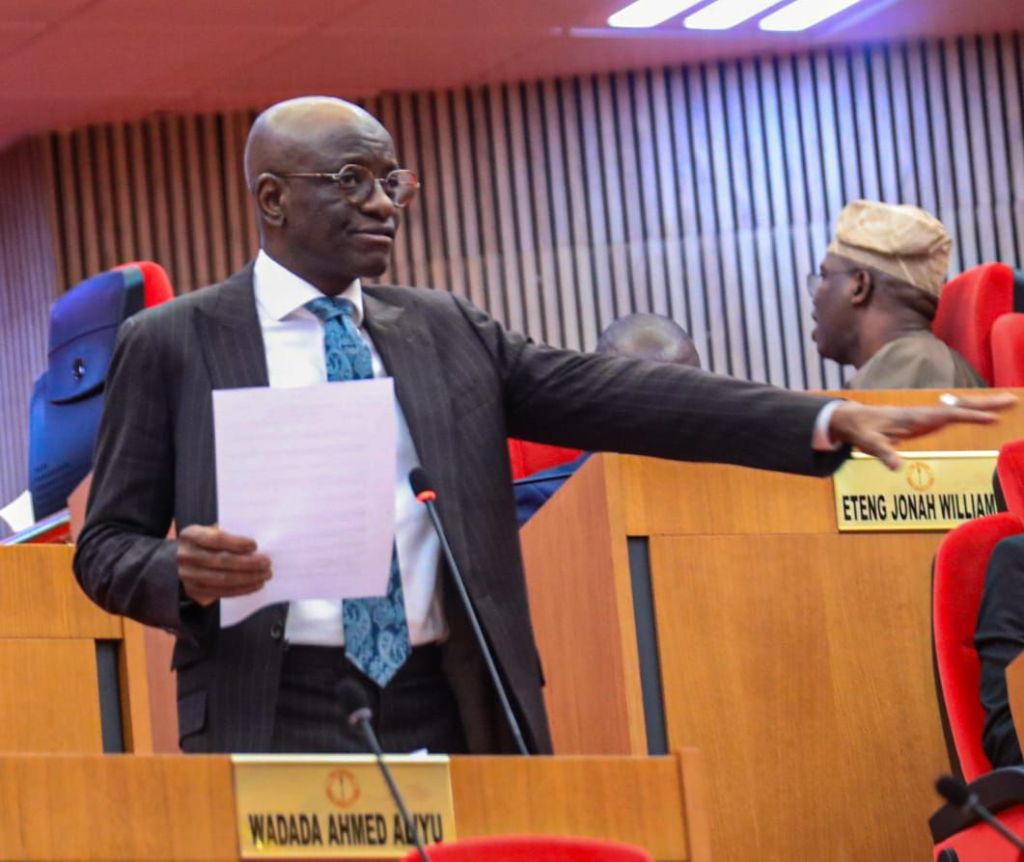
During yesterday’s Senate session, Senator Ahmed Wadada Aliyu, representing Nasarawa West, raised a crucial objection to a bill proposing the establishment of a Rice Council. The bill, sponsored by Senator Adamu Aliero of Kebbi, even from the surface would appeared more of a duplication than a necessary innovation.
In today’s Nigeria, what citizens truly desire is effective governance that yields tangible results. Senator Wadada’s opposition to the Rice Council Bill should therefore be seen as a welcome development. His stance during the bill’s second reading in the Senate was more than a critique; it was a call for responsible lawmaking.
The bill seeks to create a new Rice Council responsible for regulating and promoting rice production in Nigeria. While this might seem like a proactive step toward enhancing food security, Senator Wadada rightly noted that such functions already fall within the mandates of existing bodies—such as the Federal Ministry of Agriculture, the National Food Reserve Agency, and various commodity boards.
Of -course, Nigeria is already burdened with numerous agencies that have overlapping roles, many of which operate with vague mandates and limited coordination. Instead of expanding this bureaucratic web, Senator Wadada urged his colleagues to reconsider the wisdom of continuously creating new institutions with redundant responsibilities.
“Creating another layer will only compound our institutional inefficiencies,” he cautioned.
Indeed, Senator Wadada’s warning is especially pertinent given Nigeria’s current fiscal realities—rising debt, limited revenues, and widespread economic hardship. The government must conserve resources, not dilute them across new and potentially ineffective bodies.
While Senator Wadada’s intervention reflects a legislative philosophy grounded in responsibility, fiscal prudence, and long-term vision, his concerns about overlapping functions, administrative confusion, and the inevitable inefficiencies that follow are valid and deeply relevant.
To be fair to Senator Aliero, the intent behind the Rice Council Bill may be noble. However, good intentions are not enough. What Nigeria urgently needs is a commitment to strengthening and reforming existing institutions by ensuring they are properly funded and efficiently managed, Any legislative efforts by the National Assembly should focus on reform, not replication.
Senator Wadada’s stand at the floor of Senate serves as a timely reminder of the vital role legislators are supposed to play in safeguarding the public interest. While it is easy to cheer Senator Aliero’s new initiatives, it is far more valuable to ask whether those initiatives are necessary, practical, and economically sound.
As Senate deliberations continue, lawmakers should draw inspiration from Senator Wadada’s principled and courageous stand. It is time to halt the needless proliferation of public institutions and instead prioritize governance that is efficient, transparent, and accountable.
Nigeria does not need more bureaucracy. Nigeria needs good governance.
In Nasarawa State, we are proud of Senator Wadada’s examplinary role at the Senate. As 2027 approaches, we recognize the importance of having leaders who speak their convictions fearlessly, regardless of whose ox is gored.
Senator Wadada is not just a politician; he is indeed, a leader who shares the burdens of his people and believes in progressive ideas that can move both our state and the nation forward. Nasarawa state needs a leader like him—bold, honest, and principled.
 nasarawaeye.com