
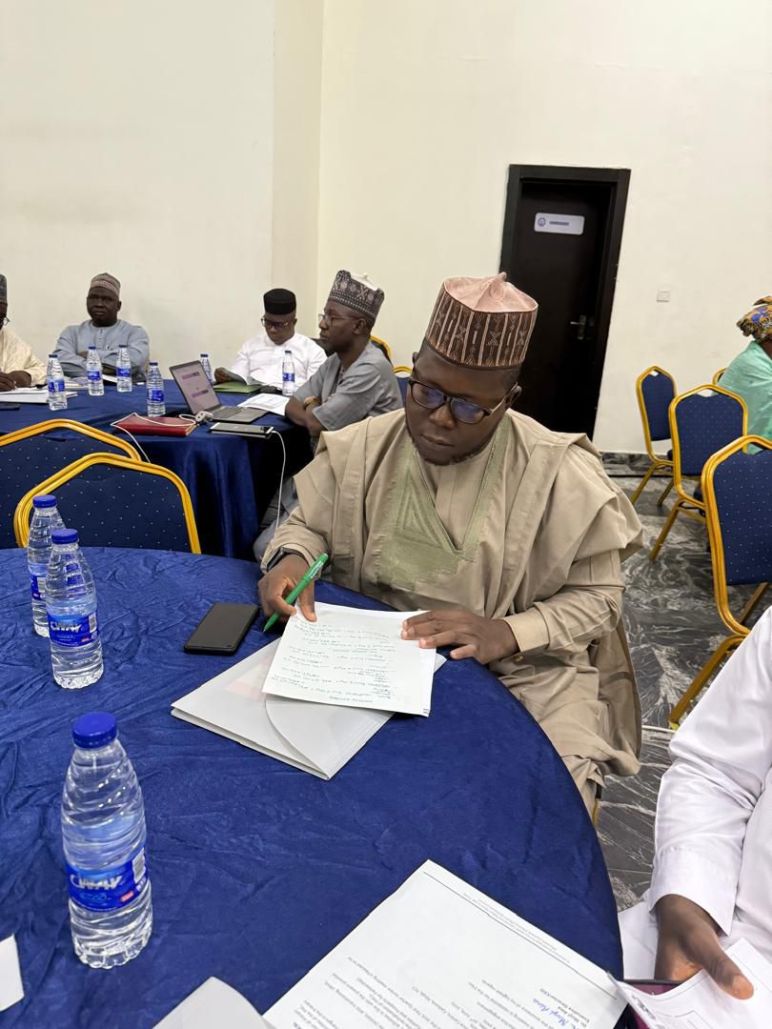
In a week that would challenge even the most seasoned public servant, Dr. Usman Iskilu Saleh—Executive Secretary of the Nasarawa State Primary Healthcare Development Agency (NAPHDA)—proved that transformation begins with presence, persistence, and purpose
From surprise inspections in remote communities to high-level strategy meetings in Abuja, Dr. Saleh’s schedule reads more like a mission log than a calendar. Yet every mile traveled and every meeting chaired is part of a deliberate and deeply personal vision: to make primary healthcare functional, community-owned, and accessible—24 hours a day, across Nasarawa
The week opened with Dr. Saleh trading protocol for pragmatism, making unscheduled visits to primary healthcare centers (PHCs) across Nasarawa. These weren’t ceremonial stopovers—they were hands-on inspections where he evaluated facility conditions, interacted with frontline staff, and ensured that PHC revitalization was more than just a policy document.
Simultaneously, he juggled stakeholder engagements in Lafia and Abuja, meeting with government agencies, NGOs, and development partners to drive the expansion of healthcare services. Whether at state capitals or in federal corridors of power, Dr. Saleh pressed the case for collaborative investment in Nasarawa’s healthcare future.
Back at the helm in NAPHDA, he chaired strategic sessions aligning the agency’s programs with Governor Abdullahi Sule’s broader health-sector reforms. For Dr. Saleh, leadership is not just operational—it’s strategic. Every step must serve the vision of a healthier Nasarawa.
This strategic clarity was evident in his community-based healthcare revitalization campaign, where he championed public ownership of healthcare infrastructure. Over radio airwaves—on NBS and Breeze FM—he outlined a bold plan to upgrade 58 PHCs across 147 wards within six months.
Dr. Saleh’s brand of leadership bridges policy and practicality. During a visit to the Central Bank of Nigeria (CBN) branch in Lafia, he led a delegation that successfully sparked interest in financing the remodeling of PHC Bukan Sidi. It wasn’t just a one-off pitch—it was the beginning of a broader public-private partnership strategy to anchor future health projects
He also welcomed NUJ correspondents to showcase the revitalization of 58 PHCs, targeting them to become 24/7 service centers by June 2025. It’s a timeline that’s aggressive—but for Dr. Saleh, necessary.
Dr. Saleh’s impact isn’t limited to bricks and mortar. At the ANRiN nutrition meeting in Abuja, he offered expert insights into food security and dietary balance. In Nasarawa, he met with the Civil Defence command, reinforcing the critical link between security and mental health in fragile communities.
And in a testament to his grassroots credibility, he participated in Lafia’s traditional “majalisa” gatherings, rallying local leaders behind a unified vision for development and healthcare.
In between, Dr. Saleh carved out time for the personal and the symbolic. He hosted a nostalgic reunion with his primary school classmates, and played a key role in the state’s Maternal, Newborn, and Child Health Week. Both events underscored the human side of public health—the stories, relationships, and trust that form its foundation.
So what drives this ceaseless tempo? It’s more than just ambition. It’s a strategic alignment with the state’s reform agenda, a commitment to inclusive and sustainable healthcare, and a belief that every stakeholder—from local leaders to federal agencies—has a role to play.
Dr. Saleh’s schedule isn’t full for its own sake—it’s full because the health system demands it. He lives the principle that implementation starts with visibility, and transformation requires presence
Dr. Usman Iskilu Saleh, is not just a health administrator, but a movement-builder. His week—dense with inspections, meetings, advocacy, and outreach—embodies a modern model of public health leadership: action-oriented, people-centered, and system-focused.
He’s not just planning for revitalized PHCs. He’s building them, funding them, staffing them, and bringing communities on board.
And if his calendar is any indication, the future of healthcare in Nasarawa isn’t just coming—it’s already under construction.
 nasarawaeye.com