
By Rayyanu Bala
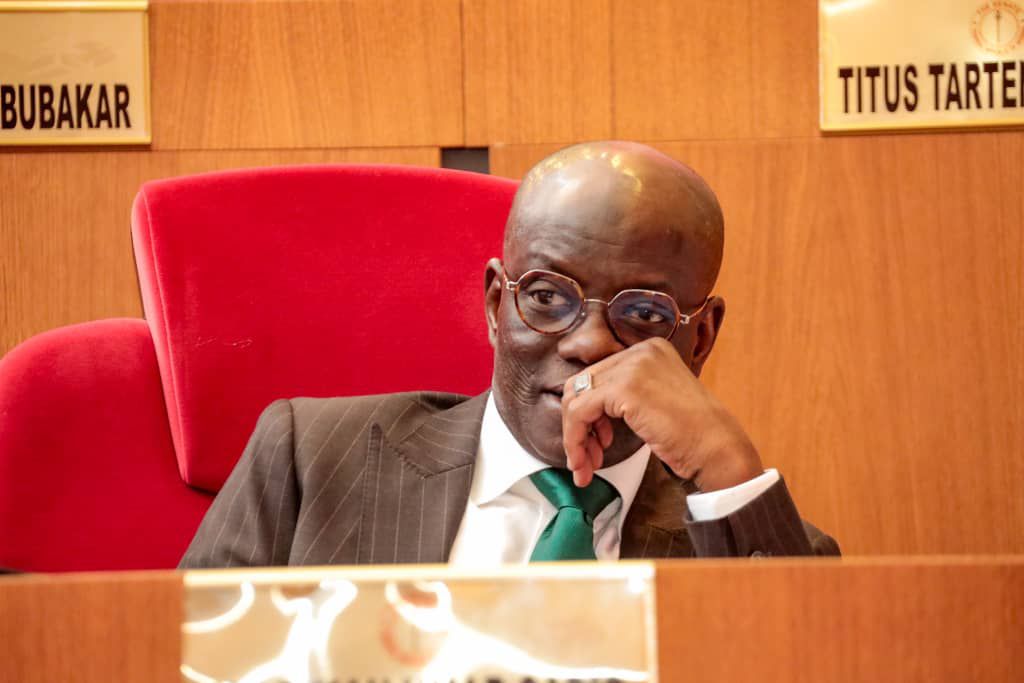
The Keffi-Nasarawa-Toto road has long stood as a symbol of neglect in Nasarawa West Senatorial District. Spanning several communities and key economic zones, its deteriorating condition reflects deep-rooted institutional failures and years of frustration.
At the center of renewed public expectations stands Senator Ahmed Wadada, now under mounting pressure to “fix the road.” While the frustration of the people is valid, so too must be our understanding of the limited tools available to a senator within Nigeria’s political framework.
Let’s start with a simple but frequently misunderstood truth: a senator cannot award contracts, mobilize contractors, or directly execute infrastructure projects. These responsibilities lie entirely with the executive arm of government, specifically, the Federal Ministry of Works and the presidency.
What a senator can do is advocate, lobby, and push for budgetary inclusion, and this, Senator Wadada has done with consistency and commitment. No one can reasonably deny that.
Since assuming office, Senator Wadada has consistently raised the issue of the Keffi-Nasarawa-Toto road on the floor of the Senate and during committee meetings. He has emphasized its strategic importance and the hardship it causes his constituents. He has also engaged relevant ministries and agencies behind closed doors in a bid to fast-track attention to the road. Yet, despite these efforts, progress on the ground remains disappointingly slow.
This brings us to the heart of the matter. Nigeria’s infrastructure challenges stem not merely from a lack of political will but from deeply entrenched bureaucratic inertia, corruption, irregular fund disbursements, and conflicting national priorities.
The country’s history is filled with examples of road projects that made it into the national budget but were never executed. In today’s Nigeria, even being listed in the budget offers no guarantee of implementation. Projects are frequently delayed for years or quietly abandoned due to shifting governmental focus or inadequate funding.
In such a dysfunctional system, even the most vocal and committed senator can find their efforts stifled.
This is not to suggest that Senator Wadada should sit back and do nothing, far from it. The expectations of the people are legitimate and must be respected. However, it would be unfair to demand tangible results from a process over which the senator has no direct control.
Rather, the senator should be assessed based on the consistency and clarity of his advocacy.
Has he kept the issue alive?
Has he been transparent about the project’s status?
Has he built the necessary alliances within and outside the Senate to apply pressure on the executive?
To all these questions, the answer is yes. Accusing Senator Wadada therefore of doing nothing is simply inaccurate and unfair
There is ample documentation of ongoing communications between Senator Wadada’s office and the Federal Ministry of Works regarding the Keffi-Nasarawa-Toto road. His role is not to pave the road himself, but to ensure it is not forgotten, and this, he has done tirelessly and effectively.
Of course, politics is also at play regarding this Keffi- Nasarawa – Toto road. Certain individuals are clearly attempting to tarnish Senator Wadada’s image for their own political advantage. But such efforts will ultimately fail.
In the end, we must balance expectation with reality. Senator Wadada cannot personally reconstruct the Keffi-Nasarawa-Toto road. But his voice remains one of the strongest in advocating for its reconstruction.
We must commend Senator Wadada for his transparency, courage, and relentless advocacy in the face of a complex and often unresponsive system.
Senator Wadada cannot perform miracles, but he hasn’t stopped trying.
 nasarawaeye.com