
By Rayyanu Bala
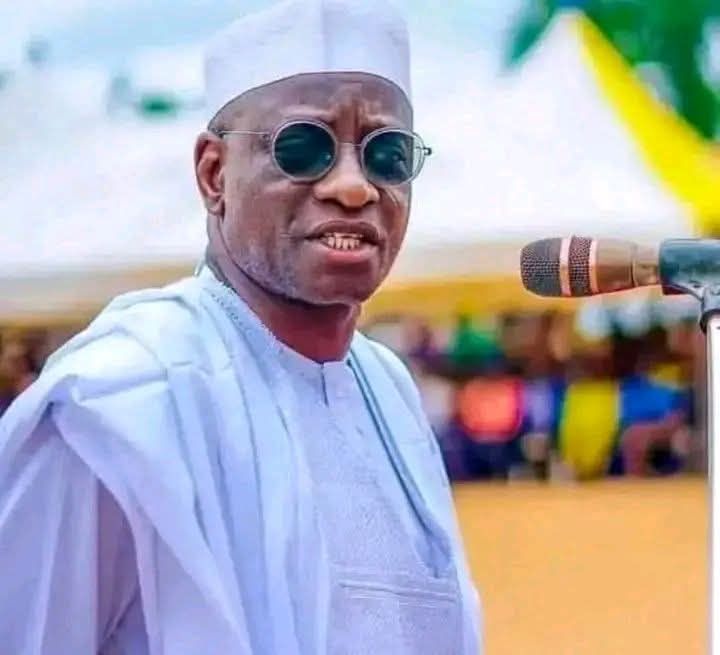
As Nigeria approaches yet another crucial electoral season, political parties are once again faced with a familiar challenge: choosing candidates not just with personal ambition, but with the ability to unite, inspire, and deliver results. For the All Progressives Congress (APC), this choice is especially critical. In a time when internal divisions can undermine even the most promising campaigns, the need for a unifying figure has never been greater. In this context, Senator Wadada emerges as a candidate whose strength lies not only in his political experience, but in his reputation as a bridge-builder.
Unlike many politicians who are polarizing figures within their own parties, Senator Wadada is known to maintain cordial, respectful relationships across the board. He has no known enemies among the aspirants vying for the party’s ticket. This is no small feat in a political environment often characterized by infighting and grudges. His ability to remain neutral, approachable, and accommodating makes him uniquely positioned to serve as a rallying point for all stakeholders within the APC.
In many elections, the greatest obstacle to party success is not opposition from rival parties, but internal disunity. When candidates who lose party primaries feel sidelined or disrespected, they may withdraw support and work against the party. The resulting fractures from this scenario can be devastating. However, Senator Wadada represents a departure from this dangerous pattern. The role he played in 2019 toward stabilizing the primary election which brought Engr Abdullahi Sule is a shining example.
However, there is growing consensus among party members that, if Wadada is given the ticket, his fellow aspirants would be willing and perhaps even eager, to rally behind him. Why? Because his candidacy will be seen as convergence of a common ground.
Such unity among the aspirants would give the APC a massive strategic advantage by way of united campaign effort through pooling of resources, consistent messaging, and stronger grassroots mobilization. It signals to voters that the party is organized, mature, and ready to govern. More importantly, it gives the electorate a reason to believe that APC is putting its best foot forward, not for selfish reasons but for the collective good.
Beyond internal politics, Senator Wadada also commands significant respect among the citizens of Nasarawa state. He is seen as accessible, down-to-earth, and genuinely invested in the welfare of the people. His political track record reflects a commitment to service delivery, youth empowerment, and inclusive development. These are qualities voters are desperately looking for in today’s Nigeria. A leader who listen, who serve, and who unify rather than divide the people.
Senator Wadada’s political ideology is rooted in progress, peace, and pragmatic governance. His style is consultative rather than autocratic, making him not only a preferred candidate within the APC but also a potentially popular choice among the general electorate. If APC is serious about winning elections and maintaining its political relevance in Nasarawa state, it cannot afford to ignore the kind of grassroots support and goodwill that Senator Wadada brings to the table.
Indeed, elections anywhere in the world are not just about numbers, they are about perception, momentum, and narrative. By fielding a candidate like Senator Wadada, APC has the opportunity to reshape its image. The party can present itself as unified, forward-looking, and people-focused. In contrast to the chaos and backstabbing often associated with primaries, Senator Wadada’s emergence as APC candidate would demonstrate political maturity and strategic vision.
This is not to say other aspirants are unqualified. Many have strong credentials. But at this critical moment, the ability to unify the party and appeal to a broad base of voters is more valuable than individual credentials. Senator Wadada offers both the credentials, capability and compatibility to win the election. These three ingredients are essential for success in modern Nigerian politics.
As the APC under Engr. Abdullahi Sule weighs its options and prepares to make key decisions on who should fly the governorship ticket in 2027, it must ask itself a fundamental question: does it want a candidate who will merely wins a primary, or a candidate who can win an election? In Senator Wadada, the party has a rare opportunity to choose both. He is not only electable but also acceptable to a broad coalition of stakeholders within and beyond the party.
If unity, stability, and victory are the goals, then Senator Wadada is the candidate APC needs, now more than ever.
 nasarawaeye.com