

By Rayyanu Bala
The Premium Times Newspaper editorial of 17 November, 2025 titled: “Holding NNPCL accountable for the queried ₦210 trillion” is worth reading by all Nigerians who care about the progress and wellbeing of our citizens.
The editorial commended Senator Ahmed Wadada Aliyu for his steadfastness against NNPC’s financial recklessness and for his insistence that NNPC must account for the missing trillions.
Indeed, many would agreed with me that Nigeria has witnessed many financial controversies, but only few have struck a raw nerve like the ongoing dispute over the Nigerian National Petroleum Company Limited’s (NNPCL) ₦103 trillion in alleged cash-call payments and its ₦107 trillion in receivables all together amounting to an astonishing ₦210 trillion in questionable entries.
Premium Times reports indicated that Senator Wadada apart from describing the figures as mind- boggling, he further asserts that “NNPCL claims it paid ₦103 trillion in cash calls to Joint Ventures in 2023, a claim that immediately set off alarm bells not just because the number is unprecedented, but because cash-call arrangements were officially abolished in 2016. So why is the NNPC reporting massive payments to a system that no longer exists?”
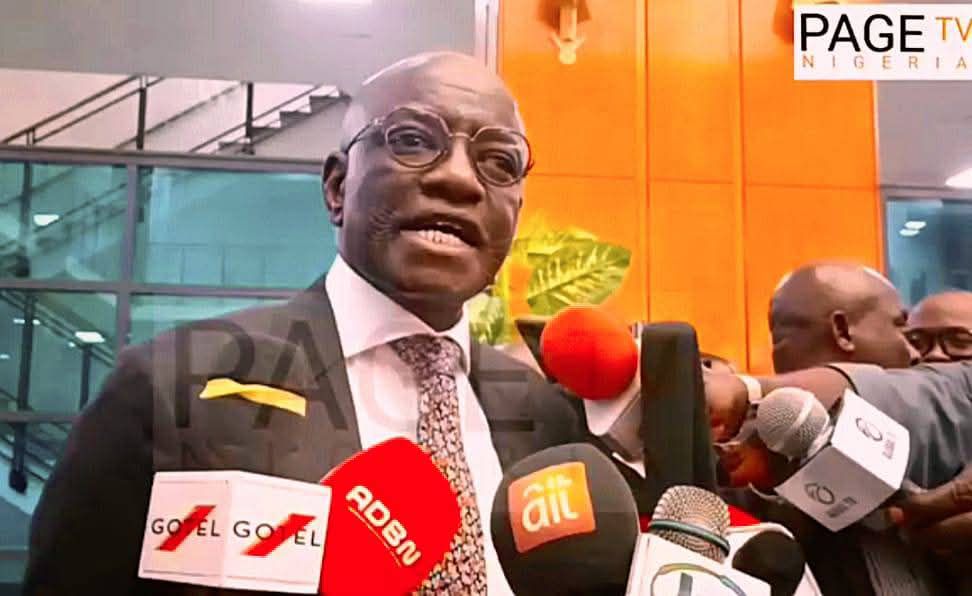
Senator Aliyu Wadada who is the Chairman of the Senate Public Accounts Committee, stepped in with the kind of clarity and firmness that the public rarely sees. Senator Wadada’s now-widely quoted question cut through the haze:”
“How can NNPC claim to have paid ₦103 trillion in one year when it only generated ₦24 trillion in revenue over five years?”
“It is a question rooted in basic arithmetic, but its implications run deep. If the numbers cannot add up, then the books do not add up. And if the books do not add up, then the Nigerian people deserve answers.” The Premium Times qoated Wadada as saying.
The matter of the ₦107 trillion receivables only worsened the concerns. NNPCL explained that some of the funds were trapped in “defunct banks,” effectively implying the money is gone. Yet the company refused to name any bank or specify any amount lost, a move rightly described as obfuscation by Senator Wadada.
What stands out in this episode is not just the questionable financial reporting from a key national institution, but the insistence by Senator Wadada that accountability is non-negotiable. At a time when public trust in governance structures is fragile, Nigerians need leaders who are willing to confront opacity, especially when it involves trillions of naira that belong to the public.
Wadada’s intervention reflects a broader truth: public office is a public trust, and ensuring transparency is not optional, it is a duty.
In a political environment where many look away from uncomfortable truths, the insistence by Senator Wadada on proper accounting, clarity, and responsibility stands out as a leadership trait worthy of attention. Nigerians, especially those examining what qualities define a credible public leader are right to observe actions like that of Senator Wadada very closely. Ultimately, the country benefits when individuals in public office demonstrate integrity, courage, and a refusal to accept vague or deceptive answers concerning national resources.
Accountability is the foundation of progress. And any leader who fights for it contributes to building a Nigeria where institutions work, public funds are protected, and the public trust is strengthened.
This has indeed exposed to people of Nasarawa state who Wadada is. Senator Wadada is one person that’s highly incorruptible. This brings us to a discussion I had with one personality in Nasarawa state who admitted to me that what impresses him more about Wadada is his disdain against injustice and corrupt tendencies.
Senator Wadada’s altercation with NNPC if it were someone, he would have given in by collecting the collectables and allowed the issue to die a natural dead.
Senator Wadada is indeed, the type of leader we want in Nasarawa state, very incorruptible and sincere in his dealings just like Engr. Abdullahi Sule.
 nasarawaeye.com