
By Iliya Adamu, Gadabuke
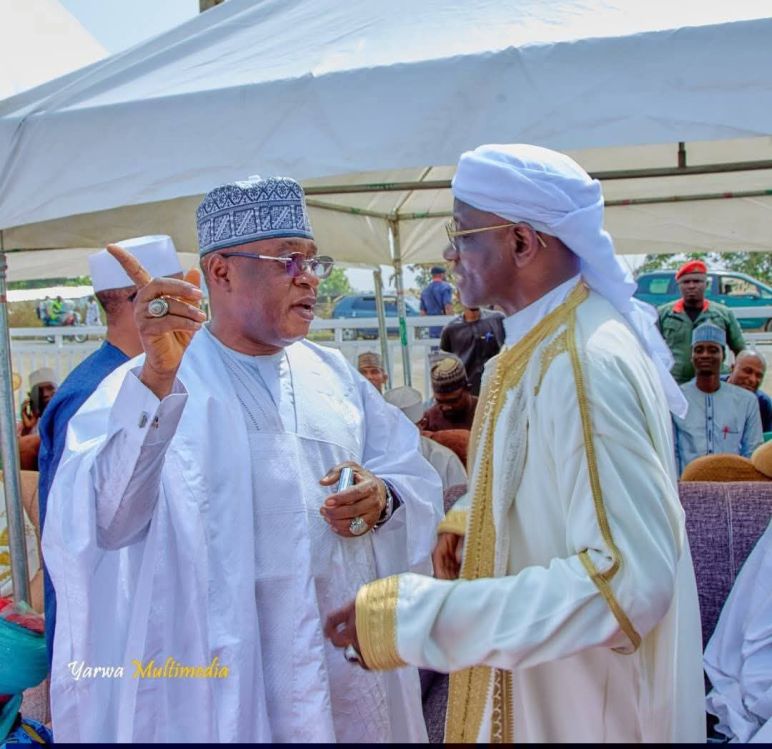
I read with great interest a piece written by one Ibrahim Adamu on his Facebook page, in which he extolled the spirit of togetherness between Senator Ahmed Wadada Aliyu and Ahmed Musa Baraden Nasarawa. The piece was, so to speak, a masterpiece.
However, there is no denying that the conversation around Senator Ahmed Wadada and Dr. Ahmed Musa Baraden Nasarawa has, thankfully, remained largely mature and respectful. In a political environment where rivalry often breeds bitterness, the mutual regard between these two leaders is refreshing and should be protected. That said, maturity should never require us to shy away from the truth.
Yes, both men are experienced. Yes, both are politically relevant. But pretending their political weight is the same does not help anyone. Senator Ahmed Wadada’s political structures across Nasarawa State are not only broader but far more entrenched. His reach cuts across wards, local governments, and senatorial zones, and extends well beyond the state into the national political space and the business world. These are long-standing networks built on trust, loyalty, and years of engagement. In politics, that kind of capital matters, and it cannot be wished away.
Politics is more than the offices one has occupied; it is about influence, relationships, and the ability to mobilize support across different interests and divides. On that score, Wadada stands clearly ahead. His connections across the federation and within the private sector place him on a pedestal that few in the state can rival.
This is why Baraden Nasarawa’s public reference to Wadada as his leader during the commissioning of the Juma’at Mosque in Keffi did not come as a surprise to those who understand the political history. It was not a casual remark or a polite gesture. It was an honest acknowledgment of leadership. Some of us know the path that led Barade to his current position, and we are aware of the role Senator Wadada played along that journey. Against that backdrop, the recognition was both appropriate and deserved.
None of this takes away from Baraden Nasarawa’s competence or his contributions. He has served the state diligently and earned respect in his own right. But leadership is contextual. In this particular context, Senator Wadada’s seniority, political depth, influence, and track record naturally place him ahead. Accepting this reality does not create division; rather, it brings clarity and order within the political family.
Ultimately, unity must remain the overriding goal. The relationship between the two leaders and their supporters should continue to be guided by mutual respect. However, unity should be anchored on truth, not on forced equivalence. Recognizing Wadada’s leadership and superior political reach does not diminish Baraden’s relevance; it simply reflects the realities on the ground. If this honesty is embraced alongside the existing spirit of cooperation, Nasarawa State will be better for it, politically stable, cohesive, and focused on progress.
 nasarawaeye.com