
By Rayyanu Bala
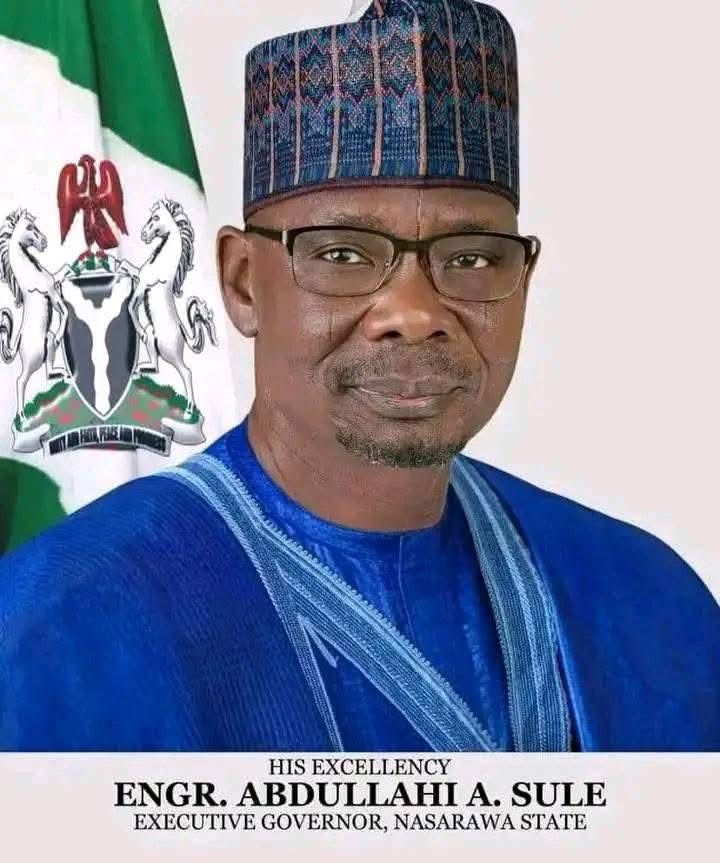
There’s something about birthdays that makes one pause and take stock—especially when the person celebrating is a top public official. When Governor Abdullahi Sule turned 66 last Friday, it felt like one of those moments. Not the kind that calls for loud praise-singing or dramatic tributes, but one that invites a simple, honest question: what has Governor Sule actually done with the time and trust the people of Nasarawa gave him in 2019 that warrants celebration?
A close look at Sule’s years as governor brings two words repeatedly to the fore: success and progress.
In Nigeria’s political space, leadership is often associated with loud speeches and even louder promises. Many leaders spend much of their time performing for the gallery. Governor Sule’s approach has been noticeably different. He does not govern like someone chasing headlines; he governs like someone focused on solving problems—quietly, carefully, and methodically.
True to his background as an engineer, Sule approaches governance like a complex project: understand the problem, design a solution, and execute it.
Since 2019, Nasarawa State has steadily begun to look like a state with clear direction. Infrastructure has improved, but more importantly, it has been thoughtfully planned. Roads are not built merely for political optics; they are designed to connect economic activity and open up communities. Projects feel tied to a broader development strategy, not scattered attempts to impress. That shift alone speaks volumes.
Some of Sule’s most meaningful achievements are not the ones that trend on social media. His real impact lies in systems and processes. Today in Nasarawa State, digital governance tools introduced under his administration have reduced delays and limited unnecessary human interference in government operations. Reforms in the mining sector have brought structure and accountability to an area where Nasarawa has long had vast but underutilized potential. These changes may not be glamorous, but they are foundational.
Agriculture, which remains central to the state’s economy, has also benefited from a more practical approach. Instead of endless ceremonies and empty promises to farmers, the administration has focused on building real value chains—connecting farmers to markets, improving support systems, and reducing the grip of middlemen. For many farmers, this has meant better coordination and more predictable outcomes. This is progress that is clearly planned.
There is also a deliberate focus on people, especially young people. Under Sule’s leadership, education and skills acquisition have been treated as tools, not talking points. Targeted programmes aimed at employability and practical skills have given many young people a fighting chance in a tough economic climate. The message has been quiet but consistent: the government sees its people as assets worth investing in.
One of Governor Sule’s most understated achievements is how he has positioned Nasarawa as a serious destination for investment. Not through hype or exaggerated claims, but through steady planning, clearer policies, and stronger institutions. Investors pay attention to consistency. Over time, it builds confidence—and confidence attracts capital.
What ties all of this together is sustainability. Decisions under this administration rarely feel rushed or impulsive. There is a sense that policies are designed to outlive election cycles and continue working even when political attention shifts elsewhere. That level of discipline is rare, and it deserves recognition.
There is also the human side of governance. Beyond policies and frameworks, people want to feel seen. In many communities, there is a growing sense that government is more present and approachable. Trust does not return overnight, but Sule’s emphasis on transparency and accountability has helped narrow the gap between citizens and the state. That is no small achievement.
Perhaps the most compelling aspect of Governor Sule’s leadership is his understanding of power. He does not treat it as a trophy or a performance; he treats it as a responsibility. In this model, progress does not need to be loud to be real—it only needs to be consistent.
At 66, Sule stands as a reminder of something our politics often forgets: good governance is possible. Vision matters. Discipline matters. Competence matters. And when these are matched with integrity and a strong work ethic, results do not need to be announced—they show.
Not every leader needs to shout to be effective. Some simply need to build, brick by brick and system by system, until the evidence becomes undeniable.
As Nasarawa continues its journey, Governor Abdullahi Sule’s story so far feels less like self-congratulation and more like a quiet case study in purposeful leadership. For aspiring leaders, it is a lesson. For citizens, it is reassuring. And for the governor at 66, it is a reminder that the strongest legacies are not declared.
They are delivered.
 nasarawaeye.com