
By Rayyanu Bala
When the Chief of Staff to the President, Mr. Femi Gbajabiamila, recently urged political actors to preserve the principle of rotational presidency between the North and the South, he wasn’t saying anything radical or new. In fact, he was restating a principle that has quietly helped Nigeria manage its diversity for decades. Zoning, at its core, is about fairness, inclusion, and managing differences in a complex society.
This idea of rotation or zoning is not unique to Nigeria. Across the world, countries with deep ethnic, regional, or cultural divisions adopt informal or formal power-sharing arrangements. From Europe to parts of Asia and Africa, rotation or zoning is often used to reduce tension, build trust, and give every major bloc a sense of belonging. It’s a political safety valve.
In Nigeria’s case, rotational understanding at the national level is simple and widely accepted: North and South. No matter how many ethnic groups we have, that broad balance has helped stabilize the system. Most Nigerians agree it has prevented total domination by one side.
Now, when we come closer home to Nasarawa state same logic applies, just on a smaller scale. In Nasarawa State, the zoning understanding has historically recognized three zones: South, North, and West. All in order to cement political consensus and fairness. People know it, politicians respect it and it has shaped expectations over the years.
At the national level, Southern Nigeria has produced President Olusegun Obasanjo from the Yoruba ethnic group. Years later, Southern Nigeria again produced President Bola Ahmed Tinubu also Yoruba. Nobody argued that Yoruba should be excluded simply because the South had already produced a Yuruba as president. Why? Because rotation is about zones, not about micro-ethnic arithmetic. Once it is the South’s turn, competence and acceptability within that zone become the deciding factors.
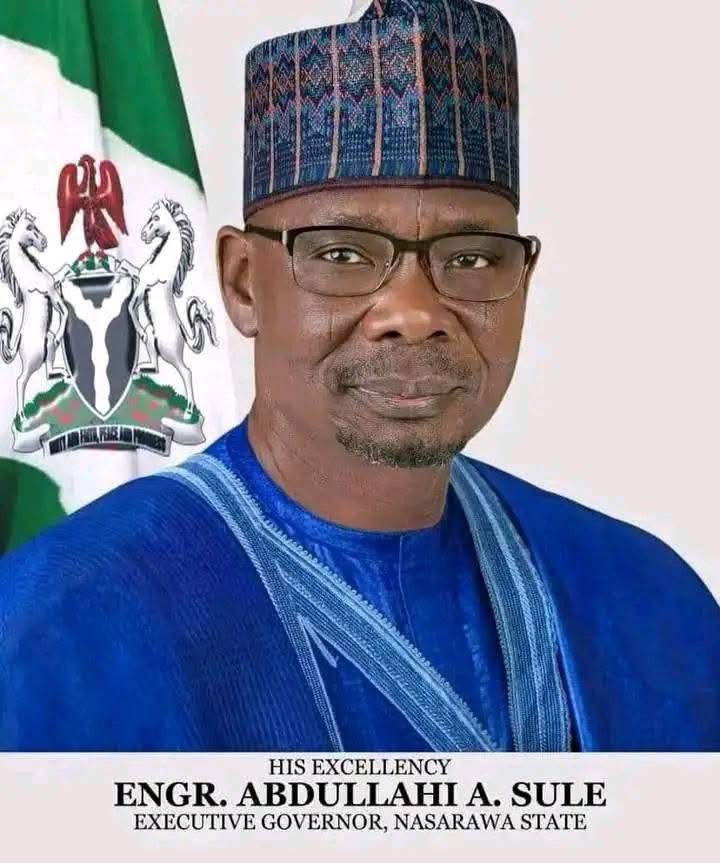
That same reasoning should apply in Nasarawa state. Since power is zoned to the west as consistently insisted by Governor Abdullahi Sule then what should matter is competence and acceptability not anything.
If power is rotating to a particular zone, it should not suddenly be reduced to village, town, or residential technicalities. Senator Wadada, though from Nasarawa, is resident in Keffi, just like Senator Abdullahi Adamu before him. Residency, contribution, and political roots in Keffi were never questioned then, and they shouldn’t be weaponized now.
The danger Nigeria constantly faces is this: we support rotation when it favors us, but we redefine it when it doesn’t. That’s how principles lose meaning.
Supporting Senator Wadada within this framework is not about sentiment; it’s about precedent and fairness. If rotation is good enough to manage Nigeria’s fragile unity at the national level, then it is good enough to be respected honestly at the state level. Anything else looks like selective justice.
Rotation works when it is applied consistently. Once people begin to move the goalpost, mistrust grows, grievances deepen, and unity suffers.
By advocating for macro zoning, some people are simply moving the goalposts, which only fosters mistrust. To prevent such negative outcomes, we should prioritize competence over macro-ethnic calculations. These calculations achieve little and only deepen divisions and suspicion.
Former President Obasanjo, a Yoruba man from the South, served two terms. After President Buhari’s eight years in office, power shifted back to the South, and the current President, Bola Ahmed Tinubu, is also a Yoruba man from the South. Similarly, in Nasarawa State, if Abdullahi Adamu from Keffi in the Western Zone served his eight years, and power now shifts to the Western zone with Senator Wadada as APC candidate who is also from Keffi, there is nothing wrong with that, since both leaders come from the same zone.
As the Hausa saying goes, “Bukatan maje haji sallah,” Since power has moved to the Western Zone, we should all give thanks and glory to God.
It is better to have this arrangement in place than to lose everything.
 nasarawaeye.com