
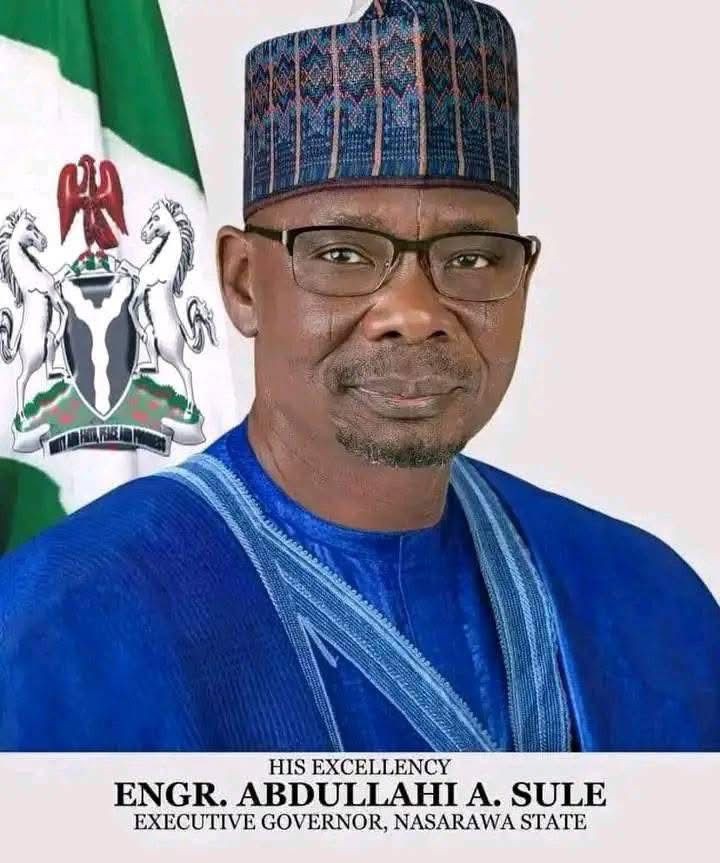
By Rayyanu Bala
Anyone who lives in or regularly visits Nasarawa State knows that the recent Sahara Reporters story alleging that the state spent ₦707 million on “food and refreshments” does not align with reality. The report, which suggests that rural communities are neglected while government resources are squandered, ignores the visible and measurable development taking place across the state.
Roads do not appear by chance. Boreholes do not drill themselves. Rural communities do not suddenly gain access to markets, water, and basic infrastructure through propaganda. These projects exist, and they are in daily use by the people of Nasarawa State.
The Sahara Reporters publication fits a familiar pattern of sensational journalism: operational figures are stripped of context, exaggerated headlines are deployed, and public outrage is manufactured. While this tactic is not new, the timing of the report is particularly revealing.
Since Governor Abdullahi A. Sule publicly affirmed his commitment to the zoning principle, especially in support of Nasarawa West, there has been a noticeable increase in coordinated attacks on his administration. Governance narratives are being deliberately distorted in a bid to weaken a governor whose principled stance on zoning threatens entrenched political interests.
These attacks are not rooted in genuine concern rather, they are politically motivated efforts aimed at undermining an administration that has chosen equity and inclusiveness over personal ambition.
Contrary to the negative narratives being promoted, rural Nasarawa is experiencing steady progress. Farmers are accessing markets, traders are moving goods, and communities are benefiting from various government interventions across the state.
Governor Sule’s approach to governance has been structured, deliberate, and focused on long-term impact rather than short-term political gains.
The Thursday anti-zoning rally held in Akwanga must also be viewed within this broader context. Zoning remains a vital mechanism for ensuring fairness, balance, and political stability in Nasarawa State. Ironically, Governor Sule has openly acknowledged that without zoning, he would not have emerged as governor.
The decision to stage an anti-zoning rally in Akwanga was a calculated attempt to create a misleading narrative of local opposition. In reality, Nasarawa North lacks the numerical strength to produce a governor independently, making zoning not only fair but necessary for unity and inclusion.
The Akwanga rally and media attack represent the actions of a few sponsored individuals rather than the collective will of the people. They are desperate attempts to disrupt an established rotational understanding that has helped maintain peace and stability in the state.
Governor Sule’s clear and public commitment to upholding zoning explains the sudden surge in negative narratives against his administration. As elections approach, those opposed to equity and rotation are increasingly resorting to smear campaigns.
While some chase sensational headlines and political relevance, the people of Nasarawa State remain focused on development that improves daily life. On this score, Governor Abdullahi A. Sule’s record is visible, measurable, and defensible.
Nasarawa State’s future lies in equity, peace, and sustained development, not in manufactured controversies driven by narrow interests.
 nasarawaeye.com