
By Rayyanu Bala
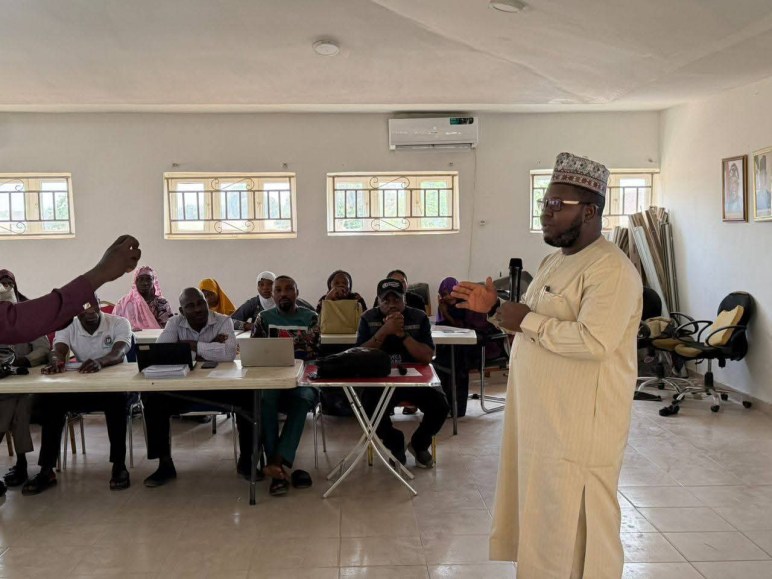
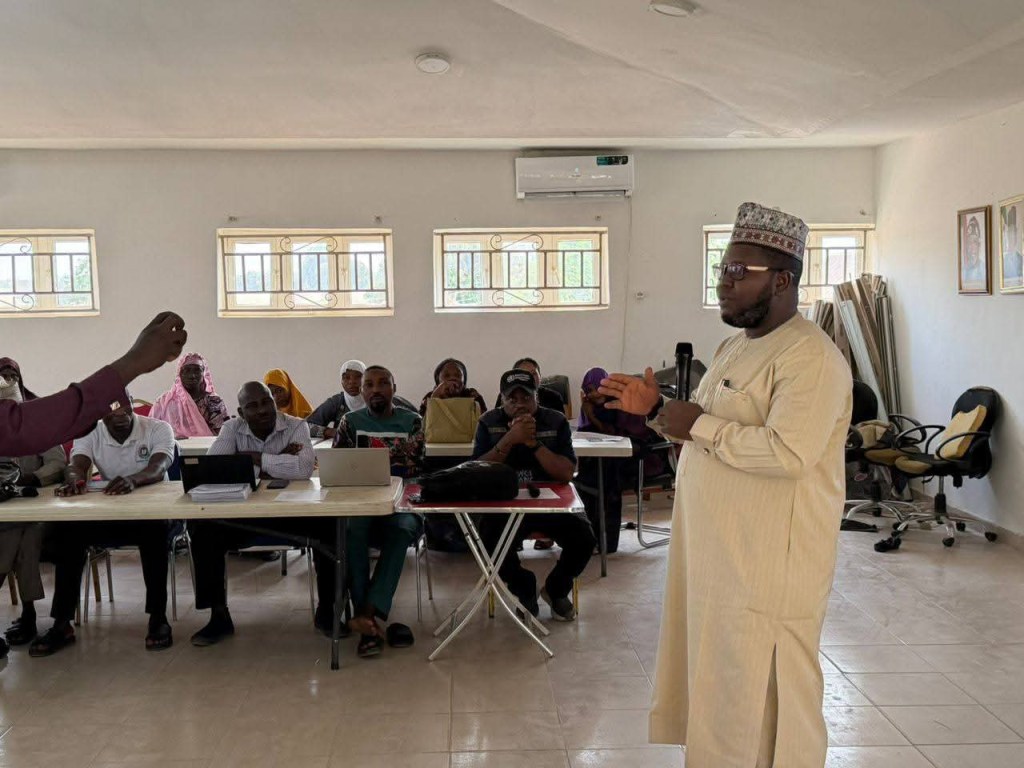
There are moments when government officials must stop being polite and start being firm, especially when children’s lives are at stake. That moment played out yesterday in Lafia when the Executive Secretary of the Nasarawa State Primary Healthcare Development Agency (NAPHDA), Dr. Usman Iskilu Saleh, issued a strong warning to Health Secretaries across the state over poor Routine Immunization performance. His message was clear that improve the data, reach every child, or be replaced.
Dr. Saleh’s warning to Health Secretaries over the poor state of Routine Immunization (RI) data in the state didn’t come out of nowhere. The numbers are worrying. Twelve LGAs reportedly recording zero-dose children is not just a statistic; it’s a loud alarm bell. Zero-dose children mean gaps in outreach, weak supervision, poor data management, or all of the above. And in public health, gaps like these cost lives.
What stood out most was not the threat of sanctions, public officials threaten sanctions all the time, but the clarity of responsibility. Dr. Saleh made it very clear that Health Secretaries will be held accountable. Full stop. In a system where blame is often passed around like a hot plate of food no one wants to touch, that kind of accountability is rare.
“I am not threatening you; I am advising you,” he said. That line matters. It shows that this isn’t about ego or power. It’s about results. It’s about ensuring that no child in Nasarawa State is denied life-saving vaccines because someone failed to do his job. When he went further to say he would replace any non-performing HS regardless of rank or years of service, it sent an even more stronger message that performance is over above position in the agency.
This is exactly the kind of leadership that justifies the confidence reposed in him by Governor Engr. Abdullahi Sule. Appointments are easy to make; delivering impact is the hard part. Dr. Saleh is showing, through action and not just pronouncements, that he understands the weight of the responsibility placed on his shoulders.
Let’s be honest with him: since the establishment of NAPHDA, it is difficult to point to any Executive Secretary who has uplifted the agency the way Dr. Usman Iskilu Saleh has. From insisting on data integrity to pushing for stronger primary healthcare delivery, his tenure has been marked by energy, firmness, and a refusal to accept mediocrity as “normal.” The agency feels more visible, more active, and more serious about its mandate.
Routine immunization is not a side activity in primary healthcare; it is the backbone. Vaccines prevent diseases that once devastated families and communities. When RI data declines, it means children are slipping through the cracks, and those cracks can quickly turn into graves. Dr. Saleh’s insistence that there must be no zero-dose children in Nasarawa State is not an unrealistic demand, it is the minimum standard any serious health system should aim for.
Critics may call his approach tough. Some may even say it’s too harsh. But leadership, especially in public health, is not a popularity contest. It is about making decisions that protect the most vulnerable, even when those decisions make some people uncomfortable. Children cannot advocate for themselves. Someone has to do it for them that’s why Dr. Usman Iskilu Saleh’s message is simple: do the job, or make way for someone who will do. That kind of resolve is exactly what NAPHDA needs at this moment. History will at the end remember Dr. Usman Iskilu Saleh’s tenure as a turning point for primary healthcare delivery in Nasarawa State.
 nasarawaeye.com