
By Rayyanu Bala
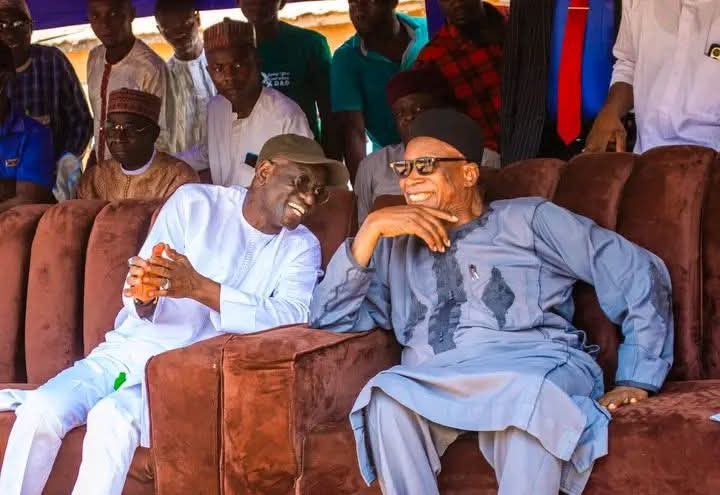
If you were at Angwan Takwa-Moroa yesterday for the flag-off of the road rehabilitation project where Senator Wadada committed N180m, you probably heard his remarks. His reference to Tukur handling architecture, Faisal taking care of medicine, Haruna being the engineer, and himself focusing on politics left many people scratching their heads.
On the surface, it sounded a casual remark with a breakdown of professions. Politics however is also a profession, and Wadada is not one to speak without intention. Beneath that calm speech delivery was a carefully crafted message that many discerning listeners picked up immediately.
What Wadada was really doing in his speech was drawing a clear line. In a subtle but deliberate way, he reminded the audience that while all four men are aspiring to become governor, only one of them, himself has politics as his primary vocation. The others, by their respective professions, were architects, doctors, and engineers, who have ventured into politics. Wadada, on the other hand, presented himself as a politician by calling.
And that distinction matters, at least in his argument.
Governance, after all, is not just about technical expertise. A governor does not design buildings, perform surgeries, or personally construct roads. Those tasks are delegated to professionals, people like the very individuals Wadada referenced. The governor’s real job is political leadership: building consensus, managing interests, navigating power structures, making tough decisions, and translating public needs into workable policy.
By assigning each aspirant a professional label, Wadada was essentially saying, “Everyone has their lane and mine is politics.” It was a gentle nudge to the audience to consider whether leadership should be treated as a side pursuit or as a full-time craft that requires years of involvement.
Some might argue that Wadada’s line of thinking is dismissive of professionals who bring valuable perspectives into governance. Doctors, engineers, and architects often make excellent leaders precisely because they are problem-solvers. But Wadada’s message wasn’t necessarily that the others are unqualified, it was that politics itself is a profession that demands focus, experience, and instinct.
In many ways, Wadada’s speech reflected a broader debate in our democracy: should leadership be entrusted to technocrats who learn politics along the way, or to politicians who learn to manage technocrats? Wadada clearly stands in the latter camp.
What made his message effective was its restraint. He didn’t attack anyone. He didn’t name weaknesses or question competence. Instead, he let the audience connect the dots. By placing himself last in the list and by saying “I will handle politics” he allowed that final line to take a firm root.
For those who missed it, the speech may have sounded like a metaphor. For those paying close attention, it was a campaign statement wrapped in civility.
Whether voters agree with that logic is another matter entirely. But one thing is clear, Wadada wasn’t confused, and he wasn’t rambling. He was making a case for himself, quietly but firmly, in a language and in a manner seasoned political observers can understand very well.
 nasarawaeye.com