
By Rayyanu Bala
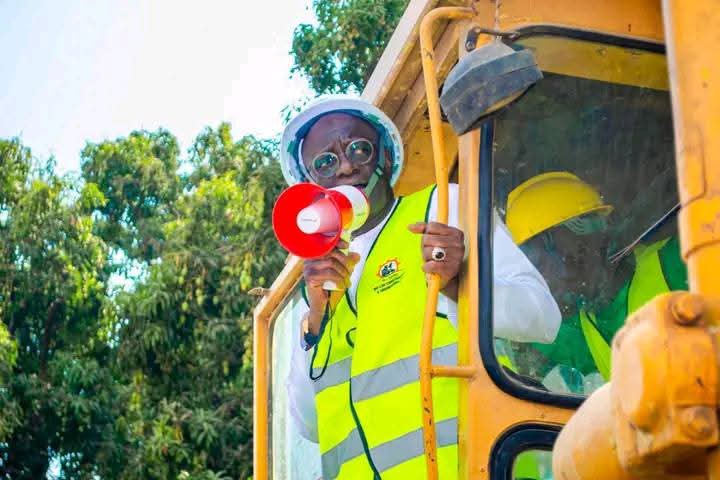
There’s a saying many of us grew up hearing. The saying is: development follows the road. This saying sounds simple but anyone who has lived in a rural community knows just how true it is. Where roads are bad, life is hard. Where roads open up, opportunities follow. That’s why the recent flag-off of N180m Angwan Takwa–Moroa road rehabilitation by Senator Ahmed Wadada is a welcome development to Angwan Takwa-Moroa community.
When Wadada launched the 18-kilometre road in Kokona Local Government Area, he wasn’t fulfilling a campaign promise, he was sending a clear message about his priorities. Roads first. People first. And that message is familiar to anyone who has watched the leadership style of Governor Abdullahi Sule, an engineer by training, whose administration has consistently emphasized road construction as the backbone of development across Nasarawa State.
You can talk all day about agriculture, trade, healthcare, or education, but without roads, those talks don’t go very far. Farmers can’t move produce, traders can’t reach markets, and even basic services struggle to get to the people who need them most. By flagging off the Angwan Takwa–Moroa road rehabilitation, Wadada showed that he understands this reality deeply.
In many ways, the project is a sign or rather a powerful indicator of what leadership could look like if Wadada is given a broader mandate in 2027. His approach mirrors that of Engineer Abdullahi Sule: identify critical road links, fix them, and let development naturally follow. It’s a practical style of governance that focuses less on noise and more on impact.
For the communities along that road, the benefits are immediate and real. Easier movement, reduced transport costs, less stress during the rainy season, and better access to markets. For the wider Nasarawa West zone and indeed, Nasarawa state, the project speaks to something bigger: a vision where rural areas are not treated as afterthoughts, but as engines of growth.
The presence of former Governor Abdullahi Adamu at the event, and his praise for Wadada’s commitment, only reinforced this point. When leaders with experience acknowledge a project as people-oriented, it tells you that something meaningful is happening. His call for unity ahead of 2027 also fits neatly into the bigger picture. Development thrives best where there is cooperation and shared purpose.
At the end of the day, roads are not just about asphalt and laterite. They are about access, dignity, and opportunity. Wadada’s decision to prioritize the Angwan Takwa–Moroa road is a reminder that leadership is often revealed in the basics: the things that make everyday life easier for ordinary people.
If this road project is anything to go by, then Wadada’s style aligns clearly with the philosophy that has guided Engineer Abdullahi Sule’s administration. Build the roads, and development will take care of the rest.
 nasarawaeye.com