
By Rayyanu Bala
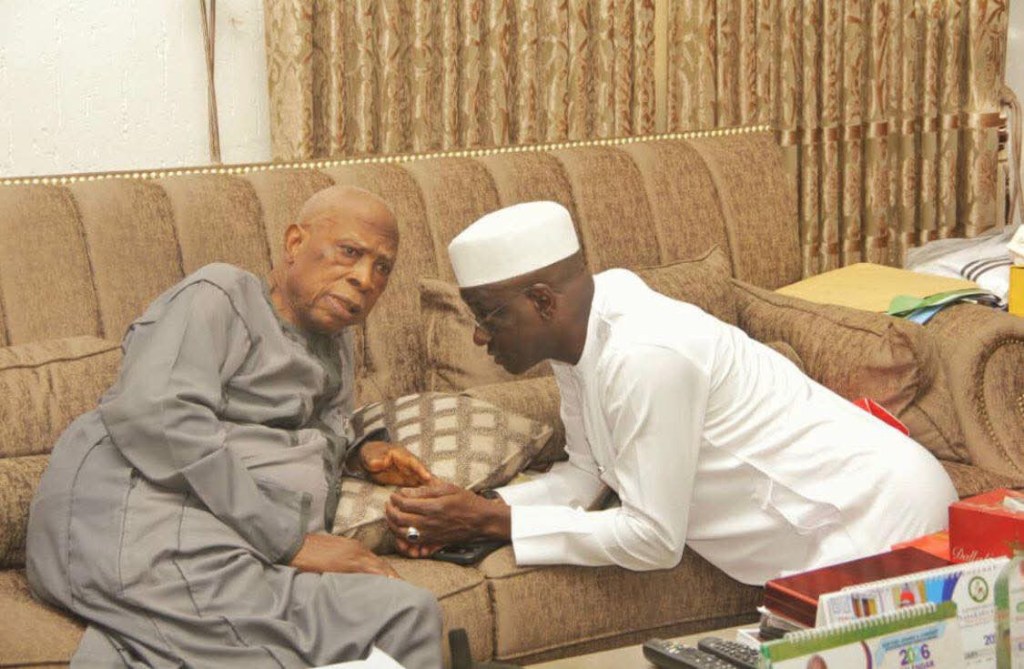
At the flag-off ceremony of the Angwan Takwa–Moroa road project last Monday, Senator Ahmed Wadada Aliyu made a statement that may have quietly carried more weight than the infrastructure project itself. In a moment of candor, he told the audience, including senator Abdullahi Adamu, that whatever people see him doing, whether in his political actions or even in his political words, was learned from or copied from Senator Abdullahi Adamu.
This is not a small admission in Nigerian politics.
In an environment where many politicians prefer to project absolute originality and personal dominance, Wadada’s statement was refreshingly humble. By openly acknowledging Abdullahi Adamu as the model behind his political conduct, Wadada was doing more than offering praise. He was publicly defining his political identity.
And it speaks volumes.
When a sitting senator says he learned his political behavior from another leader, it tells us two things. First, that there is a deep personal respect involved. Second, that he sees value in continuity, an inheritance of political style, discipline, and perhaps even philosophy.
Abdullahi Adamu is widely regarded as a seasoned political figure, someone who has navigated Nigeria’s complex political terrain for decades. For Wadada to openly declare that he copies or was taught by Adamu suggests that he sees him not just as a father, but as a mentor and role model.
Of -course, politics often thrives on rivalry and ego, but mentorship is rarely discussed openly. By admitting that his political approach is shaped by Adamu, Wadada places himself in a tradition rather than isolating himself as a standalone actor. It shows loyalty. It shows gratitude. And perhaps most importantly, it shows that he believes leadership is something that can be learned from those who came before.
Some might perhaps, interpret his words as political strategy, after all, public alignment with an established figure can strengthen credibility. But beyond strategy, there is something personal about the way Wadada framed it. He didn’t just say he respects Adamu; he said what people see in him politically is something he learned from Adamu. That is a strong statement of admiration.
In many ways, it is also a declaration of political DNA.
If Wadada’s actions reflect Abdullahi Adamu’s influence, then voters and observers can expect consistency with whatever qualities they associate with Adamu, be it discipline, firmness, political calculation, or grassroots engagement.
Ultimately, Wadada’s statement was not just about roads or development projects. It was about influence, mentorship, and political lineage. By his own admission, Abdullahi Adamu is his role model. And in saying that publicly, Wadada showed that respect, in politics, can still be worn openly.
Whether one agrees with their political approach or not, there is something noteworthy about a leader who acknowledges where he learned the craft. In a system that often rewards loud self-promotion, Wadada chose to highlight the man who shaped him.
And that, perhaps, says as much about him.
Therefore, whatever Wadada said in the past about Abdullahi Adamu or anyone else, he copied from his political mentor, Senator Abdullahi Adamu, Turakin Keffi.
 nasarawaeye.com