
By Rayyanu Bala
The APC stakeholders’ meeting held last Monday at the Aliyu Akwe Banquet Hall in Lafia offered far more than routine party formalities. It provided meaningful insight into Governor Abdullahi Sule’s mindset regarding succession, legacy, and the future of the party he leads in Nasarawa State.
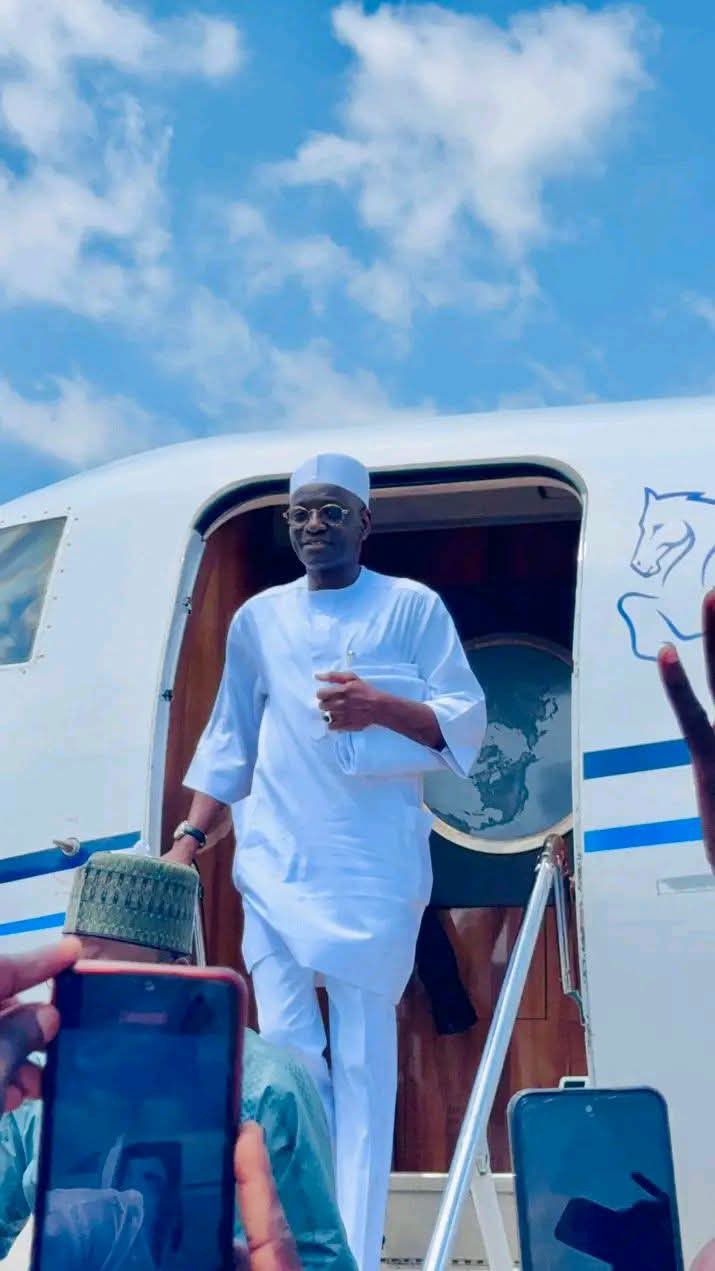
When we carefully examine unfolding developments across the state, attention increasingly narrows to Senator Ahmed Aliyu Wadada, whose name is steadily resonating across the political landscape as a leading contender to succeed Governor Sule in 2027.
For some time now, Wadada has consistently advocated for a level playing field in the APC primaries. At the stakeholders’ meeting, Governor Sule reaffirmed that the 2027 governorship primaries would be free and fair. He reminded party faithful that he himself emerged through a credible process and, “Inshallah,” intends to uphold the same standard in producing his successor. That statement is significant, as it reinforces what Wadada has long maintained at various forums.
Governor Sule’s public commitment to transparent primaries sends a strong and reassuring signal. More importantly, he made it clear that he has no intention of imposing a successor. Instead, he seeks someone capable of surpassing his achievements.
Undoubtedly, under Sule’s leadership, Nasarawa State has witnessed infrastructural expansion, improved investment drive, and growing political consolidation within the APC. The defection of high-profile figures into the party stands as political capital any governor would be proud of. His administration has maintained a reputation for steady governance and strategic economic positioning.
So when he declares that he wants someone who can do better, the question naturally arises: Who truly has the capacity to surpass him?
Without prejudice, Senator Wadada stands out as a strong contender. To outperform Governor Sule in Nasarawa State, a successor must embody several critical attributes: deep grassroots reach across all zones; strong federal connections; proven legislative and executive experience; financial and political capacity; and national visibility within and beyond the APC.
Among potential aspirants, Wadada possesses a rare combination of reach, connection, and pedigree.
First, his political journey has been deliberate and progressive. From his tenure in the House of Representatives to his current position in the Senate, Wadada has built networks that extend beyond Nasarawa into national political corridors. Governance today is not merely about administering a state; it requires leveraging federal partnerships, attracting investment, and negotiating influence at the center.
Second, his grassroots penetration is undeniable. Politics in Nasarawa is deeply local, and Wadada’s connection with communities, traditional institutions, and youth constituencies gives him a statewide presence that few can match.
Third, in a state that has benefited from technocratic leadership under Governor Sule, the next governor cannot afford to be politically lightweight. Surpassing Sule will require a blend of administrative discipline and political dexterity. Wadada’s experience in federal legislative processes and exposure to national policymaking position him as someone capable of raising the bar.
To exceed the current administration’s achievements, the next governor must expand industrialization, deepen infrastructure penetration into rural communities, enhance federal allocations and projects to the state, and strengthen political inclusiveness while maintaining party cohesion. Achieving this dual mandate demands both strong Abuja connections and deep local legitimacy, a balance Wadada appears to embody.
With Governor Sule’s promise of free and fair primaries, coupled with 2026 electoral reforms just signed by President Bola Ahmed Tinubu which provides for direct primaries or consensus as modes of party nomination, APC members will face a defining choice: settle for uncertainty, or choose a candidate with reach, connection, and a consistent public service record.
Accordingly, Abdullahi Sule has set a clear benchmark for leadership, stating unequivocally that he desires a successor capable of surpassing his achievements. If capacity is the true standard, then Ahmed Aliyu Wadada stands out as one of the most prepared and well-equipped to meet and potentially exceed that expectation.
The future of Nasarawa State however, will not be shaped by ambition alone, but by proven competence and capacity. As 2027 approaches, Wadada is increasingly recognized as a leading embodiment of that capacity in the evolving political landscape.
Therefore, if capacity remains the benchmark, then Wadada is clearly leading the pack.
 nasarawaeye.com