
By Rayyanu Bala
At the groundbreaking ceremony for the DASH Akwanga construction project yesterday, Governor Abdullahi Sule made a statement that sounded simple at first, but the political undertone was difficult to ignore. Standing before dignitaries, stakeholders, and community leaders, Governor Sule said: “I might complete the 1st phase and not complete the 2nd phase, but if the next Governor is seated here, he will continue from where I stopped.”
Moments like that often pass as routine political remarks. But sometimes, the setting and the people present give them deeper meaning. In this case, the seating arrangement itself spoke volumes.
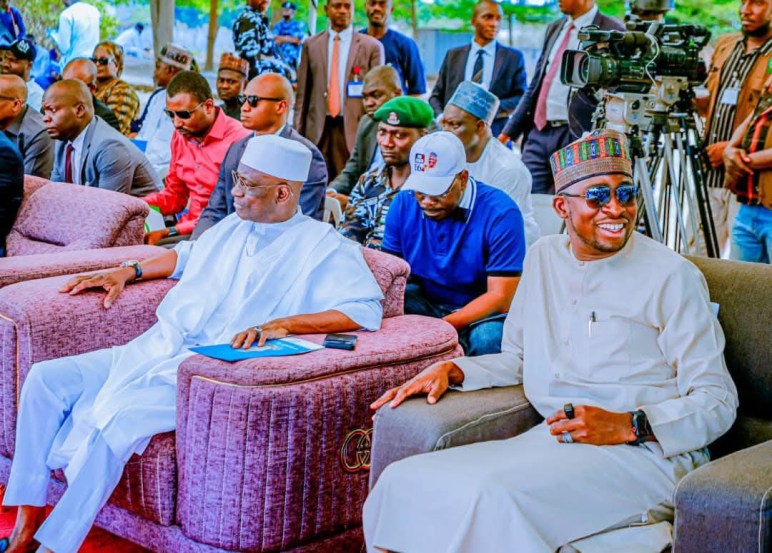
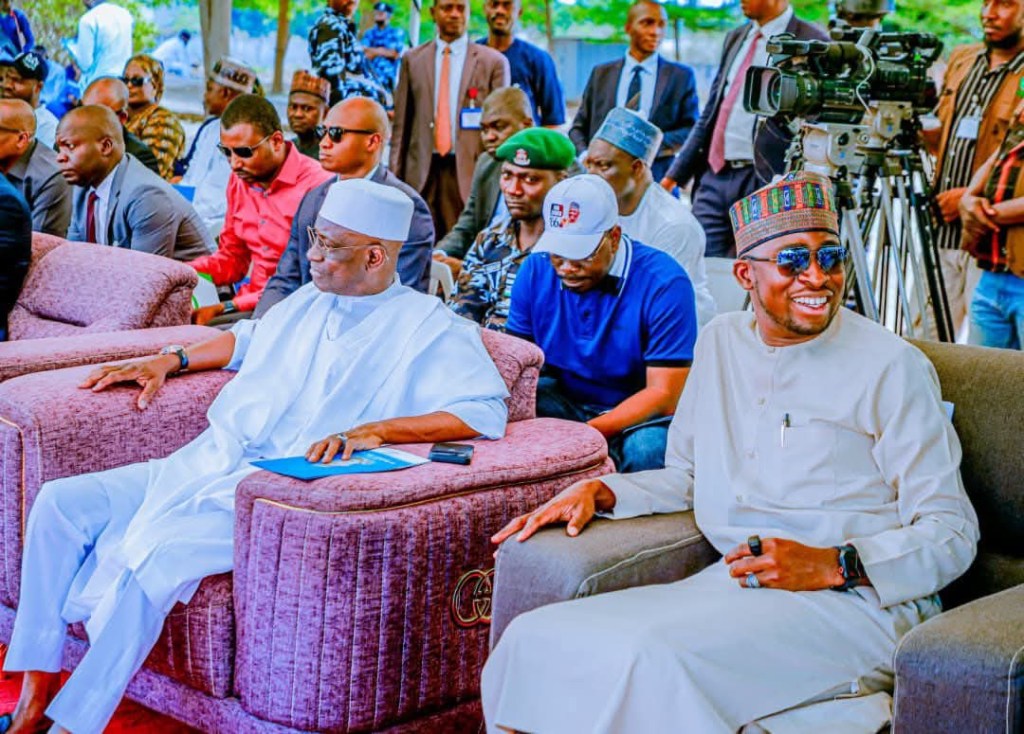
Right there in the front row, seated prominently alongside the governor, was Senator Ahmed Aliyu Wadada. Interestingly, among all the political figures present at the event, Wadada stood out as the only widely acknowledged governorship aspirant sitting in that strategic position close to the governor.
For many observers, that detail did not go unnoticed.
Politics, especially in Nasarawa State, is not only about declarations; it is also about signals. And the image of Senator Wadada seated at the front row beside Governor Sule while such a statement was being made naturally sparked conversations among attendees and political watchers alike.
Governor Sule’s statement at Akwanga raises a simple but compelling question: was that moment merely coincidental, or was it reflective of an emerging political reality?
Senator Wadada is not a stranger to the political landscape of Nasarawa State. Over the years, he has built a reputation that extends far beyond the walls of government offices. His influence is deeply rooted at the grassroots, where his name resonates strongly among ordinary citizens across the state.
From Keffi to Toto, Akwanga to Wamba, Nasarawa Eggon and from Lafia to Awe and beyond, Wadada’s political structure and support base are widely acknowledged. Many of his supporters often point to his accessibility and longstanding engagement with communities as one of his greatest political strengths.
But Wadada’s profile is not limited to grassroots politics alone.
He also brings a unique blend of national and international connections. Having served in different capacities within Nigeria’s political system, Wadada has developed relationships that stretch across the country and beyond. For a state like Nasarawa, which continues to pursue development through partnerships and investment opportunities, such connections could prove invaluable.
This combination of grassroots popularity and broader political reach is precisely why many people already see Wadada as the natural successor to Governor Abdullahi Sule in 2027.
Of course, politics is rarely decided in a single moment or by one event. Elections involve complex dynamics, alliances, and the will of the people. But the symbolism at the DASH Akwanga groundbreaking ceremony was powerful.
When a sitting governor talks about a successor continuing his work, and the only governorship aspirant present is seated right in front of him, it inevitably sends not only a strong message but a direction. What Governor Sule said at that moment whether intentional or not, the signal is clear.
For supporters of Senator Wadada, that moment simply reinforced what they have long believed, that Wadada represents continuity, stability, and the next phase of leadership for Nasarawa State.
As the state gradually moves toward the 2027 elections, one thing is already certain, Senator Ahmed Aliyu Wadada remain a candidate to beat.
If Governor Sule’s remarks in Akwanga were anything to go by, the idea of continuity may already have a face in the front row at Akwanga groundbreaking. Governor Sule’s declaration therefore made that understanding all the more compelling.
 nasarawaeye.com