
By Rayyanu Bala
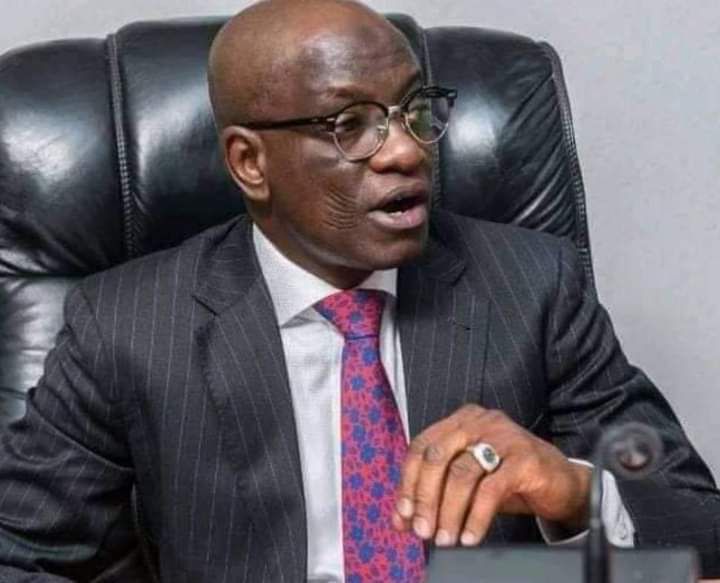
In Nigeria’s political space, moments often arise when public officials demonstrate the kind of leadership that reminds citizens why oversight and accountability matters. One such moment recently came during the interview granted by Senator Ahmed Wadada Aliyu, Chairman of the Senate Committee on Public Accounts, on the popular political programme Politics Today, anchored by Seun Okinbaloye on Channels Television.
The interview quickly sparked national attention because of the staggering ₦210 trillion discrepancy issues connected with the financial records of Nigerian National Petroleum Company Limited (NNPCL). But beyond the headlines and heated reactions, the exchange revealed something deeper about Senator Wadada: a lawmaker determined to do his job thoroughly, responsibly, and transparently.
During the interview, Wadada raised questions stemming from the Auditor-General’s report and NNPCL’s audited financial statements. Importantly, he was careful to clarify that the Senate committee was not accusing NNPCL of theft. Rather, the committee was simply asking for explanations for certain financial entries particularly issues surrounding legal fees, rebranding costs, and massive accounting items such as accrued expenses.
One figure that caught Wadada’s attention most was the reported ₦103 trillion in accrued expenses for 2023, which appeared difficult to reconcile with the company’s reported revenues of roughly ₦24 trillion over five years. For many Nigerians watching the interview, the numbers were bewildering. Analysts suggested that the figures could represent complex oil-industry accounting structures such as liabilities, receivables, and joint-venture costs, rather than missing funds.
But that clarification does not diminish the significance of Wadada’s intervention. On the contrary, it highlights the importance of what he was doing: asking questions on behalf of the Nigerian people. In a democracy, legislative oversight is not about making premature accusations, it is about seeking clarity where figures appear unclear.
Wadada’s calm, methodical explanation during the interview demonstrated a style of leadership that prioritizes facts over sensationalism. Rather than fueling public panic, he repeatedly emphasized that the committee’s role is to seek answers and ensure transparency. Wadada’s action was a refreshing display of responsible public servants trying to ensure accountability in running the affairs of public institutions such as NNPCL.
For observers in Nasarawa State, Wadada’s actions at the senate committee are significantly worthy of praise. And it brings to focus the kind of a governor Narasawa will need in 2027. Wadada’s conduct in the Senate is already shaping how many people evaluate his leadership potential.
Oversight work in the Senate might seem distant from the day-to-day concerns of citizens in Nasarawa, but the underlying qualities are the same: diligence, courage and a commitment to accountability.
If these traits are anything to go by, Nasarawa could benefit enormously from Wadada’s leadership.
Imagine a governor who approaches state finances with the same attention to detail he applied during the NNPCL inquiry. Imagine a government that is willing to ask hard questions about public spending, insist on transparency, and pursue policies with disciplined oversight. Those are precisely the qualities that help transform states from merely surviving to truly thriving.
Nasarawa has enormous potential—agriculture, solid minerals, and a strategic location in Nigeria’s North-Central region. Yet unlocking that potential requires leaders who combine vision with fiscal responsibility. It requires leaders who will continue from where Engr. Sule will stop.
Wadada’s performance on the national stage suggests he understands both executive and legislative roles.
His Senate role has given him firsthand experience in scrutinizing complex financial systems, navigating institutional accountability, and engaging national economic debates. Those experiences are valuable assets for any leader aspiring to govern a state that is eager for accelerated development.
Of course, politics is never decided by TV interviews but moments like the one on Politics Today help the public glimpse how a leader thinks and acts under scrutiny.
In that moment, Wadada did not posture or politicize. He did what public servants are supposed to do: he asked questions, demanded clarity, and defended the principle of accountability.
If Wadada brings that same zeal, discipline, and sense of duty to the leadership of Nasarawa State in 2027, the state may well find itself on a path to new and enviable heights.
And for many watching that interview, the thought may already have crossed their minds that perhaps this is exactly the kind of leadership Nasarawa needs in 2027.
 nasarawaeye.com