
By Murtala Adogi Mohammed PhD.
Strategic Succession, Continuity, Political Legacy in Nasarawa State & The Power of Decisiveness in Decision-Making.
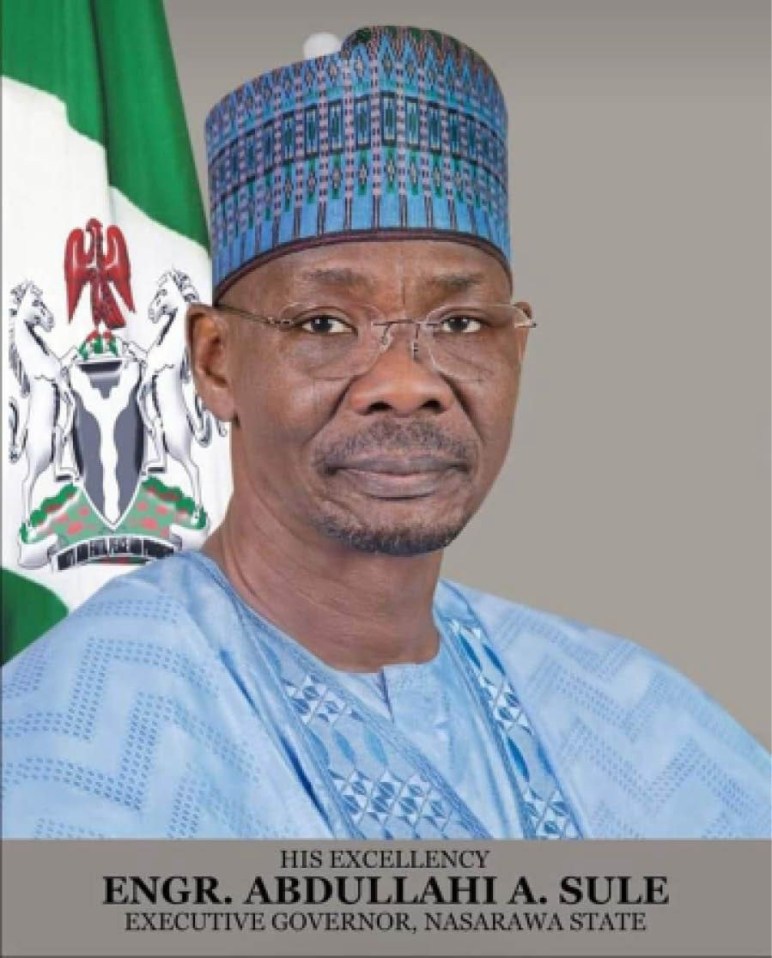
Your Excellency,
Leadership, at its highest level, is not only measured by what is achieved in office, but by the strength, stability, and continuity of what follows. The true test of statesmanship lies in how power is transitioned and whether that transition sustains momentum or disrupts it.
Permit me to draw from a simple but instructive analogy:
In every penalty kick, the goalkeeper is faced with three choices—dive left, dive right, or stay at the center. The outcome is not determined by the number of options available, but by the quality, timing, and strategic judgment behind the decision.
As Nasarawa State approaches a defining moment, the issue is not the availability of options, but the selection of the one that best preserves stability, protects legacy, and accelerates development outcomes.
- LOYALTY, SACRIFICE, AND STRATEGIC RESTRAINT: THE 2019–2023 CONTEXT
Recent political history provides a clear empirical basis for assessing leadership character. In 2019, Senator Wadada emerged as a formidable contender with the capacity to alter the political equation. However, rather than pursuing a divisive path, he exercised strategic restraint, accepted the outcome of the primaries, and assumed the role of Director General of your campaign. This decision prioritized system stability over personal ambition. In 2023, he again demonstrated discipline by deliberately stepping aside to allow Your Excellency to complete your tenure without internal disruption. These actions reflect a rare combination of loyalty, patience, and long-term strategic thinking—qualities that are critical in leadership succession.
- CONTINUITY BEYOND TENURE: THE TRUST AND LEGACY FACTOR
A critical dimension of succession planning—often underestimated—is the assurance of continuity beyond tenure. Governance does not end with office, it extends into influence, legacy, and post-office relevance. In this regard, Senator Ahmed Wadada Aliyu represents a strategic asset. His political disposition reflects a long memory of relationships and a consistent pattern of loyalty. He is not driven by short-term calculations but by sustained alignment. This is particularly important in ensuring that the transition does not create a disconnect between past and future leadership, but rather reinforces continuity. A successor with this orientation provides not only administrative continuity but also personal and political reassurance.
- STRATEGIC CONNECTIVITY: LEVERAGING NATIONAL POWER NETWORKS FOR DEVELOPMENT
In the evolving Nigerian political economy, subnational performance is increasingly linked to access—access to influence, networks, and decision-making centers at the national level. Senator Wadada operates effectively within these circles, often described as the “owners of Nigeria PLC.” This positioning is not symbolic, it has practical implications for development. It enhances the state’s ability to attract investments, negotiate opportunities, and secure federal alignment. In a context where states compete for attention and resources, such connectivity becomes a critical enabler of accelerated growth and economic transformation.
- GRASSROOTS LEGITIMACY: THE FOUNDATION FOR POLITICAL STABILITY
Sustainable governance requires a strong social foundation. Senator Wadada’s political strength is not confined to elite networks; it is deeply rooted in grassroots legitimacy. His long-standing engagement with local constituencies has built an organic support base that transcends electoral cycles. This type of legitimacy is essential for maintaining social cohesion, reducing resistance to policy implementation, and ensuring that governance remains responsive to the realities of citizens. It provides the administration with both political capital and operational stability.
- POLITICAL ALIGNMENT: MINIMIZING FRICTION, MAXIMIZING GOVERNANCE EFFICIENCY
One of the most significant risks in succession is political fragmentation, which often translates into governance inefficiencies. Senator Wadada has consistently demonstrated the capacity to build and sustain alignment across diverse political interests. His ability to navigate complex political environments, maintain relationships, and manage competing interests positions him as a unifying figure. This reduces the likelihood of post-transition conflicts and ensures that governance is not undermined by internal divisions. In practical terms, this translates into faster decision-making, smoother policy implementation, and a more coherent administration.
THE MOMENT OF DECISION: A STRATEGIC INFLECTION POINT
Your Excellency, the decision before you is not routine—it is a strategic inflection point. Like the goalkeeper in a penalty scenario, there are multiple directions available. However, only one decision will consolidate your achievements, protect your legacy, and sustain the trajectory of the state.
CONCLUSION: THE POWER OF DECISIVENESS IN DECISION-MAKING
Based on these five considerations, I strongly recommend that Senator Ahmed Wadada Aliyu be considered as your successor. This is a delicate and defining decision, one that requires strategic clarity, courage, and foresight.
At a time when the political environment in the state calls for stability and cohesion, the choice you make will not only shape the immediate transition but also calm tensions, consolidate gains, and safeguard your legacy.
History will remember this moment not for the options available, but for the wisdom exercised in selecting the path that best secures continuity, strengthens trust, and advances the long-term interests of Nasarawa State.
Yours sincerely,
Murtala Adogi Mohammed PhD.
Danmasanin Adogi
Futurist & Policy Extrapreneur
Founder/CEO, System Strategy & Policy Lab (SSPL)
 nasarawaeye.com