
By Rayyanu Bala. Abraham Lincoln, in his 1858 speech delivered in Springfield, Illinois, spoke about the dangers of political divisiveness and the negative impacts of bad politics, emphasizing that such division can undermine the unity and strength of any nation or state. His words resonate deeply with the current situation in Nasarawa State. If we are not careful about how the mediocre engage in politics here, we risk replicating the very same divisiveness that Lincoln warned about. The way in which we allow religion, ethnic tensions, and even academic attainment to fuel bad politics could potentially weaken the unity and strength of Nasarawa State.
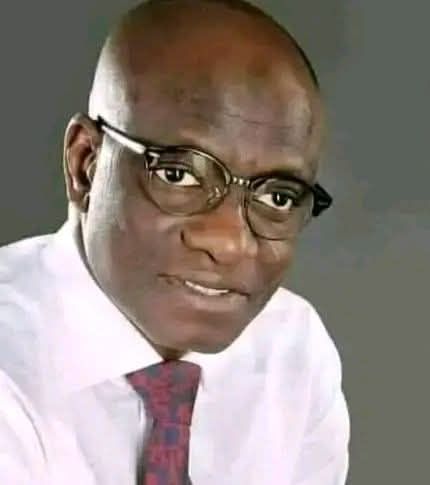
Since Senator Wadada expressed his interest in contesting for the governorship of Nasarawa State in 2027, various criticisms have been leveled against him. Some argue that he is not an indigene of Nasarawa State, while others say why Muslims always, suggesting that the state should not continue electing Muslim governors. Some are also asserting that an HND is not sufficient to qualify him for the governorship, or something to that effect.
All these baseless and childish arguments are unfounded. Even his staunchest critics would acknowledge that Senator Wadada is fully qualified to aspire to any political position in Nigeria. Many things have been said and written about him regarding his Islamic faith and ethnic background, but these sentiments have not had any impact, as the people of Nasarawa are enlightened and educated enough to see through the distractions. They believe that what matters in a leader is not their religious or ethnic or academic background, but rather their past achievements and what they are capable of achieving now and in the future. The history of Senator Wadada is filled with numerous instances where the interests of the people were at the forefront of his actions and decisions. While time and space may not allow us to list all of them here, it is enough to say that his achievements during his time in the House of Representatives alone are sufficient to qualify him for any office in Nigeria. This is especially true considering the impactful work he continues to do in the Senate, particularly through his interventions across various sectors of the state’s economy. On issue of academic qualifications, the section of the Nigerian Constitution that addresses academic qualifications for elective office is Section 131. This section outlines the requirements for a person to be eligible to run for the office of President in Nigeria.
For example: Section 131(b) states that a candidate for the office of the President must have been educated to at least the secondary school level. For the office of Governor, the qualifications are outlined in Section 177 of the Constitution.
Similarly, for the National Assembly, the qualifications are in Section 65 (for the Senate) and Section 106 (for the House of Representatives).
These sections detail the educational and other requirements for candidates for various elective positions in Nigeria.
In this context, it is overly simplistic to focus on academic qualifications, as Senator Wadada is undeniably qualified. After all, HND qualifications are highly respected globally, particularly due to their emphasis on practical knowledge.
All these sentiments however do not contribute to the advancement of our democracy; instead, they serve only to divide us as a people. Politics is a noble pursuit that requires individuals of integrity to engage in it. For a long time, Senator Wadada has stated that his motivation for entering politics was to advance the welfare of humanity, not for personal gain. This explains why his focus has always been on the well-being of the people. Stirring religious, ethnic, and academic tensions is merely a distraction—one that Senator Wadada has consciously set aside in order to move forward with his mission.

