
By Our Reporter
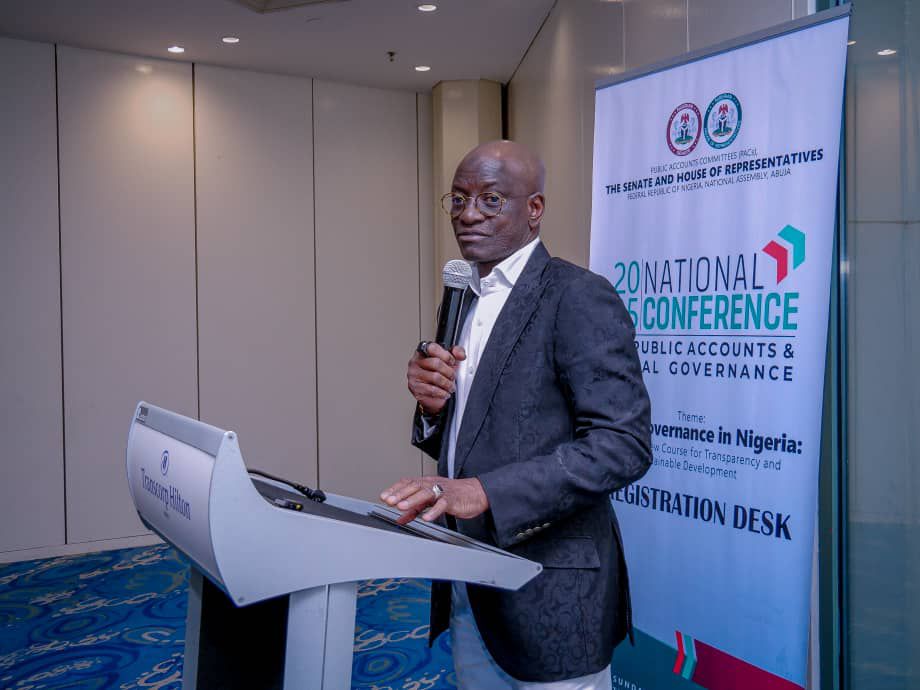
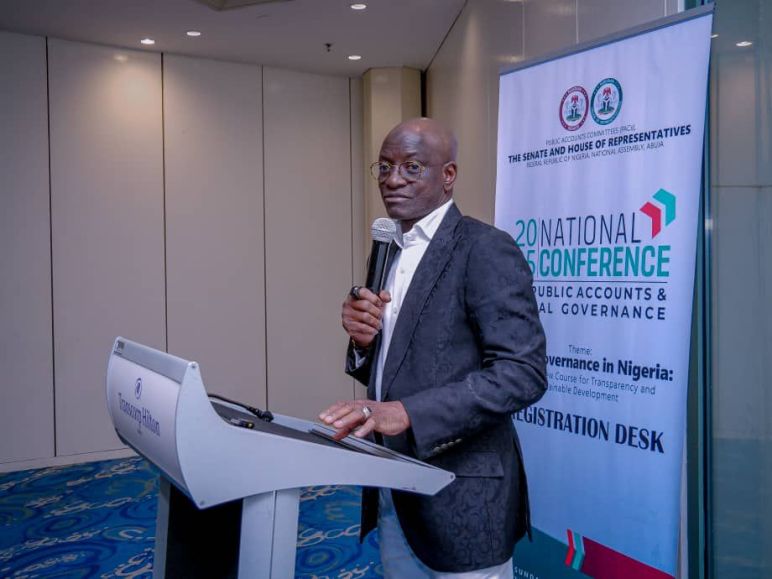
In a year where Nigeria’s fiscal integrity stands at a crossroads, Senator Ahmed Wadada Aliyu has emerged as a central figure in the nation’s drive toward financial transparency and accountability. As Chairman of the Senate Public Accounts Committee (SPAC) and senator representing Nasarawa West Senatorial District, his leadership is resonating powerfully at the 2025 National Conference on Public Accounts and Fiscal Governance, currently underway at the Transcorp Hilton Hotel in Abuja.
Themed “Fiscal Governance in Nigeria: Charting a New Course for Transparency and Sustainable Development,” the three-day event has drawn lawmakers, economists, policy experts, and development partners from across Nigeria and beyond. The collective goal: to reshape how public funds are managed, audited, and accounted for in a time of mounting debt, revenue leaks, and persistent inefficiencies in government spending.
Senator Wadada’s prominent role at the conference reflects not only his position at the helm of one of the Senate’s most powerful oversight bodies, but also his steadfast commitment to reforming Nigeria’s public finance architecture. Since assuming leadership of SPAC in the 10th Senate, Wadada has consistently pushed for a data-driven, transparent approach to public auditing—insisting on strict accountability across all Ministries, Departments, and Agencies (MDAs).
“It is not enough to pass budgets,” he noted during a breakout session. “We must ensure those budgets are implemented with integrity, that expenditures are tracked in real time, and that public officers are held responsible for every naira spent.”
The conference comes at a pivotal moment. Nigeria’s fiscal system remains plagued by challenges—ranging from poor budget execution and delayed project delivery to underreported revenues and lax enforcement of audit findings. In response, the sessions have tackled critical reform areas including:
- Strengthening the independence and operational capacity of the Office of the Auditor-General for the Federation
- Enhancing institutional support for public audit bodies
- Promoting open budgeting and citizen participation in fiscal planning
- Deploying technology to monitor public expenditure in real time
- Improving coordination between federal and state fiscal agencies
- Enforcing sanctions on officials and agencies found non-compliant
Senator Wadada’s remarks have struck a chord among attendees, especially his call for the modernization of Nigeria’s public auditing systems in line with global standards. Yet, he maintains that reforms must remain sensitive to Nigeria’s unique institutional, political, and cultural contexts.
“We must build a system that works for Nigeria,” he said, “not just one that looks good on paper but fails in practice.”
Beyond individual reforms, a key focus of the conference is fostering greater synergy between the Public Accounts Committees of both the Senate and House of Representatives. Stakeholders believe that a unified legislative approach could strengthen oversight, reduce duplication of efforts, and send a clear message that fiscal recklessness will no longer be tolerated.
As the conference enters its final day, there is growing anticipation that the policy recommendations emerging from discussions will form the backbone of the 2026 fiscal policy framework. If implemented, these proposals—anchored by Senator Wadada’s vision—could significantly enhance Nigeria’s financial credibility, both domestically and internationally.
In a country where public trust in government spending remains fragile, the 2025 National Conference on Public Accounts and Fiscal Governance represents more than just policy talk. It signals a collective recognition that transparency is not a luxury—it is a necessity. And at the heart of that message is Senator Ahmed Wadada: a lawmaker determined to ensure that Nigeria’s fiscal future is one of integrity, sustainability, and citizen empowerment.

