
By Mohammed Kilema, Lafia
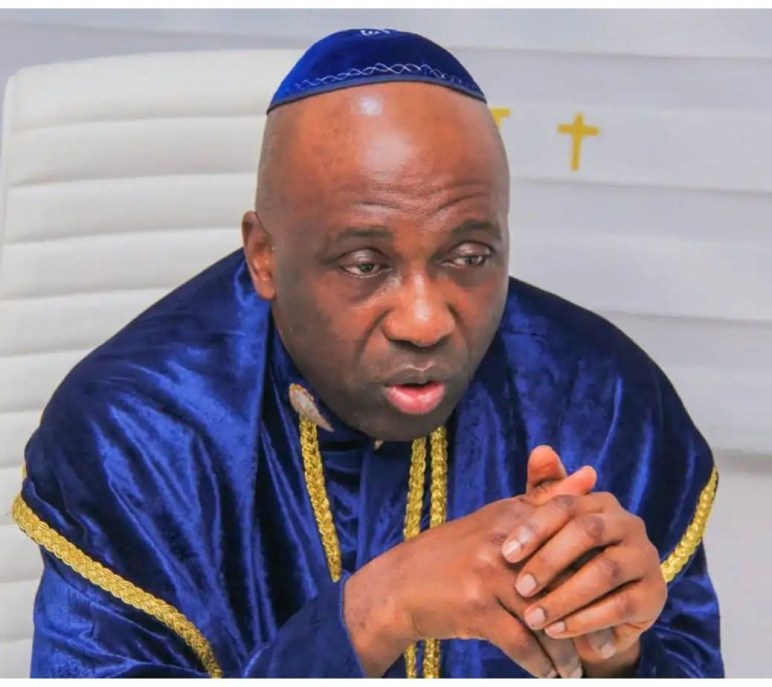
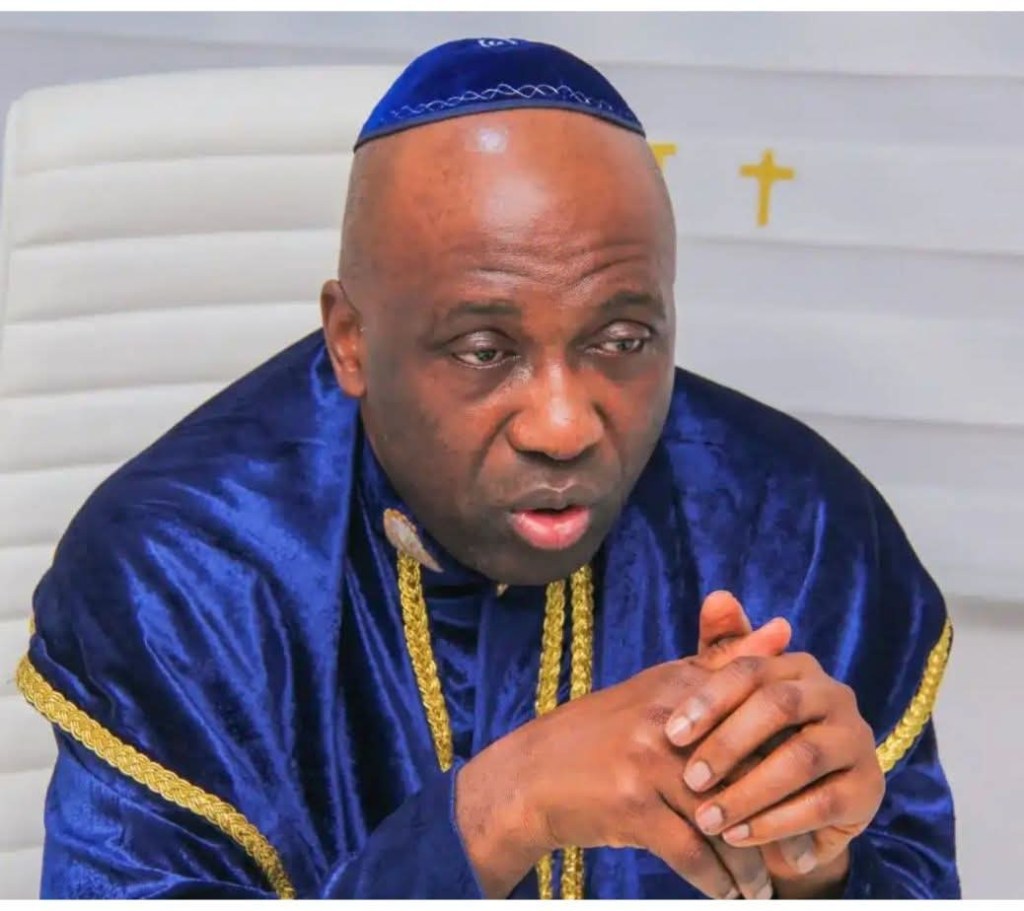
The attempt to elevate the recent political prophecy of Primate Elijah Babatunde Ayodele to a position of determinative authority over the forthcoming gubernatorial contest in Nasarawa State calls for a firm, reasoned, and unapologetically clear counter-position. While due respect must be accorded to his spiritual office and humanitarian contributions, the conflation of prophetic utterance with democratic inevitability is both intellectually untenable and politically misleading.
At the heart of this matter lies a fundamental truth: the words of Primate Ayodele are not divine but human, and therefore not sacrosanct. They are subject to the same limitations, fallibilities, and contextual uncertainties that define all human pronouncements. To elevate them to the status of unquestionable destiny is to abandon reason for fatalism, and civic responsibility for passive acceptance. Democracy, by its very nature, is an arena of contestation, persuasion, and collective choice—not prophetic imposition.
The assertion that Mohammed Abubakar Adamu, a former Inspector General of Police, is destined to become the next Governor of Nasarawa State—and that any deviation from this outcome automatically signals the defeat of the APC—is, at best, a speculative projection dressed in the garb of certainty. Political history, both within Nigeria and globally, is replete with confident predictions that have failed to materialize. Indeed, even within the prophetic tradition itself, there are numerous instances where declarations did not translate into reality. Who, then, is the mortal that can guarantee that this particular prophecy will come to pass? As the Americans would say, “ain’t nobody.”
It is important to interrogate the track record of such prophetic interventions in political affairs. Over the years, Primate Ayodele has made several high-profile predictions regarding elections, governance, and global events, some of which have not come to fruition. While his followers may highlight instances of perceived accuracy, a balanced assessment reveals a pattern of mixed outcomes. This inconsistency underscores the need for caution in assigning primacy to any single prophecy, especially in matters as consequential as the leadership of a state.
More critically, the political landscape of Nasarawa State today is far too dynamic, complex, and competitive to be reduced to a singular prophetic narrative. While Mohammed Abubakar Adamu is undoubtedly a strong contender, it would be a grave misreading of the current realities to suggest that he stands unchallenged or preordained. On the contrary, stronger contenders have emerged—figures whose political capital, grassroots connection, and cross-regional appeal constitute what can only be described as a political tsunami.
Foremost among these is Ahmed Aliyu Wadada, a man whose political trajectory, record of service, and widespread acceptability have positioned him as the candidate to beat. Senator Wadada’s influence is not confined to a single constituency or senatorial district; rather, it spans the entire breadth of Nasarawa State. From Nasarawa North to Nasarawa South and Nasarawa West, his name resonates with a rare blend of familiarity, trust, and admiration.
This is not accidental. It is the product of years of consistent engagement, tangible contributions, and a leadership style that prioritizes inclusivity and development. His record of attainment speaks volumes—projects executed, lives touched, and communities uplifted. In an era where political rhetoric often outpaces delivery, Wadada stands out as a figure whose accomplishments provide a solid foundation for higher responsibility.
Equally significant is his acceptability across diverse demographic and political divides. In a state characterized by ethnic plurality and political diversity, such broad-based support is not merely an advantage—it is a decisive factor. Wadada’s appeal cuts across age groups, professional classes, and traditional boundaries, creating a coalition of support that is both deep and expansive. It is this organic, people-driven momentum that renders any attempt to predetermine the outcome through prophecy not only premature but fundamentally flawed.
To liken his political strength to an “Armageddon” may appear dramatic, but it captures the scale and intensity of the movement that has crystallized around him. It is a force that cannot be easily dismissed or overshadowed by external declarations. Indeed, it is engraved in the hearts of the good people of Nasarawa State—a testament to the enduring connection between the candidate and the electorate.
In this context, the prophecy in question begins to resemble what may be described as a “talk show postulation”—a statement lacking the empirical grounding and analytical rigor required to withstand scrutiny. It is a projection that, while attention-grabbing, does not adequately account for the on-the-ground realities that ultimately determine electoral outcomes. And just as the deep gullies—“Gwangwaro”—of Lafia had fizzled away, so too will this prophecy be eroded by the steady force of political reality.
It must also be emphasized that the health of Nigeria’s democracy depends on the ability of its citizens to think critically, question assumptions, and make informed choices. The uncritical acceptance of prophetic declarations in political matters risks undermining this process. It shifts the focus from performance to prediction, from accountability to acquiescence. This is a path that must be firmly resisted.
None of this is to diminish the personal faith of individuals or the role of spiritual leaders in society. Faith remains a vital component of the Nigerian experience, offering guidance, hope, and moral direction. However, its application must be carefully distinguished from the mechanics of governance and electoral politics. The two operate in different domains, and their conflation can lead to confusion and misjudgment.
As the political season unfolds, supporters of Ahmed Aliyu Wadada are therefore urged to remain steadfast, focused, and resolutely optimistic. The path to victory lies not in prophetic endorsement but in sustained engagement, strategic organization, and unwavering belief in the candidate’s vision and capacity. It is through these means that electoral success is achieved and sustained.

