
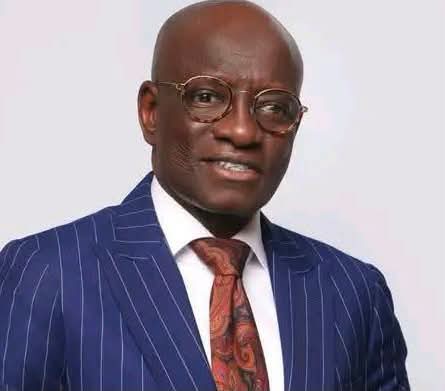
By Rayyanu Bala
When Senator Ahmed Wadada Aliyu last week met with elders of the Migili nation in Lafia, he asked a simple yet thought-provoking question: “What’s my fault? Is it because I have amplified and promoted the name of Nasarawa?”
For many people who have followed his political journey, that question deserves an equally straightforward response: Distinguished Senator, your record speaks for itself.
Of course, politics naturally comes with criticism, disagreements, and differing opinions. Every politician must face scrutiny, and that is healthy for democracy. However, when assessing a leader, the discussion should always return to one important question: What has the person contributed to the people and the state?
Looking at Senator Wadada’s political career, one can confidently say that promoting the interests of Nasarawa State has remained one of his defining priorities.
Even before becoming a senator, during his tenure in the House of Representatives, he consistently projected the state’s image at the national level. He sponsored several bills and legislative initiatives aimed at improving governance and expanding opportunities for the people of Nasarawa state. Those efforts helped establish him as a lawmaker more interested in delivering tangible results than making noise.
Today, in the Senate, Senator Wadada’s commitment has only grown stronger. His legislative activities, oversight functions, and interventions are all part of the public record that anyone can examine. Whether one agrees with him or not, it is difficult to ignore the visibility he has brought to Nasarawa State on the national stage.
Beyond legislation, Senator Wadada has also demonstrated the value of relationships. In politics, connections matter most when they are used to deliver meaningful benefits to the people. Indeed, many point to several development initiatives, federal engagements, and federal government presence in the state that he has personally influenced.
Perhaps one of the most significant recent examples is the approval granted by President Bola Ahmed Tinubu for the establishment of Federal University of Mining, Engineering and Technology in Nasarawa State. Such an institution could become a major catalyst for education, research, job creation, and economic growth, especially considering the state’s enormous mineral resources.
Equally noteworthy is his role in securing an important federal appointment for an indigene of Nasarawa State, a position that, according to sources, had never before been occupied by someone from the state. This significant appointment is expected to make headlines soon. Achievements like these do not only benefit individuals; they also strengthen the state’s representation at the national level.
However, criticism should always be balanced with fairness. Where there are genuine accomplishments, they deserve acknowledgment, just as shortcomings deserve scrutiny.
So, when Senator Wadada asks, “What’s my fault?” many would argue that his greatest “fault” has been his refusing to stop promoting the name of Nasarawa State on the national stage.
Ultimately, history will judge every public servant not by political rhetoric but by impact. If the projects, institutions, and opportunities associated with Senator Ahmed Wadada Aliyu continue to translate into lasting development for Nasarawa State, then his legacy will be determined not by the on going campaigns of the moment but by the enduring benefits that the people of Nasarawa State continue to enjoy.

