


By Rayyanu Bala
By every standard, political opposition is a legitimate part of democracy. However, opposition should be guided by facts, fairness, constructive criticism and a genuine concern for the people, not bitterness, personal vendetta or an unhealthy obsession with a particular individual.
Having carefully read the write-up titled “2027: Wadada, Ayida-Kena and the Politics of Being Clever by Half,” one cannot help but wonder whether the writer is genuinely concerned about the development of Afo land or simply determined to discredit Senator Ahmed Wadada Aliyu at all costs.
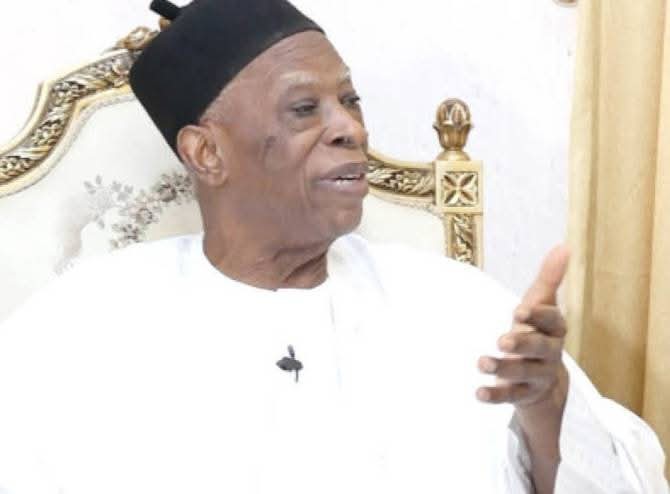
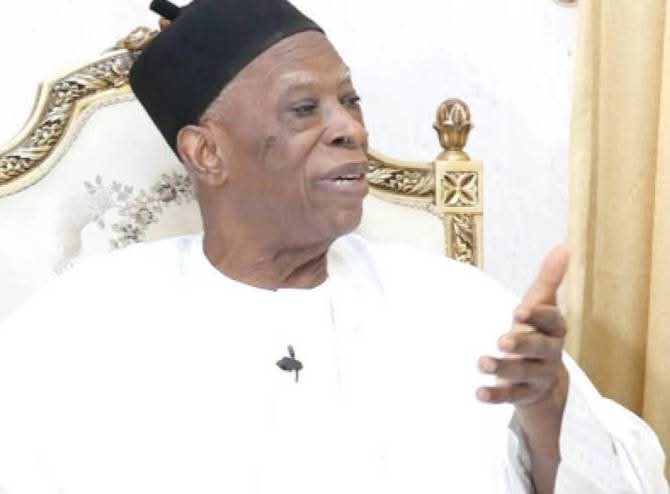
The entire article is woven around a narrative that portrays Wadada as a political opportunist, yet the writer have conveniently forgotten that Wadada is neither the first senator to represent Afo land at the red chamber nor the first person to occupy political position in the whole of Nasarawa West. Before Wadada, there were other senators, including an illustrious son of Afo land, Senator Abdullahi Adamu and late Senator Abubakar Sodangi.
The pertinent question, therefore, is this: Did the problems of Afo land begin when Senator Ahmed Wadada Aliyu became senator?
If the roads were bad, the people were neglected, and the constituency faced developmental challenges before Wadada’s emergence, why has the writer not demonstrated the same level of outrage against previous representatives? Why is the historical failure of representation suddenly being reduced to the responsibility of one man?
Is it fair to hold Wadada solely responsible for every developmental challenge confronting Afo land while giving previous senators a free pass? Accountability should not be selective. If we must assess political officeholders, let us assess them all by the same standards.
More disturbing is the writer’s inability to identify anything positive about Senator Wadada. Does this mean that in all the years of Wadada’s public service, there is absolutely nothing worthy of acknowledgment? Even the strongest critics should be able to distinguish between genuine shortcomings and political achievements. Criticism loses its credibility when it becomes a predetermined mission to condemn everything about a particular person.
Let us also understand that politics is not played through bitterness, character assassination or the deliberate misrepresentation of every action taken by an opponent. Politics is about ideas, engagement, persuasion, performance and the ability to convince the electorate that one has a better alternative.
If Wadada is grading the Onda-Kana-Apawu road, the writer is free to question the timing, quality, scope and sustainability of the project. Those are legitimate issues. But to automatically describe every intervention as an insult to the sensibilities of the people is to suggest that nothing Wadada does can ever be good enough.
What exactly does the writer want? Should Wadada abandon every effort towards constituency development simply because the 2027 election is approaching? We must not allow political hostility to become an excuse for rejecting every intervention, irrespective of its value to the people.
There is also a fundamental difference between constructive opposition and opposition for its own sake. A good opposition does not merely attack; it offers alternatives. It does not manufacture public anger; it raises legitimate concerns. It does not rewrite history to suit a political narrative; it confronts the facts as they are.
The writer’s obsession with Senator Wadada raises a more important question: What exactly does this relentless criticism stand to achieve for Afo land? Will the criticisms construct roads? Will it improve our schools? Will it create opportunities for our youths? Will it address our developmental challenges?
Afo land needs development, not political hostility. Our people deserve political environment where genuine efforts are acknowledged and shortcomings are addressed with facts.
Senator Ahmed Wadada Aliyu is not above criticism, and nobody should suggest otherwise. But neither should he be subjected to a standard that was never applied to those who occupied the same office before him.
As we approach 2027, let us learn how to play opposition politics with maturity. If Wadada has failed in certain areas, provide verifiable evidence and demand answers.
But please, let us stop dressing personal animosity in the costume of folklore and presenting political bitterness as concern for the masses.
Our collective interest must always come before individual political interests.
2027 should be about who can serve Afo land better, not who can tell the most entertaining story about who should not serve Afo land.

