
By Rayyanu Bala
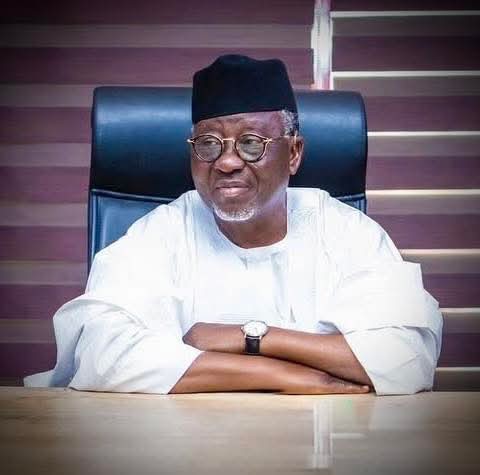
To be fair, Senator Umaru Tanko Al-Makura has undoubtedly made his mark in the history of Nasarawa State. His contributions to the growth of the APC in the state cannot be ignored. Many of the political figures who occupy influential positions within the party today are, in one way or another, products of the political structure he helped build. Whether we talk about Governor Abdullahi Sule, Aliyu Bello, or several other prominent APC stakeholders, Al-Makura played a significant role in bringing many of them into political prominence.
However, politics is not just about history, loyalty, and who brought whom into the political limelight. It is also about understanding the changing dynamics of power, respecting institutions, and knowing when to allow the political process to take its natural course.
For the past seven years of Governor Abdullahi Sule’s administration, Senator Al-Makura has continued to enjoy considerable respect, recognition, and patronage. This is quite different from what we have witnessed in some other states, where former governors are often pushed aside or completely sidelined by their successors. In Nasarawa, that has largely not been the case.
Perhaps the real disagreement between Governor Sule and Senator Al-Makura is not necessarily about personal respect, recognition, or patronage. It is more about succession in 2027.
From the unfolding situation, one could argue that Senator Al-Makura expected Governor Sule, as he approaches the end of his second term, to consult him on who should succeed him. In other words, the expectation may have been that the governor would approach him, acknowledge his political standing, and seek his opinion on who should be presented as the next APC governorship candidate.
But is that how politics works?
With due respect to Senator Al-Makura, there is hardly any political system where an incumbent governor is expected to surrender his constitutional and political prerogatives to a predecessor simply because the predecessor played a major role in his emergence. Mentorship is important, but it does not amount to permanent ownership.
A former governor may have helped build a political structure, supported the emergence of a successor, and contributed immensely to his success. However, once the successor assumes office, the dynamics of leadership naturally change. The incumbent governor develops his own political relationships, interests, loyalists, and vision for the future of the party and the state.
This is the reality of politics, and everyone, regardless of political status, must learn to appreciate it.
Right from the outset, I would have expected Senator Al-Makura, considering his experience and understanding of the enormous powers attached to the office of an executive governor, to approach the situation with greater maturity and restraint. He understands better than most that authority comes with the office and that, no matter how influential a predecessor may be, he cannot expect his successor to operate indefinitely under his shadow.
As things stand now, unfortunately, what should have been managed through dialogue and mutual understanding has developed into an unnecessary confrontation between them.
In many ways, Governor Sule’s patience and willingness to accommodate different interests may have been interpreted as a sign of weakness or an opportunity to continually test the limits of his authority. But patience should not be mistaken for helplessness. Every leader has a threshold, and when that threshold is crossed, the consequences can be difficult to manage.
The disruption of the APC presidential campaign rally in Lafia was particularly unfortunate. Whatever grievances or disagreements Senator Al-Makura has with Governor Sule, the rally incident does little to strengthen the APC’s image or demonstrate political maturity. Rather, the incident raises questions about respect for the party as well as respect for the office of the governor and above all respect for the office of vice president.
If Senator Al-Makura had grievances, there were better ways to express them. Disagreements are normal, even among political allies, but the manner in which such disagreements are handled determines who gains public sympathy and who loses political ground. In this case, Governor Sule gains public sympathy, while Senator Al-Makura loses ground both within and outside the state, taking into consideration the unfortunate rally incident.
In my opinion, the Lafia incident was a serious political miscalculation on the part of Senator Al-Makura. The incident risks turning what could have remained a manageable disagreement into a much bigger political crisis. It also creates an impression that personal expectations are being placed above the collective interests of the party as well as those of the state.
Senator Al-Makura deserves respect for his contributions to Nasarawa politics. But respect must also be mutual. The governor equally deserves the freedom to exercise the authority entrusted to him by the people without being subjected to unrealistic expectations from anyone.
The APC in Nasarawa State belongs to its members and supporters, not to any individual, regardless of how instrumental that individual may have been in building the party.
The time has come for all of us in Nasarawa State to understand that political influence is not permanent and that leadership succession cannot be reduced to an obligation to satisfy the wishes of a predecessor.
Senator Al-Makura has made his mark. Governor Sule is also entitled to make his own mark. Period.

