
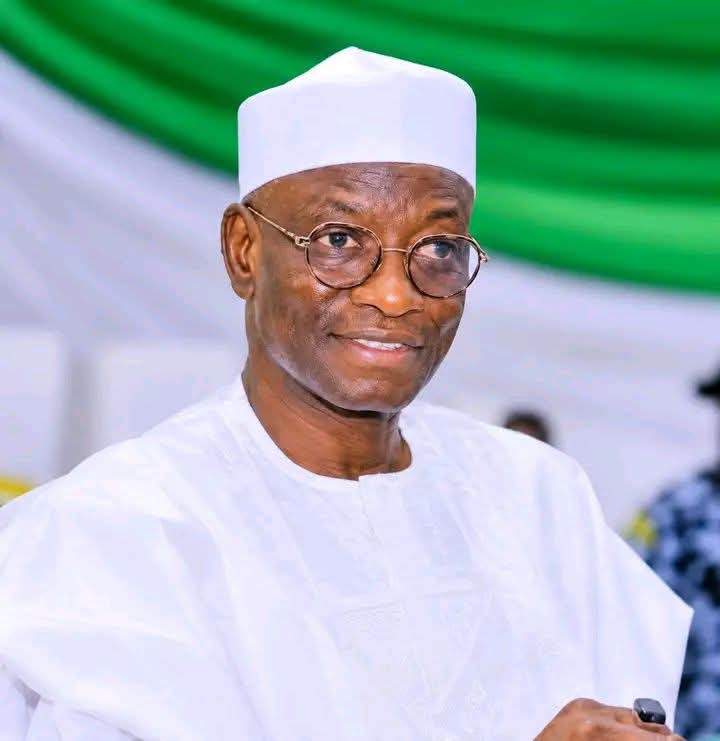
By Rayyanu Bala
Senator Ahmed Wadada Aliyu is one of those personalities who hardly needs an introduction, at least among the people of Nasarawa State and beyond. Wherever you go, his name rings a bell. Some know him as a politician of great repute, others as a philanthropist whose generosity knows no bounds, while many associate him with his wide network of relationships and connections, extending beyond Nigeria’s borders.
But beyond the politics, philanthropy, influence and connections, there is something about Wadada that I find particularly interesting: his personality and the way he relates with people.
His entry into partisan politics has, in many ways, revealed another side of him. Despite his political standing, influence and social status, he comes across as someone who does not consider himself above others. Those who are familiar with his everyday interactions often describe him as an easy-going person who makes people feel comfortable around him. He does not appear to be the kind of person who allows wealth, age, ethnicity, religion or social standing to determine how he treats others.
That, to me, is one of his most admirable qualities.
We live in a society where people sometimes allow political differences, personal disagreements and social status to get in the way of ordinary human relationships. It is not uncommon to see people hold grudges simply because of a disagreement that could have been resolved through a simple conversation. But one thing people often say about Wadada is that once an issue is settled, he moves on. He does not allow yesterday’s disagreement to become tomorrow’s problem.
I think this is an important quality, particularly for anyone who aspires to occupy a position of
leadership in a diverse society like Nasarawa State.
Nasarawa is a state of many identities. We have different ethnic groups, religious affiliations, traditions, political interests and socioeconomic backgrounds. Our differences are real, and they are part of what makes the state what it is. But managing such diversity requires a politician of Wadada’s calibre. It requires someone with Wadada’s patience, tolerance, emotional intelligence and, above all, a genuine appreciation of the dignity of every citizen.
This is where I believe Wadada’s human qualities deserve our votes in 2027.
Wadada understands that Nasarawa does not belong to one ethnic group, one religion, one political party or one social class. It belongs to all of us. The elderly deserve respect, the young deserve encouragement, the wealthy deserve the same human consideration as the less privileged, and people from different religious and cultural backgrounds deserve to feel that they belong. That is the kind of leadership Wadada is poised to provide.
Wadada is someone who views leadership not just in terms of the office one occupies or the authority that comes with it, but also from the perspective of service to the people. Can the ordinary man approach you without fear? Can someone who disagrees with you still have a cordial relationship with you? Can people from different backgrounds see you as someone who respects their place in society? This is the perspective that defines leadership.
Of course, no individual is without shortcomings, and leadership will always attract different opinions. But there are certain personal qualities that should be encouraged and celebrated wherever they are found.
Accessibility, humility, tolerance, generosity and the ability to accommodate opposing views are among the qualities that Wadada possesses.
For a state like Nasarawa, Wadada’s attributes are not just desirable; they are necessary. We need people who understand that unity does not mean everyone must think alike, and that peaceful coexistence does not require us to abandon our differences. Rather, it requires us to recognise those differences and still find common ground.
Wadada’s dream is to see a state where nobody feels excluded because of their ethnicity, religion, political affiliation or economic circumstances. He wants to see a state where people can disagree politically without becoming enemies and where every citizen feels respected, heard and valued.
That is why, when I think of Senator Ahmed Wadada Aliyu, I look beyond his politics or public profile. I look at the human qualities that make it possible for people from different walks of life to relate with him.
For me, the Wadada I know is not just a politician or a philanthropist; he is a man whose approach to human relationships offers a useful lesson in tolerance, humility and the importance of treating people with dignity.
And if there is one thing Nasarawa needs more than ever today, it is the kind of leadership Wadada represents: leadership that values people, embraces our diversity, and ensures that everyone feels seen, included, and a true sense of belonging.

