By Rayyanu Bala
Politics in Nasarawa State has a way of unfolding in layers—some public, some subtle, and others wrapped in a manner that only seasoned observers can fully appreciate. The recent conversations surrounding Governor Sule’s endorsement of Senator Ahmed Wadada Aliyu for the 2027 governorship race are a perfect example.
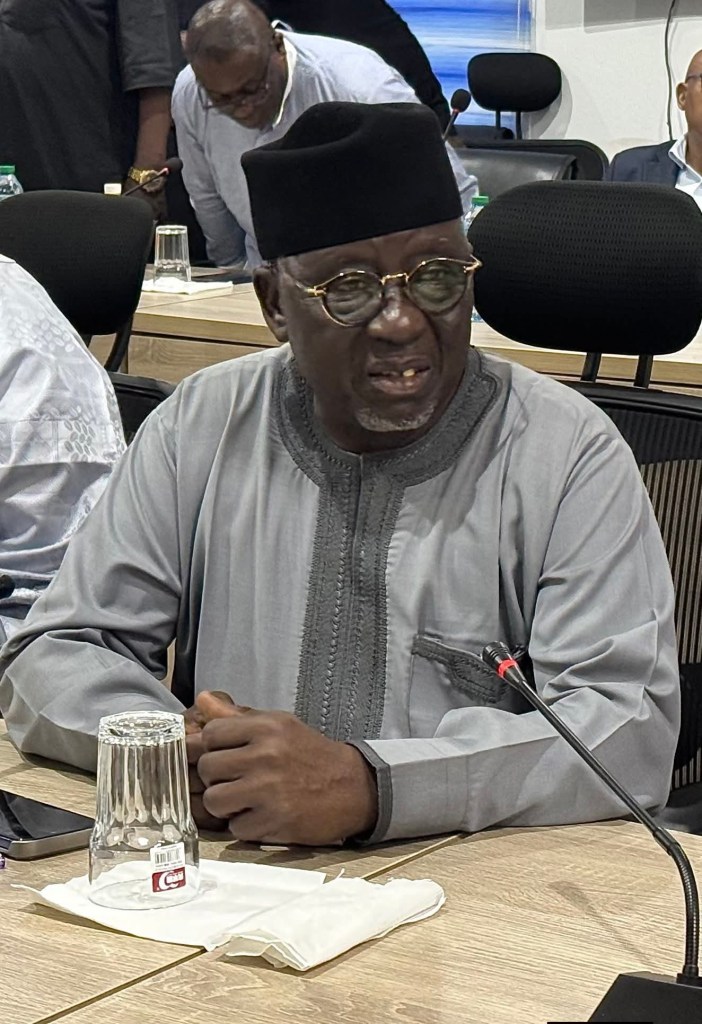
What happened in Wamba during the condolence visit over the demise of the APC State Deputy Chairman, late Alhaji Yakubu Barde, at the palace of the Oriye Rindere, Justice Lawal Musa Nagogo, might appear ordinary at first glance—just a gathering of political heavyweights paying their respects. But in reality, it revealed far more than mere sympathy. It exposed underlying alignments and, perhaps, quiet decisions already taking shape.
At that same palace, two prominent figures—Umaru Tanko Al-Makura and Ahmed Wadada Aliyu found themselves in a moment that has ought to have sparked intense political interpretation. It wasn’t merely their presence at the same venue for the same purpose that caught attention, but what was said there. Video clips of the encounter were widely circulated on social media.
Al-Makura’s remarks at the palace were not offhand. He deliberately walked down memory lane, recalling how the Oriye Rindere had once offered prayers for him during his own political battle against Aliyu Akwe. According to him, those prayers were answered, culminating in his emergence as governor in 2011. That alone carried significant weight.
But then came the moment that has fueled the current debate, which some have deliberately and mischievously interpreted from a different angle. At the condolence visit, Al-Makura openly asked the same traditional ruler to extend similar prayers to Wadada to make him governor, just as he had prayed for him. In a political environment like Nigeria’s, where symbolism, endorsements, and spiritual undertones intersect, Al-Makura’s request was far from casual. It sounded very much like a passing of the torch.
So when Abdullahi Sule publicly endorsed Wadada, it raised eyebrows in some quarters, especially among supporters of Mohammed Abubakar Adamu. But here’s the uncomfortable question: was Sule’s endorsement really the starting point?
If anything, Al-Makura’s earlier words suggest that the process may have already been in motion, quietly, symbolically, and perhaps strategically. His appeal to the Oriye Rindere for prayers to Wadada wasn’t merely spiritual; in Nigerian politics, such gestures often double as endorsements in their own right.
This is why the outrage from Adamu’s camp feels somewhat selective. If endorsements are truly the issue, then the conversation should not begin with Governor Sule. It should go back to Wamba to that palace moment where Al-Makura effectively signaled his support for Wadada, wrapped in tradition and faith.
What we are seeing now in Governor Sule’s endorsement is simply the formalization of what had already been informally set in motion by Al-Makura.
Sule’s endorsement did not create the narrative—it just amplified it, laud and clear.
If supporters of the former IGP are to blame Governor Sule for endorsing Wadada, then they should first question Tanko Al-Makura for asking the Oriye Rindere to offer prayers for Wadada. And, in His infinite mercy, God answers prayers, through the processes we are now witnessing by Governor Sule’s endorsement of Senator Wadada.