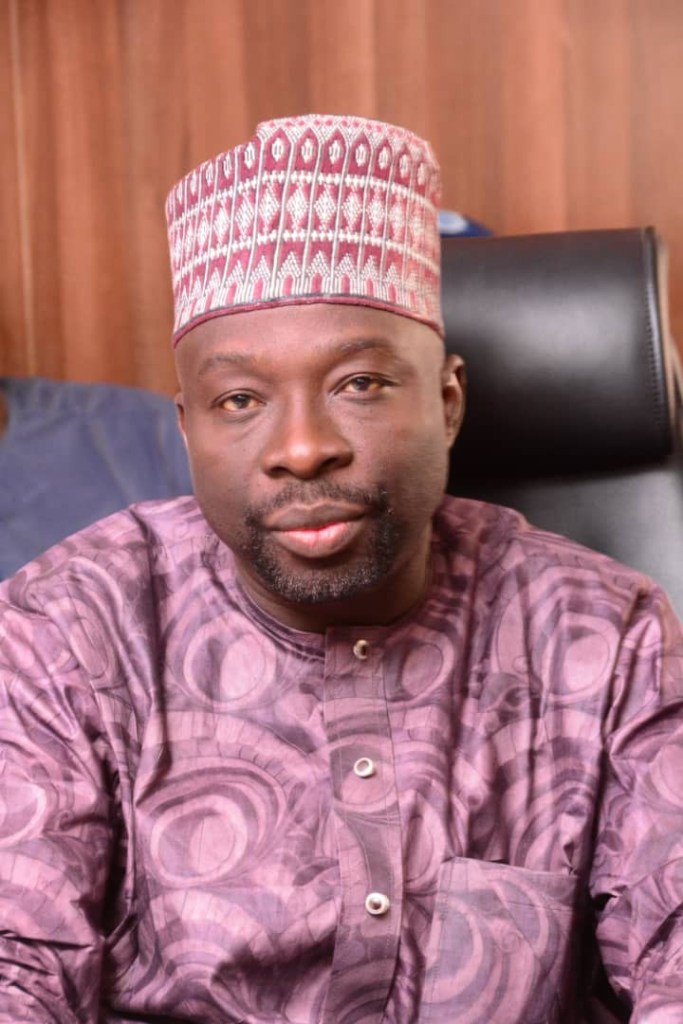
By Dr. Sulaiman Abdulwahab Sulaiman, CNA
The wise decision of Governor Abdullahi A. Sule to endorse Senator Ahmed Aliyu Wadada as his preferred aspirant for the 2027 governorship election received criticism from Umaru Tanko Al-Makura, whose remarks have since attracted widespread reactions and backlash from stakeholders and commentators. Many of these responses defended Governor A. A. Sule’s action on the grounds of political tradition, leadership prerogative and consistency.
Across these responses, several key arguments emerged.
Observers note that the practice of a sitting governor identifying a preferred successor is not new in Nasarawa politics. Senator Umaru Tanko Al-Makura himself endorsed Engineer Abdullahi A. Sule ahead of the 2019 election, just as Senator Abdullahi Adamu had earlier influenced the emergence of the late Alhaji Aliyu Akwe Doma. From this standpoint, Governor Sule’s action is seen as a continuation of an established political culture rather than a deviation from it.
Supporters of Governor A A Sule argue that his decision followed extensive consultations with stakeholders across the state and does not override democratic processes. They emphasize the clear distinction between a “preferred aspirant” and a “candidate,” noting that party primaries remain the ultimate mechanism for selecting the flag bearer.
A major issue raised in the debate is consistency. Critics argue that Senator Al-Makura’s current opposition to early endorsement appears contradictory to his own past actions. The concern is not only about timing, but about fairness, credibility and consistency in political judgment.
The presentation of Senator Wadada to President Bola Ahmed Tinubu (GCFR) is also defended as a demonstration of party discipline and respect for leadership, rather than an irregular political move. It is viewed as proper political communication within the structure of the ruling party.
Across the board, there is a strong call for unity within the APC in Nasarawa State. Stakeholders warn that internal divisions and public disagreements could weaken the party’s chances ahead of the 2027 elections. In addition, many argue that the recent posture of Senator Umaru Tanko Al-Makura could create disaffection among party members and deepen internal cracks, potentially leading to disunity within the party. Given his political standing and experience, such a development is widely considered unexpected and capable of undermining cohesion at a critical period for the party.
A PERSONAL REFLECTION: LESSONS FROM 2018
Beyond public commentary, my firsthand experience from the 2018 succession process offers deeper insight into the current controversy.
At the time, as preparations intensified for the 2019 governorship election, members of the government – including cabinet officials – sought clarity from the then Governor Umaru Tanko Al-Makura regarding his preferred aspirant. His response was clear: he had no candidate.
On that basis, stakeholders aligned themselves with different aspirants. Some supported Alhaji Dauda Kigbu, others backed Architect Shehu Tukur, Hon Silas Agara and Hon. Danladi Evulanza among others. Even prominent figures such as Former Governor, Senator Abdullahi Adamu supported alternative aspirant, reflecting a widely accepted understanding that “everyone was on his own.”
In line with this development, on 17th May 2018, I personally conveyed my position in these words to Governor Al-Makura:
“I wish to formally inform you that I have decided to support the political project of Alhaji Dauda Kigbu for the 2019 elections. This decision became necessary following your statement that you had no preferred candidate and that everyone was therefore on his own in deciding who to support as successor to the Governor of Nasarawa State in 2019.”
However, after these alignments had already been established, the situation changed significantly. Governor Al-Makura later declared Engineer Abdullahi A. Sule as his preferred aspirant.
This late shift created considerable political tension. Many stakeholders who had already committed to other aspirants found it difficult to reverse their positions. The resulting disagreements led to serious internal friction, most notably between Governor Al-Makura and Senator Abdullahi Adamu.
The situation escalated to the point where investigative measures were reportedly initiated, including investigations into projects such as the sale of Keffi Hotel, the Farin Ruwa Project and Lafia Investment Hotel by Governor Al-Makura against Senator Abdullahi Adamu. Political tensions further deepened when attempts were made to challenge Senator Adamu’s political position. A commissioner was directed to purchase the Senate expression of interest form for the senatorial seat occupied by Senator Abdullahi Adamu. Ultimately, it took the intervention of the presidency to restore calm and bring the situation under control.
Against this backdrop, a critical question arises:
If it was considered acceptable for Former Governor Umaru Tanko Al-Makura to declare a preferred aspirant ahead of the 2019 governorship election, why should a similar action by Governor Abdullahi A. Sule for the 2027 election now be viewed as inappropriate by the same Senator Almakura? Sen. Al-Makura Forgets History So Quickly
Conclusion.
The reactions trailing Senator Al-Makura’s criticism of Governor Sule’s preferred aspirant have exposed clear contradictions in political reasoning, especially when measured against established precedents within the state’s succession politics.
What is increasingly evident is about the person – Senator Ahmed Aliyu Wadada – that the former. Senator doesn’t want to be “anointed aspirant” later APC candidate and subsequently governor of Nasarawa State.
The attempt to now question a process that mirrors earlier political decisions in the state raises serious concerns about selective memory and double standards.
As the 2027 elections draw closer, stakeholders must rise above selective criticism and political convenience. Anything short of consistency and sincerity in judgment risks deepening internal fault lines within the party and weakening the very structure needed for electoral success.
The APC in Nasarawa State cannot afford the luxury of internal contradictions disguised as principle.
Dr. Sulaiman Abdulwahab Sulaiman, CNA
FACSA (USA). FCIFCN. FCIM. FICAN. FICEN
Former Executive Secretary, Nasarawa State Scholarship Board
19th April, 2026