
By Rayyanu Bala
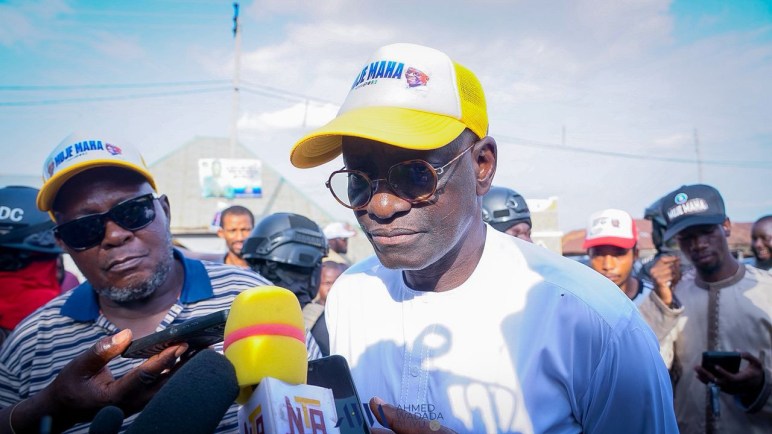
Senator Ahmed Wadada Aliyu’s remarks during his thank-you visit to Governor Abdullahi Sule at the Government House last Tuesday, where he appealed to former Inspector General of Police Mohammed Adamu to emulate his experience in party politics, are worthy of note.
Wadada’s appeal to the former IGP carried a deeper message about loyalty, patience, and maturity in democratic politics. Senator Wadada is indeed a shining example of a politician who values party stability above personal disappointment. He has demonstrated this trait on many occasions in the past.
When in 2015 he contested for the Nasarawa West senatorial seat against Abdullahi Adamu and lost, he took the matter to court. All indications pointed to the possibility of him winning the case, but some prominent individuals in the state appealed to him to withdraw the suit against Abdullahi Adamu, and he obliged unconditionally.
Again, when he contested for governor against Engr. Abdullahi Sule in 2019 and lost at the primaries, he accepted defeat and even served as chairman of Sule’s campaign council. In 2023, he attempted to contest for the Senate once more, but after sensing some irregularities, he refused to participate in the primaries, defected to the SDP, and eventually won the election.
Wadada has never contested in a primary election, lost, and then defected afterward. This is the hallmark of a politician who understands the dynamics of politics. One cannot accept all the conditions and guidelines of a primary election and, after losing, defect to another party. Such behaviour does not reflect good sportsmanship.
By reminding the former IGP that he had been “in the terrain of politics before him,” Wadada was not boasting about seniority. Rather, he was making a case for political experience as a teacher of patience and endurance. According to him, true leadership is not tested only in moments of victory, but also in times of defeat.
His reference to how he handled his own political setback between 2018 and 2019 was particularly significant. Instead of abandoning the APC after conceding defeat, Wadada submitted himself to the party and eventually led the campaign structure that helped Governor Abdullahi Sule emerge victorious. That decision strengthened both the party and the state.
The underlying message to Mohammed Adamu is simple: politics is bigger than individual ambition. If every disappointed aspirant chooses defection as the first option, political parties will continue to weaken internally, while governance suffers from unnecessary divisions.
Interestingly, Wadada’s position becomes even stronger when viewed alongside the conduct of another retired police chief, former IGP Usman Alkali, in Yobe State. Alkali also contested for the governorship ticket but lost at the primaries. Yet, unlike many politicians who immediately seek refuge in opposition parties after defeat, he remained within the fold of his party. His decision demonstrated discipline, loyalty, and faith in the political process.
In many ways, that example reinforces Wadada’s argument. Politics requires emotional control and long-term thinking. Just like a Hausa man will say: “Gobe ya fi baya yawa,” loosely meaning that tomorrow’s opportunities are greater than rash reactions, fits perfectly into this conversation. Political veterans understand that today’s setback can become tomorrow’s opportunity. Defection driven by anger may create temporary headlines, but it hardly builds enduring political relevance.
Wadada’s comments also touch on a larger issue confronting Nigerian politics today: the absence of consistency and commitment. Too often, politicians move from one party to another not because of policy differences, but because their personal ambitions were not realised. Such actions made people become cynical about democratic values.
Whether one agrees with Wadada or not, his statement promotes an important principle: collective interest should outweigh personal frustration. Nasarawa State, as he rightly noted, belongs to everyone. Political actors may disagree during contests, but after the primaries, unity becomes essential if development is to take place.
As the 2027 elections gradually approach, Senator Wadada is determined to present himself as a symbol of party loyalty and political maturity. His challenge to Mohammed Adamu is therefore not personal; rather, it is a broader call for politicians to embrace patience, discipline, and reconciliation after internal contests.
Democracy grows stronger when leaders learn how to lose with dignity, just as they have since learned how to celebrate victory with humility.

