
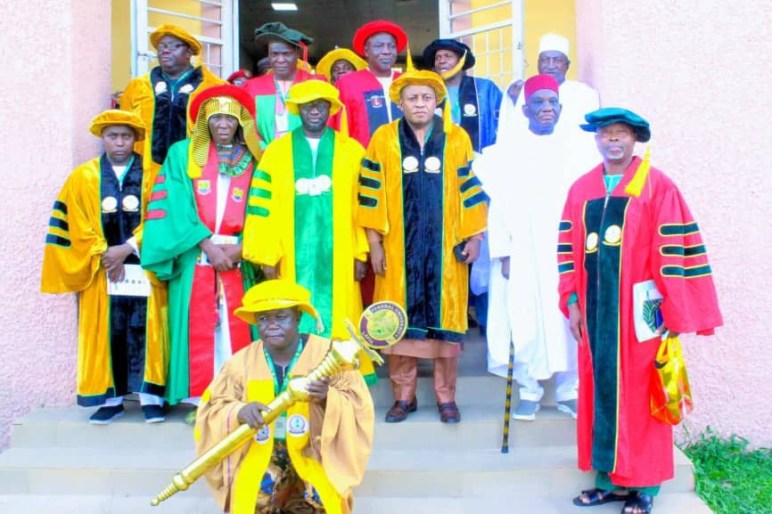
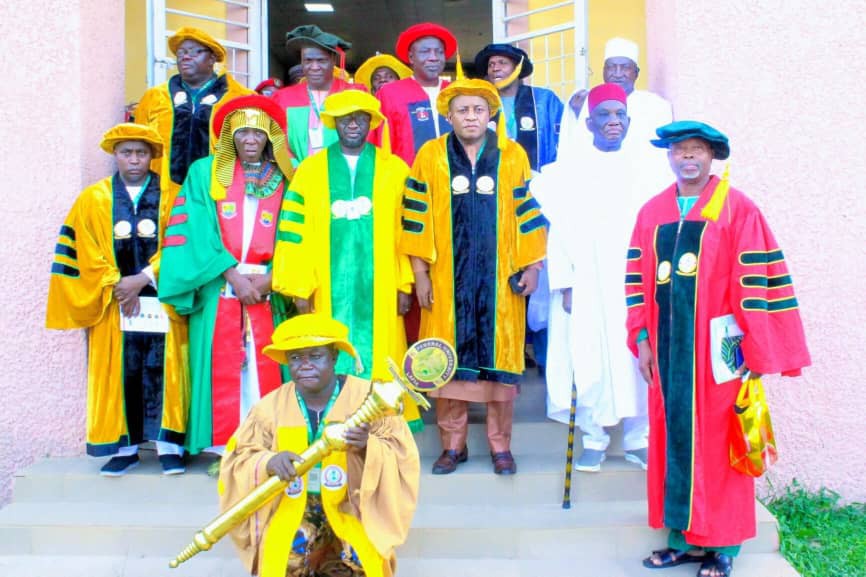
A Professor of African Literature at the Federal University of Lafia (FULafia), Prof. Mallam Al-Bishak, has called for the rewriting of African history and educational curricula from an African-centered perspective to restore pride among Africans and inspire future generations.
Prof. Al-Bishak made the call on Wednesday while delivering the 44th Inaugural Lecture of the Federal University of Lafia, titled “Egyptology, Egyptomania and Khemetology: Literature and the Black African Literary as Masters of Homer, Socrates, Plato, Aristotle etc.”
The inaugural lecture attracted academics, students, and other stakeholders from different walks of life.
According to the professor, there is an urgent need to move away from Eurocentric narratives that portray Africa and its people negatively while exaggerating the achievements of other civilizations.
“There is the absolute need to rewrite African history away from the Eurocentric perspective that seeks to denigrate Africa and its inhabitants and exaggerate the capabilities of the white race in order to entrench Eurasian hegemony and keep Africans subservient,” he said.
He argued that African educational curricula should be redesigned to instill confidence, self-worth, and pride in African pupils.
“Along with that is the need to redesign the educational curriculum of African schools so as to inculcate pride in African pupils and imbue them with the confidence to chart a greater future,” he added.
Prof. Al-Bishak maintained that colonial education had negatively influenced African minds, creating a sense of inferiority and dependence on Western nations.
“Our history, just as our artifacts, has been stolen from us. We have been indoctrinated with an inferiority complex towards the white man, believing that we are incapable of doing anything independently and must rely entirely on him,” he stated.
He emphasized that Africans must reject the stigma associated with slavery and embrace slogans such as “Black is Beautiful” and “I Am Black and Proud.”
According to him, Africa was once a global center of learning, literacy, and scholarship dating back over 7,000 years. He argued that African literary history should recognize ancient African intellectuals such as Imhotep, Ptahhotep, and Amenhotep alongside contemporary literary icons.
“Instead of talking only about Chinua Achebe, Wole Soyinka, and Abubakar Imam as pioneers of African literature, we should also be talking about Imhotep, Ptahhotep, Amenhotep and others,” he said.
The professor further urged African scholars to develop indigenous theories and solutions to local challenges rather than depending entirely on foreign ideas.
As part of efforts to deepen research into Africa’s ancient heritage, Prof. Al-Bishak called on the university management to establish an Institute for Ancient African Studies.
According to him, such an institute would promote robust research on the achievements of Africans in antiquity and inspire present and future generations to emulate the accomplishments of the past.
He expressed appreciation to the Vice-Chancellor, his family, colleagues, and other supporters for their contributions to the success of the lecture.
In his remarks, the Vice-Chancellor of the Federal University of Lafia, Prof. Mohammed Isa Kida, who chaired the event, urged academics to sustain research and innovation efforts for the advancement of education and national development.
Prof. Kida described inaugural lectures as important platforms for professors to showcase their achievements in research, teaching, innovation, and community engagement.
He congratulated Prof. Al-Bishak, the Department of English and Literary Studies, and the Faculty of Arts for the successful lecture.
“Today’s lecture is particularly significant because it explores a field that continues to generate scholarly interest, intellectual debate, and renewed appreciation of Africa’s contribution to world civilization,” the Vice-Chancellor said.
He noted that the lecture encouraged critical reflection on the historical, cultural, literary, and philosophical foundations of human civilization and Africa’s place within that narrative.
Earlier, the Chairperson of the Inaugural Lecture Committee, Prof. Josephine E. Odey, said the event featured practical exhibitions and other activities. She commended the Vice-Chancellor and other stakeholders for their support toward the success of the programme.
Delivering the vote of thanks, Dr. Suzan Dingba expressed appreciation to the Vice-Chancellor and other dignitaries for attending the lecture and prayed for continued blessings upon them.
Highlights of the event included the presentation of a certificate and a commemorative seal to the inaugural lecturer, Prof. Mallam Al-Bishak, by the Vice-Chancellor.

