
MOSES AGBADU
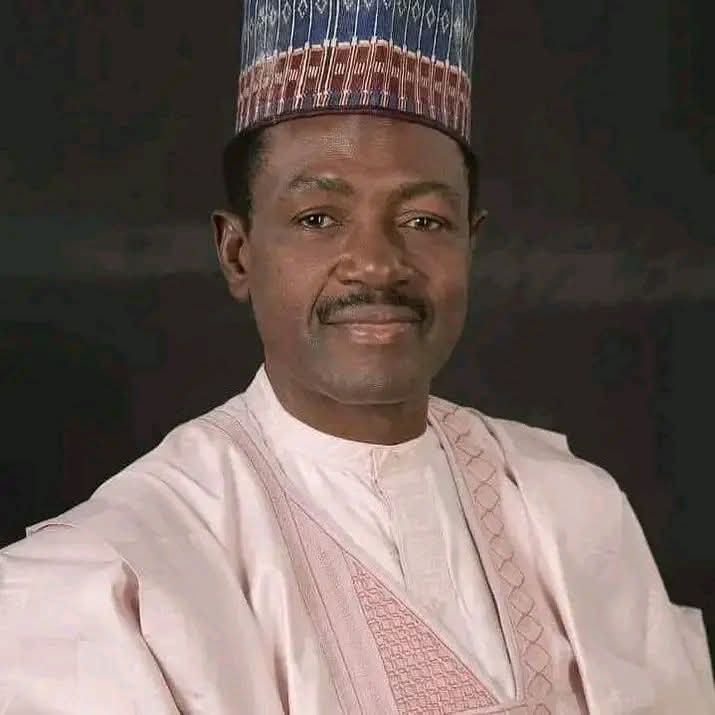
I wholeheartedly align myself with the courageous submission of Rayyanu Bala titled “Labaran Maku: Enough of This Shenanigan.” It is a timely intervention that challenges a disturbing narrative capable of undermining the unity and political maturity of Nasarawa State.
Like Rayyanu Bala, I once admired Labaran Maku. His intellectual activism during his days at the University of Jos, his association with Marxist thinkers, and his incisive commentaries as a journalist projected the image of a man committed to justice, equality and progressive politics. Many believed he represented ideals that transcended ethnicity and sectional interests.
Today, however, his public utterances present an entirely different picture.
His sweeping assertion that successive governors of Nasarawa State were merely “imposed by outsiders” is not only historically contestable but also politically reckless. It ignores the complexity of our democratic evolution and unfairly dismisses the role of the electorate in determining political leadership.
More importantly, it exposes a glaring contradiction in his own political journey.
If every governor lacked legitimacy because they were supposedly imposed, why did Labaran Maku willingly serve as Commissioner for Information, later as Deputy Governor, and subsequently rise to become a Minister of the Federal Republic? At what point did these administrations suddenly become illegitimate? These are legitimate questions that deserve equally legitimate answers.
To participate enthusiastically in government, enjoy its privileges, and decades later condemn the very political system that elevated one to national prominence is an inconsistency that weakens the credibility of such criticism.
In my opinion, his present rhetoric also invites reflection on whether his earlier association with Marxist ideology genuinely reflected universal ideals of justice or merely provided a convenient political platform before a more pronounced ethnic political outlook emerged. Whether others agree or disagree, his recent statements inevitably fuel that perception.
Throughout his tenure as Commissioner, Deputy Governor and Minister of the Federal Republic, many observers perceived an increasing inclination towards ethnic politics. His latest remarks do little to dispel that impression.
Even more perplexing is the recurring claim that leaders were “imposed from outside.” If that were so, who compelled the people of Nasarawa State to vote for them? Elections are ultimately decided by voters. To suggest that the electorate had no agency is to underestimate the intelligence and democratic will of the very people whose interests he now claims to defend.
Nasarawa belongs to every law-abiding citizen who contributes to its peace, development and prosperity. The future of our state cannot be built on endless appeals to ethnic identity or sectional grievances. Competence, integrity and service—not ancestry—should remain the enduring criteria for leadership.
If political ambitions have not materialised as expected, the solution cannot be to revisit history through an ethnic lens or promote narratives that risk deepening divisions among our people. Statesmanship demands responsibility, consistency and an unwavering commitment to unity.
I therefore join Rayyanu Bala in saying:
Enough of the promotion of tribalism in Nasarawa State.
Enough of rewriting history for political convenience.
Enough of narratives that divide rather than unite.
Enough of this shenanigan.
The people of Nasarawa State deserve sober, factual and constructive political discourse.
Public debate should elevate our democracy, not inflame ethnic passions or diminish the choices made by the electorate over the years.
I commend Rayyanu Bala for speaking out with conviction. His intervention is a reminder that silence in the face of divisive rhetoric is never an option. Those who genuinely love Nasarawa State must continue to defend its unity, reject tribal politics and insist that political engagement be guided by truth, consistency and respect for the intelligence of the people.
History should unite us, not be manipulated to divide us.

