

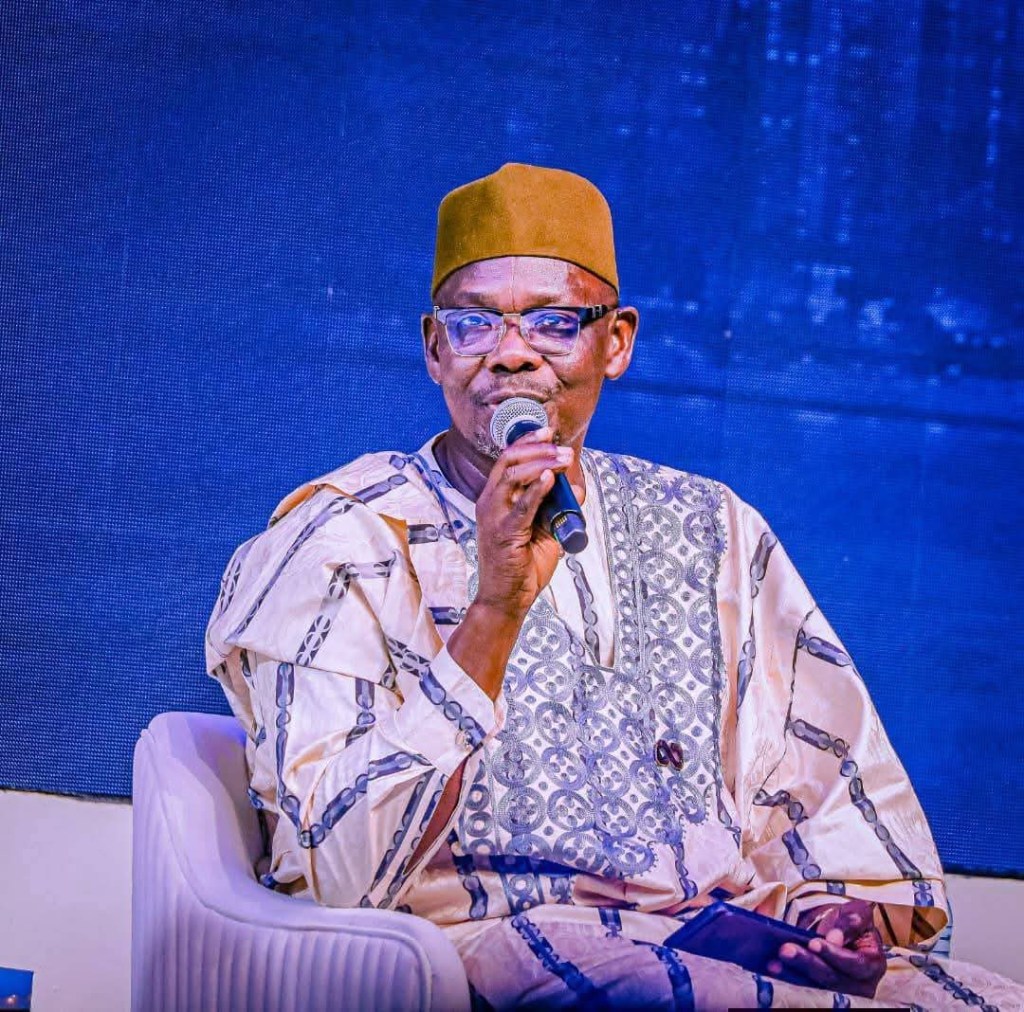
By Rayyanu Bala
When my good friend and colleague, Ali Abare, wrote to correct the erroneous belief about Lafia in his thought-provoking piece titled, “Lafia Belongs to All Citizens of Nasarawa State,” I felt obliged to lend my voice in support of his write-up, at least to help set this misconception in its proper perspective.
The claim that only a Lafia indigene can develop Lafia, as promoted under the so-called “Lafia Agenda,” was designed to mislead the uninformed and the gullible.
Ironically, the very person being presented today as the champion of this agenda has not consistently demonstrated a genuine commitment to Lafia. While everyone knows he once had “Lafia” as part of his name, he chose to drop it as his career advanced.
So, enough of this “Lafia Agenda.” What Lafia needs is capable, committed, and visionary leadership, not slogans or emotional appeals based on their place of origin.
Now, let’s get to the heart of this piece. But before we address the main issue, the first question we should ask is this:
Who really owns Lafia?
The answer is simple. Lafia is not just the hometown of those who were born there. It is the capital of Nasarawa State. And because it is the state capital, it belongs to every single citizen of the state.
A civil servant from Keffi who works in the state secretariat has a stake in Lafia. A trader from Toto who comes to the capital to do business has a stake in Lafia. A student from Wamba studying in Lafia has a stake in Lafia. A farmer from Karu, a businessman from Akwanga, a public servant from Nasarawa Eggon, or a visitor from Awe, all have a stake in the city because it serves as their administrative and political capital of their state.
The capital is where government is seen. It is where major public institutions are located. It is where investors often form their first impression of the state. When Lafia works well, the entire state benefits. When it is neglected, every citizen pays the price in one way or another.
That is why it is wrong to suggest that development in Lafia is somehow a favour done only to the people of Lafia.
When a governor builds roads in the state capital, improves drainage, eases traffic or constructs public infrastructure, those projects serve the entire state. Every resident, visitor, worker, student and investor who uses those facilities benefits, regardless of where they come from.
And when a governor fails to develop Lafia, it is not only the people of Lafia who suffer. The whole state suffers. A neglected capital reflects poorly on the entire state. Poor infrastructure affects government services, commerce, investment and the image of Nasarawa itself.
That is why every citizen has every right to demand a functional, modern and well-planned Lafia.
Governor Abdullahi Sule’s administration offers a practical example of this principle. He is not from Lafia. He comes from Gudi in Akwanga Local Government Area. Yet under his administration, the state capital has witnessed some of its most visible infrastructure projects, including the flyover and underpass, the expansion of Shendam Road, the new State Secretariat Complex, several network roads across the metropolis and the Kilema Bridge.
Whether one supports his politics or not is a different matter. The important point is that these projects demonstrate that a governor does not need to be born in Lafia to understand the importance of developing the state capital.
He developed Lafia because he understood what every governor should understand, that the capital belongs to the whole state.
This is exactly how government should work.
A governor does not swear an oath to serve only his hometown. He swears to serve every citizen of Nasarawa State. That responsibility includes protecting and developing the capital city because the capital is the common property of all.
That is why reducing the conversation to where a candidate was born misses the point entirely.
The real questions voters should ask are straightforward. Does the candidate have a vision for Lafia? Can the candidate improve infrastructure? Can the candidate attract investment? Can the candidate make the capital cleaner, safer and more efficient? Can the candidate govern fairly without seeing any part of the state as more important than another?
Those questions matter far more than birthplace.
History has shown that commitment and competence are not determined by local government of origin. Good governance is measured by results.
As Nasarawa prepares for general elections, citizens should resist attempts to personalise ownership of the state capital. Lafia is not the exclusive preserve of one community. It is the shared capital of every citizen of Nasarawa State.
Every taxpayer contributes to its growth. Every government institution located there belongs to the people of the entire state. Every major project completed there serves citizens from all three senatorial districts.
Lafia is the face of Nasarawa State. It is where the state presents itself to the rest of Nigeria and beyond.
For that reason alone, its development should never be viewed through the narrow lens of indigeneity. It should be seen as a collective responsibility and a collective benefit.
Lafia belongs to the people of Lafia by heritage.
But as the capital of Nasarawa State, it belongs to every citizen by right.

