
By Mohammed Kilema.
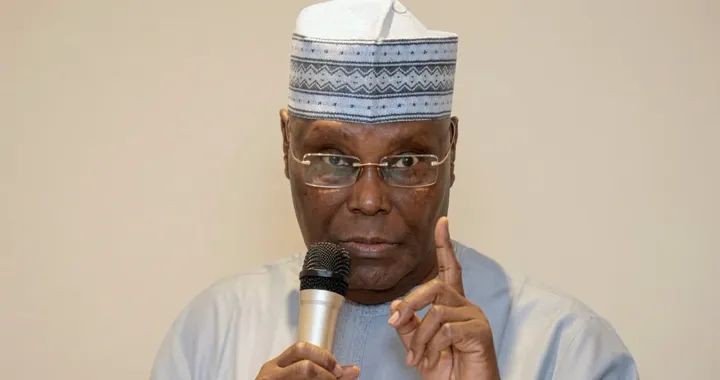
A Response to Chief Ibrahim Nasiru
The attempt by Chief Ibrahim Nasiru to portray Atiku Abubakar’s latest economic propositions as a comprehensive alternative to the economic direction of the Bola Ahmed Tinubu administration is, with respect, unconvincing.
The article which appeared on Tmsnews publication of today calls the government’s response “panic” and describes Atiku’s proposals as a “blueprint” capable of transforming Nigeria’s economy. But rhetoric is not economics, and political promises do not automatically become economic policy merely because they are packaged in attractive language.
The fundamental question is simple:
Where are the measurable economic parameters, fiscal assumptions, implementation mechanisms, timelines, institutional responsibilities, financing arrangements, risk assessments and projected outcomes that qualify these proposals as a genuine economic blueprint?
Until those questions are answered, describing the proposals as a coherent economic programme is premature.
1.A Blueprint Must Be More Than a Collection of mere Ideas
An economic blueprint ordinarily requires considerably more than announcing that borders should be reopened, ports should be developed or bureaucratic controls should be relaxed.
A serious economic programme should explain:
- what precisely will be changed;
- how much it will cost;
- where the financing will come from;
- what institutions will implement it;
- what laws or regulations must change;
- what the immediate and long-term consequences will be;
- how national security risks will be managed;
- how much additional trade, employment, investment and revenue will result;
- and how success will be measured.
The article supplies virtually none of these parameters.
It therefore commits the classic error of confusing policy aspiration with policy design.
Saying that Nigeria should have efficient borders is not a blueprint.
Saying that ports outside Lagos should be developed is not a blueprint.
Saying that technology should replace unnecessary physical controls is not a blueprint.
All three propositions may be desirable. But desirability is not the same thing as an executable economic strategy.
2.The Tinubu Administration Is Resetting the Economy—Not Destroying It
The central weakness of the article is its failure to recognise the magnitude of the economic restructuring currently taking place under President Bola Ahmed Tinubu.
The administration inherited an economy burdened by substantial fiscal distortions, multiple exchange-rate pressures, an expensive fuel-subsidy regime, weak revenue mobilisation, debt-service constraints, infrastructure deficiencies and significant structural inefficiencies.
The government’s response has therefore been a reset, rather than the cosmetic management of an already healthy economy.
Economic resetting is necessarily painful because structural distortions cannot be removed without imposing transitional costs.
The critical issue is not whether reform creates pain in the short term. The critical issue is whether the reform establishes a stronger foundation for sustainable growth.
This is precisely where the Tinubu administration’s approach deserves serious consideration.
The government has pursued reforms designed to correct fundamental distortions rather than perpetuate them for temporary political convenience.
That is fundamentally different from promising Nigerians immediate relief by reopening corridors, removing controls or announcing infrastructure ambitions without establishing the complete economic architecture required to sustain them.
3.Economic Reform Cannot Be Reduced to “Open Borders”
The article’s treatment of border management is particularly problematic.
Nigeria is not merely a commercial territory surrounded by harmless trading communities. It shares borders with countries within a region confronted by terrorism, arms trafficking, human trafficking, drug trafficking, irregular migration, transnational organised crime and violent extremist networks.
Consequently, border management is simultaneously:
an economic issue, a national-security issue, a migration issue, a customs issue and a sovereignty issue.
It is therefore intellectually dangerous to frame border controls principally as “bureaucratic bottlenecks” or “physical blockades.”
The relevant question is not whether Nigeria should have open or closed borders.
The relevant question is:
How can Nigeria achieve maximum legitimate trade with minimum security risk?
That is a much more sophisticated question.
And that is precisely why the government’s position deserves to be examined on its actual merits rather than caricatured as hostility towards commerce.
4.Technology Is Not a Magic Substitute for Governance
The article proposes digital intelligence, automated tracking and non-intrusive scanners as though technology alone solves the border problem.
It does not.
Technology requires:
- reliable electricity;
- telecommunications infrastructure;
- interoperable databases;
- trained personnel;
- cybersecurity;
- maintenance;
- institutional coordination;
- credible intelligence;
- effective prosecution;
- and corruption-resistant administrative systems.
A scanner does not arrest a smuggler.
A database does not prosecute a terrorist.
A digital platform does not automatically prevent collusion between criminals and compromised officials.
Technology is an instrument of governance—not a substitute for governance.
Indeed, one of the more futuristic elements of the government’s economic and security-reset philosophy should be precisely the integration of technology, intelligence, customs administration, financial monitoring and physical security into a single national architecture.
That is considerably more sophisticated than simply saying: “open the borders and digitise them.”
5.The Fallacy of Equating Border Restrictions with Economic Failure
The article argues that legitimate traders are being pushed into smuggling because of restrictions.
There may indeed be instances where excessive bureaucracy creates incentives for informal trade. That deserves reform.
But the conclusion does not follow that the appropriate solution is simply to remove existing controls.
The correct economic response is to distinguish between:
legitimate trade facilitation and illicit trade facilitation.
Nigeria needs faster customs clearance, predictable tariffs, transparent procedures, digital documentation and reduced opportunities for extortion.
At the same time, it needs stronger intelligence-led enforcement against arms, narcotics, illicit financial flows, counterfeit products and other prohibited goods.
That is not an either/or proposition.
A modern state must be capable of doing both.
6.The Kamba Argument Does Not Prove the Case
The article repeatedly invokes Kamba as evidence that the administration misunderstands border governance.
But reopening or maintaining a border post is not, by itself, an economic policy.
The real questions are:
What volume of legitimate trade will the border generate?
What revenue will Customs collect?
What security infrastructure will be deployed?
What commodities will qualify?
What neighbouring-country arrangements apply?
What will be the impact on domestic producers?
What are the implications for smuggling?
What infrastructure exists on both sides?
What is the cost-benefit ratio?
How will performance be evaluated?
Without answers to such questions, the Kamba argument remains largely political symbolism.
7.Developing Nigeria’s Southern Ports Is Desirable—but Again, Where Is the Blueprint?
There is nothing inherently wrong with developing Calabar, Port Harcourt or other ports.
Indeed, port diversification could potentially improve logistics, stimulate regional economic activity and reduce excessive dependence on Apapa and Tin Can Island.
But again, the issue is not whether the idea sounds attractive.
The issue is whether it is economically viable and operationally executable.
Port development requires enormous investment in:
- dredging;
- channels;
- quay infrastructure;
- cargo-handling equipment;
- road and rail connectivity;
- customs systems;
- security;
- warehousing;
- industrial clusters;
- shipping-line economics;
- hinterland logistics;
- and private-sector participation.
A port is not economically successful simply because government declares it open.
Shipping companies must have commercial reasons to use it.
Cargo owners must find it competitive.
Road and rail systems must efficiently evacuate cargo.
The entire logistics ecosystem must function.
Consequently, claiming that developing southern ports will “immediately” lower costs and create thousands of jobs is precisely the sort of assertion that requires modelling rather than political enthusiasm.
8.What Is Missing From the So-Called Atiku Blueprint?
If this is genuinely an economic blueprint, Nigerians deserve to see its numbers.
Where is the:
GDP impact assessment?
Employment projection?
Inflation impact analysis?
Foreign-exchange implication?
Customs-revenue projection?
Capital-expenditure requirement?
Debt implication?
Private-sector financing structure?
Implementation timetable?
Cost-benefit analysis?
Risk matrix?
Institutional framework?
Monitoring and evaluation mechanism?
Without these, the word “blueprint” becomes little more than political branding.
Nigeria has suffered for decades from policies announced with impressive vocabulary but inadequate implementation architecture.
The country now needs something different.
It needs measurable, evidence-based and fiscally responsible policy.
9.President Tinubu’s Economic Reset Is Fundamentally Futuristic
The most consequential difference between the two approaches is philosophical.
One approach can easily be reduced to telling Nigerians what they want to hear.
The other attempts to address the structural weaknesses that have accumulated over decades.
President Tinubu’s economic reset should therefore be assessed not merely by today’s hardship but by the economic system Nigeria is attempting to construct for tomorrow.
The removal of longstanding distortions, reforms to the foreign-exchange market, fiscal restructuring, increased revenue mobilisation, investment in infrastructure, efforts to attract private capital and the broader movement towards a more market-oriented economic framework should be evaluated as parts of a larger structural transformation.
Such transformation inevitably creates winners and losers in the transition.
But the alternative is to preserve inefficient systems indefinitely because reform is politically uncomfortable.
That would be economically irresponsible.
10.Results, Not Political Narratives, Should Decide the Debate
The article says the administration is “terrified” of Atiku’s proposals.
That assertion is unnecessary and unsupported.
Governments should not be judged by how frightened their opponents claim they are.
They should be judged by measurable outcomes.
Likewise, opposition politicians should not be judged by the eloquence of their proposals.
They should be judged by the quality, feasibility and cost of their programmes.
Nigeria’s economic debate must therefore graduate from slogans.
If Atiku’s proposal is genuinely superior, let its proponents publish the numbers.
Let them tell Nigerians:
How much will it cost?
How will it be financed?
What will happen to inflation?
What will happen to the naira?
What will happen to government revenue?
What will happen to domestic manufacturing?
How will national security be protected?
What will be the measurable GDP impact?
How many jobs will actually be created?
Within what period?
That is where the debate belongs.
Conclusion: Nigeria Needs Economic Science, Not Economic Hallucination
With due respect to Chief Ibrahim Nasiru, the attempt to elevate Atiku Abubakar’s border and port proposals into a comprehensive economic blueprint does not withstand serious economic scrutiny.
The proposals may contain ideas worthy of consideration. But isolated policy ideas do not constitute a national economic blueprint.
Nigeria needs an economic programme grounded in data, fiscal realism, institutional capacity, national security, technological transformation and measurable outcomes.
That is why I strongly support the Federal Government’s economic-reset agenda.
The Tinubu administration should not be judged merely by the immediate discomfort associated with correcting decades of accumulated distortions. It should be judged by whether those reforms ultimately produce a more productive, competitive, investment-friendly, revenue-generating and resilient Nigerian economy.
Reform is not failure.
Temporary hardship is not necessarily evidence of wrong policy.
And political promises are not economic blueprints merely because they sound attractive.
The real test is results.
Nigeria cannot afford another cycle of policies designed primarily to win applause today while postponing the structural problems of tomorrow.
What Nigeria requires is economic science over political sentiment; measurable outcomes over campaign rhetoric; structural reform over cosmetic relief; and a futuristic economic architecture over short-term political expediency.
That is the essence of an economic reset.
And that is why the Tinubu administration’s reform trajectory deserves not panic, but constructive scrutiny, patience, refinement and strong national support where the evidence demonstrates that it is moving Nigeria towards a more sustainable economic future.
Mohammed Kilema, Lafia

