
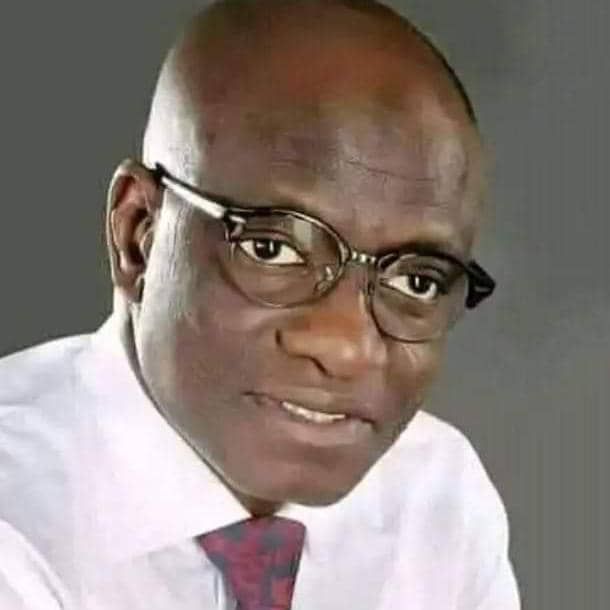
By Rayyanu Bala
Barely eight days ago, at the APC stakeholders’ meeting convened by Senator Abdullahi Adamu and held at the Aliyu Doma Banquet Hall in Lafia, Senator Ahmed Wadada Aliyu made a statement that, to many political observers, was profound.
He appealed for forgiveness from anyone who might have been offended by him or his supporters in the course of his political campaign.
At first glance, one may dismiss such a statement as the usual language of politicians. But when we look closely, it becomes clear that Wadada made the appeal with the best of intentions.
For Senator Wadada to openly ask for forgiveness is, in my view, a reflection of the kind of politician he is becoming or, perhaps more accurately, the kind of man he has always been. It suggests a man who understands that politics is about people and relationships, not just positions, power, and personal interests.
Indeed, politics can be a very competitive business. Campaigns can create disagreements, friendships can be tested, and political differences can easily become personal. In such an environment, it takes a certain level of humility and compassion for a politician to say, in effect, “If I have offended you, forgive me; let us move forward.”
Wadada’s gesture says something about his character, particularly when we begin to consider leadership beyond the present moment.
Senator Wadada is not someone who suddenly ventured into politics because he had nothing else to do. He is a career and practising politician who has spent more than 23 years understanding the political terrain, interacting with the people, and participating actively in the political process.
Wadada is a politician who has seen yesterday and understands today and is, therefore, better positioned to anticipate tomorrow. He appears to understand that leadership is not about winning an election alone; it is about earning the confidence of the people and building relationships strong enough to withstand political storms.
As Nasarawa State looks ahead to the question of who could succeed Governor Abdullahi Sule, Senator Wadada’s name naturally comes into consideration. Whether one supports him or not, it is difficult to ignore the qualities he has publicly demonstrated throughout his career as a practising politician.
Wadada’s experience, accessibility, and, more importantly, his apparent willingness to reconcile with those with whom he has disagreed are legendary.
Of course, with 2027 in mind, nobody should assume that governorship succession is automatic. Elections are won through organisation, broad support, effective messaging, and strong mobilisation. In all these areas, Wadada’s leadership potential has been visible for more than two decades.
One indication of Wadada’s standing came when he was recognised as the Outstanding Lawmaker of the Year by the prestigious Daily Times during its centenary celebration held in Abuja last week. An award of that nature is significant, not simply because of the title attached to it, but because of the institution behind the recognition.
When an organisation with the history and reputation of Daily Times chooses to recognise a lawmaker, it naturally raises the question: what qualities did they see in Wadada?
For those who believe Wadada has a bigger political future ahead of him, the answer is obvious. They see a politician who has demonstrated capacity, maintained a strong presence in the political space, and understands the importance of connecting leadership with the people.
And perhaps his recent appeal for forgiveness adds another dimension to that picture.
In politics, strength is often associated with the ability to fight, defeat opponents, and hold one’s ground. But there is another kind of strength: the strength to admit that relationships matter more than temporary disagreements.
That is the kind of politics Nasarawa State needs as we approach the 2027 election.
Senator Wadada may have his critics, just as every serious politician does. He may also have political opponents who will question his ambition and record. That is part of democracy.
But if his recent conduct is anything to go by, Wadada appears to understand one important truth: after every campaign, the people remain. Political opponents can become partners, disagreements can be resolved, and yesterday’s battles do not necessarily have to become tomorrow’s divisions.
So, as the 2027 election draws closer, the question should not simply be who wants to succeed Governor Abdullahi Sule.
The more important question is: who has the experience, temperament, capacity, and human connection to lead Nasarawa into the next chapter?
For the electorate in Nasarawa, they already have their answer. And the answer is Senator Ahmed Wadada Aliyu.
If his recent appeal for forgiveness is any indication, Senator Wadada may be signalling that his ambition to govern the state is not about occupying a seat; it is about building bridges, bringing people together, and leading with compassion.

