
By Rayyanu Bala
Sometimes, politics can make us argue about things that really should not be an issues in the first place.
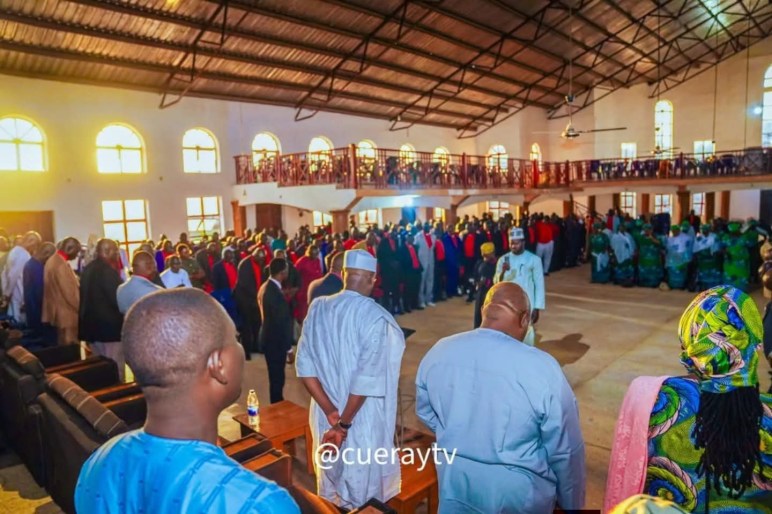
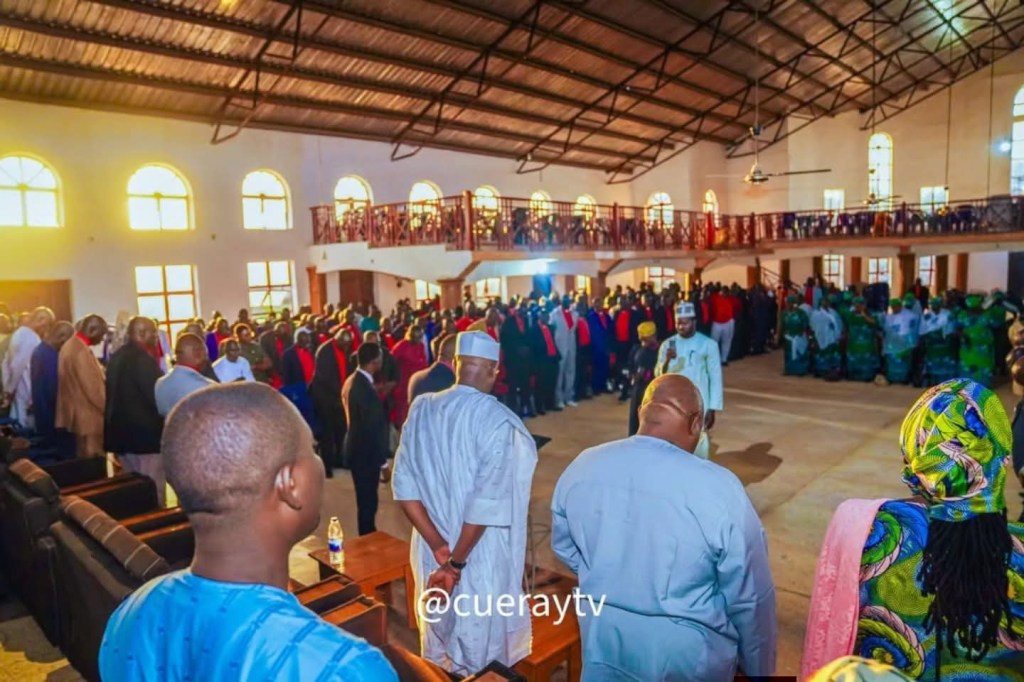
Take Senator Ahmed Wadada Aliyu’s appearance at the ERCC Church in Akwanga on Friday. He showed up wearing a cap, and suddenly, the cap itself has become a subject of political and religious debate.
Really?
Are we seriously going to make a cap the issue?
Let’s take a step back.
Senator Wadada has, over the years, interacted with both Muslims and Christians. His public conduct has generally reflected respect for both faiths, and he has maintained relationships across religious lines. So, it is difficult to understand why his wearing a cap during a meeting at an ERCC facility should suddenly be presented as evidence of disrespect for Christianity.
Wadada was not attending a church service. He was at the church premises for a meeting and an engagement. A church facility can also be a place where people meet, discuss community matters, engage political leaders and hold conversations that have nothing to do with worship.
So, wearing a cap to such a meeting does not automatically mean someone is disrespecting God, Christianity or the church.
Of course, religious institutions deserve respect. Nobody is arguing otherwise. But we also have to be careful not to manufacture religious sentiments where there may be none, especially when politics is involved.
One cannot help but wonder whether some of the outrage over the cap is actually about the cap, or about the politics surrounding Senator Wadada and the 2027 Nasarawa State governorship election.
Could it be that some people are trying to use a simple appearance with a cap at a church facility to create a narrative that paints Wadada as someone who does not respect Christians?
If that is the game, then we need to ask ourselves whether this is really the kind of politics Nasarawa needs.
Nasarawa is a religiously diverse state. Muslims and Christians have lived together for generations. They attend each other’s ceremonies, do business together, build friendships, share communities and, yes, vote for politicians across religious lines.
That peaceful relationship is bigger than any politician.
We should therefore be very careful about turning ordinary interactions between people of different faiths into religious controversies.
If you disagree with Wadada politically, there are plenty of serious things to discuss.
Talk about his ideas.
Talk about his leadership record.
Talk about his vision for Nasarawa.
Talk about what he intends to do differently if given the opportunity to lead the state.
Those are legitimate political questions. Those are the issues voters should be debating ahead of 2027.
But his cap?
Come on.
We should challenge political ideas, not weaponise someone’s cap. We should examine people’s records and character, not search for innocent wearing of cap that can be interpreted through a religious lens.
When politicians and their supporters use something as innocuous as wearing a cap at a church gathering to create suspicion where none existed, all in pursuit of political advantage, then we are indeed far gone politically. This is dangerous.
Nasarawa does not need politics that divides its people according to the faith they profess. It needs leadership that makes Muslims and Christians feel that they belong to the same state and have an equal stake in its future.
So, let us respect the church.
Let us respect the mosque.
Let us respect the traditions and sensitivities of every faith.
But let us also respect the reality that people can meet, talk, work together and engage across religious boundaries without every interaction becoming a religious controversy.
If Senator Wadada’s political ambition is the concern, then let us debate his ambition.
If his leadership is the concern, let us debate his leadership.
If his policies are the concern, let us debate his policies.
If his capacity to govern Nasarawa is the concern, let voters judge him on that.
But let a cap remain a cap.
Politics should be about how we make life better for the people, not about manufacturing religious suspicion out of wearing a cap. We should not allow political ambition to destroy that bond.
Let the church remain the church. Let the mosque remain the mosque. Let politics remain politics.
And above all, let Nasarawa remain united.

