
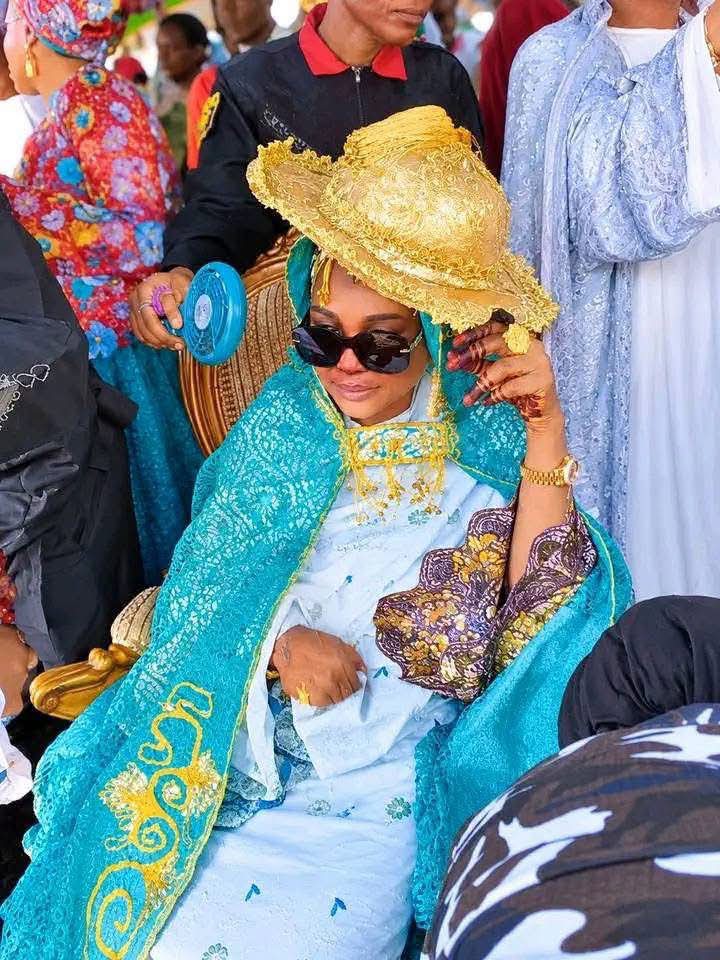
By Our Reporter
In a colourful celebration of culture, identity and communal acceptance, Hajiya Maryam Wadada, wife of Senator Ahmed Wadada Aliyu, has been turbaned as the Sarauniyar Karshi by the Emir of Karshi, HRH Prof. Mohammed Sani Bako II.
The historic ceremony, held on Saturday, October 31, 2026, in Karshi, Nasarawa State, was more than a traditional celebration. It was a moment that brought into focus the enduring significance of traditional institutions, the richness of Gwandara cultural heritage and the importance of building bridges across communities.
For Hajiya Maryam Wadada, the conferment represents an honour and a new cultural identity. For the Gwandara people, it is an expression of hospitality, recognition and the willingness to embrace individuals whose relationships and contributions strengthen the community.
An Honour Beyond the Ceremony
Traditional titles have remained important instruments of recognition in Nigerian communities. Beyond their ceremonial appeal, they often represent acceptance, responsibility and a commitment to the values and aspirations of the people.
By conferring the title of Sarauniyar Karshi on Hajiya Maryam Wadada, the Karshi traditional institution has established another significant connection with the Wadada family.
The honour also reinforces the role of traditional rulers in promoting peaceful coexistence, cultural preservation and social integration, particularly in a state as ethnically diverse as Nasarawa.
A Humanitarian Journey and the Expectations of Leadership
Beyond the glamour and symbolism of the turbaning ceremony, Hajiya Maryam Wadada is associated with humanitarian interventions focusing on women, children and vulnerable members of society.
Her activities have centred on women’s empowerment, educational support, maternal and child healthcare, skills acquisition and financial assistance aimed at improving the livelihoods of women.
These interventions reflect the importance of grassroots humanitarian engagement in addressing social and economic challenges facing families and communities.
With her new traditional position, there are expectations that she will have an expanded platform to encourage greater participation in community development, particularly among women and young people in Karshi and neighbouring areas.
The title, therefore, carries responsibilities that go beyond prestige. It presents an opportunity to deepen relationships, promote social welfare and contribute meaningfully to the development of the community.
Celebrating the Richness of Gwandara Culture
For the Gwandara people, the ceremony was also an opportunity to celebrate their cultural identity and reaffirm the relevance of their traditional institution.
Across Nasarawa state, traditional institutions continue to serve as custodians of customs, history and values. Their influence remains important in promoting dialogue, resolving community concerns and encouraging peaceful relationships among different groups.
In Nasarawa State, where different ethnic communities coexist, such cultural engagements provide opportunities to strengthen mutual understanding and build lasting relationships.
The turbaning of Hajiya Maryam Wadada demonstrates how traditional recognition can become a platform for cultural integration, bringing people closer through shared respect and communal values.
A Family’s Growing Connection.
The ceremony also comes against the backdrop of increasing political activities in Nasarawa State, particularly involving Senator Ahmed Wadada Aliyu, who represents Nasarawa West Senatorial District and is the All Progressives Congress (APC) governorship candidate for the 2027 election.
His political engagement has continued to bring the Wadada family into contact with communities and traditional institutions across the state.
Nevertheless, the significance of Hajiya Maryam Wadada’s new title extends beyond the political atmosphere. It represents a cultural relationship between the Wadada family and the Gwandara people, founded on recognition, acceptance and shared community interests.
The Crown and Its Responsibilities
In traditional African societies, titles are not merely symbols of social status. They often come with expectations of service, humility, respect and loyalty to the customs of the people.
As Sarauniyar Karshi, Hajiya Maryam Wadada assumes a position that offers an opportunity to become more actively involved in promoting the cultural values and developmental aspirations of the community.
Her new status could also provide a stronger voice for issues affecting women and children, while encouraging younger generations to appreciate their cultural heritage and participate in community-building efforts.
The real value of such recognition, therefore, lies not only in the honour conferred but also in the positive contributions that follow.
Beyond the Turbaning
As the celebrations in Karshi become part of the community’s cultural history, the broader message remains one of inclusion, unity and shared responsibility.
For the Wadada family, the conferment marks a significant bond with the Gwandara community. For Karshi, it reflects the traditional institution’s spirit of hospitality and cultural openness.
Hajiya Maryam Wadada’s emergence as Sarauniyar Karshi presents an opportunity to strengthen the relationship between tradition and modern community development.
Beyond the ceremonial splendour, the lasting significance of the title will be determined by the relationships it nurtures, the humanitarian causes it advances and the cultural values it helps preserve.
In a society where unity and peaceful coexistence remain essential to development, the turbaning stands as a reminder that cultural honours can be more than celebrations of individuals; they can also be instruments for bringing communities together.

