The Nasarawa State House of Assembly has held a public hearing on a bill seeking to regulate the establishment and operations of private nursery, primary, secondary schools and tertiary institutions across the state.
The proposed legislation is aimed at curbing the proliferation of unapproved private schools, eliminating quackery and improving the quality of education in Nasarawa State.
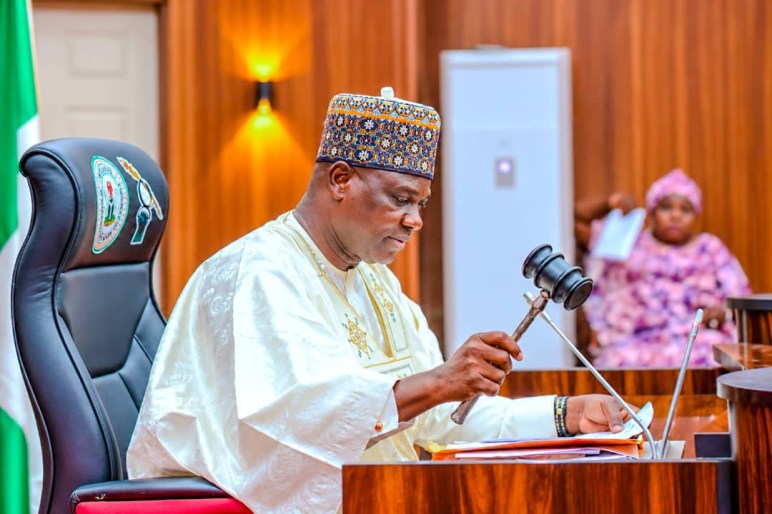
The Speaker of the House, Rt. Hon. Dr. Danladi Jatau, declared the public hearing open in Lafia, saying the exercise was designed to obtain contributions and recommendations from educationists and other relevant stakeholders to ensure the passage of an effective law.
Jatau explained that the proposed legislation would empower the Ministry of Education to strengthen the regulation of private schools, establish quality standards and provide clear operational guidelines for their establishment and management.
He said the bill, if passed into law, would address the decay in the education sector and promote quality education in line with global best practices.
The Speaker commended Governor Abdullahi Sule for initiating the bill, describing it as a significant step towards strengthening the state’s education system.
“I want to appreciate the State Government for initiating this bill towards ensuring quality education in the state.
“I have subjected the bill to public hearing in order to get inputs from you so that we will have a good law that will regulate the establishment of private schools for quality education in the state,” he said.
He urged participants to make meaningful contributions to the proposed legislation and assured them of the Assembly’s commitment to enacting laws that would improve educational standards in the state.
In his vote of thanks, the Chairman of the House Committee on Education, Science and Technology, Rt. Hon. Abel Yakubu Bala, appreciated the Speaker and stakeholders for their participation in the public hearing.
Bala said the proposed law would ensure that private schools operate in accordance with acceptable standards and global best practices, stressing that sound education remained a critical requirement for national development.
He noted that the legislation, when passed, would help tackle quackery and promote quality education across the state.
The committee chairman also assured stakeholders that their observations, recommendations and contributions would be carefully considered in the legislative process to ensure the emergence of a comprehensive and effective law.
Among those who made contributions at the public hearing were the Permanent Secretary, Ministry of Education, Hajiya Khadijat Suleiman; Permanent Secretary, Ministry of Tertiary and Technical Education, Dr. Damina John Ali; and Executive Chairman of the Nasarawa State Universal Basic Education Board (NSUBEB), Dr. Kassim Mohammed Kassim.
Others included Mr. Odey Elijah of the Nasarawa State Education Trust Fund; Deputy Rector, College of Agriculture, Science and Technology, Lafia, Dr. Vincent Aya; and Dr. Kwakipi Akodos Egga of Isa Mustapha Agwai I Polytechnic, Lafia.
Also in attendance were the Chairman of the Academic Staff Union of Secondary Schools, Mr. Bello Hamidu Kwara; Chairman of the All Nigeria Confederation of Principals of Secondary Schools (ANCOPSS), Mr. Aloko Williams; Chairman of the Nasarawa State Parent-Teacher Association (PTA), Mr. David Habila; and Chairman of the Nigeria Bar Association (NBA), Lafia Branch, Alaku Dennis Dauda, Esq.
Other participants included the Chairperson of the Association of Private School Owners of Nigeria (APSON), Hajiya Amira Mbia; Permanent Member One of the Teachers Service Commission (TSC), Mr. Abdullahi Amwe; and Mr. Ogah Omaku Ogiri of the National Association of Proprietors of Private Schools (NAPPS).
The stakeholders unanimously expressed support for the proposed legislation, describing it as timely and necessary in view of the increasing number of private schools across the state.
They maintained that effective regulation would help eliminate unqualified operators, promote accountability and ensure that private educational institutions provide quality teaching and learning in a conducive environment.
The stakeholders also commended Governor Sule and the State Assembly for their commitment to improving the education sector, expressing optimism that the proposed law would strengthen the state’s education system and enhance the quality of learning at all levels.

