By Rayyanu Bala
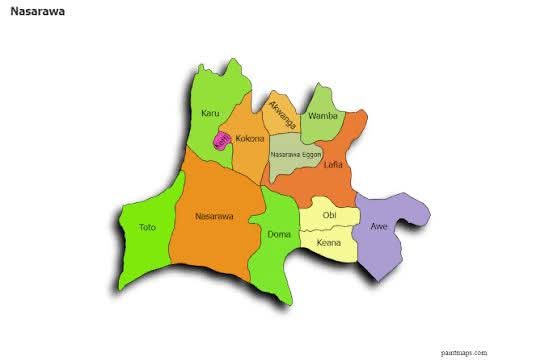
Right from the onset, politics in Nasarawa State has been defined in such a manner that no single tribe or town can produce a governor without forming a political alliance with others. It was against this backdrop that, since the commencement of civilian rule in 1999, it has been the collective decision of the entire citizens of the state that produced Senator Abdullahi Adamu, late Aliyu Akwe Doma, Senator Umaru Tanko Al-Makura, and Engr. Abdullahi Sule. It is the same collective decision that may produce Senator Ahmed Wadada Aliyu in 2027. Zoning has always been the guiding principle. However, the entry of former IGP Mohammed Abubakar Adamu tends to challenge that arrangement. But can the politics of Lafia define the destiny of the entire Nasarawa State?
Senator Umaru Tanko Al-Makura, from Lafia, just completed his eight-year tenure in 2019 and handed it over to Engr. Abdullahi Sule from Akwanga. Now that Engr. Abdullahi Sule is about to complete his eight years in office, we are being asked to bring in former IGP Mohammed Abubakar Adamu, also from Lafia, to serve as governor. Can the people of Nasarawa State be so foolish as to vote for a former IGP who is from Lafia?
Are we to continue recycling political power within Lafia?
Let it be stated without fear or favour: Nasarawa citizens are not fools, and the people of this state cannot be deceived by political theatrics, exaggerated claims, or sensational but false claims about political momentum. If there is any momentum at all, it is only within Lafia. And Lafia is just one local government out of the 13 we have.
The people of Nasarawa State must, therefore, look beyond political drums and ask the more important question: What kind of leadership do we want in 2027, and what principles should guide our choice?
One of the most troubling dimensions of Lafia politics today is the notion that a Lafia man must succeed Engr. Abdullahi Sule, as if Nasarawa State begins and ends in Lafia.
The governorship of the state is not the exclusive preserve of Lafia.
For eight years, former Governor Umaru Tanko Al-Makura, a son of Lafia, governed Nasarawa State. The people gave him their mandate, and his administration had its own opportunities, achievements, challenges, and lessons.
Now, as 2027 approaches, Nasarawa citizens must ask themselves a straightforward question: After eight years under Al-Makura, should the state simply return to another eight years of leadership from within Lafia, as though the rest of Nasarawa has no qualified sons and daughters capable of governing?
Is Nasarawa State so short of competent, credible, and experienced leaders that political power must continually revolve around the same Lafia?
What message does this send to the people of Nasarawa West and Nasarawa South? Or are the other 12 local governments inferior to Lafia? Are they slaves to the people of Lafia?
This is not an argument against Lafia or its people. Lafia is the state capital, and its citizens have every right to contest for any political office. But we, the people of Lafia, must embrace the spirit of fairness and togetherness. In fact, under a civilised clime, no one in Lafia ought to have come out to contest for the governorship of Nasarawa State.
No single town owns Nasarawa State. No single political family owns its future, and no town should appear indispensable to the survival of the state.
The people of Nasarawa State are more politically conscious than some commentators assume. They are not fools.
The question of where the next governor should come from deserves an honest and mature discussion. Nasarawa is a diverse state, and its unity is strengthened when its people believe that governorship positions are not permanently concentrated in one area.
Since the people of Lafia have already enjoyed eight years of governorship under Al-Makura, it is reasonable for citizens from other parts of the state to have the opportunity to produce the next governor.
This write-up should not be dismissed as hostility towards Lafia. I am also from Lafia and proud of it. But the governorship position is about inclusion, fairness, and collective ownership.
This is not intended to blame Lafia for producing a former governor. Rather, it is to help guarantee Nasarawa’s political future. This is a demand for equity and a demand for fair opportunities for all parts of Nasarawa State, and it cannot be termed a crime against democracy. Fairness is also part of democracy.