
By Rayyanu Bala
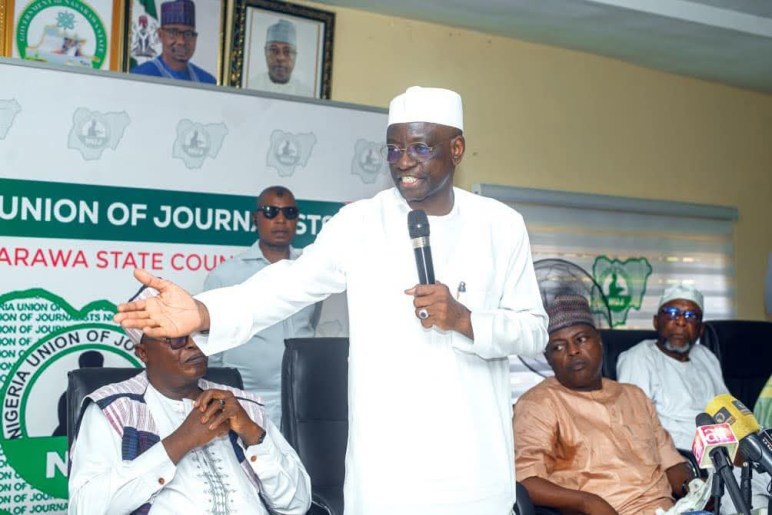
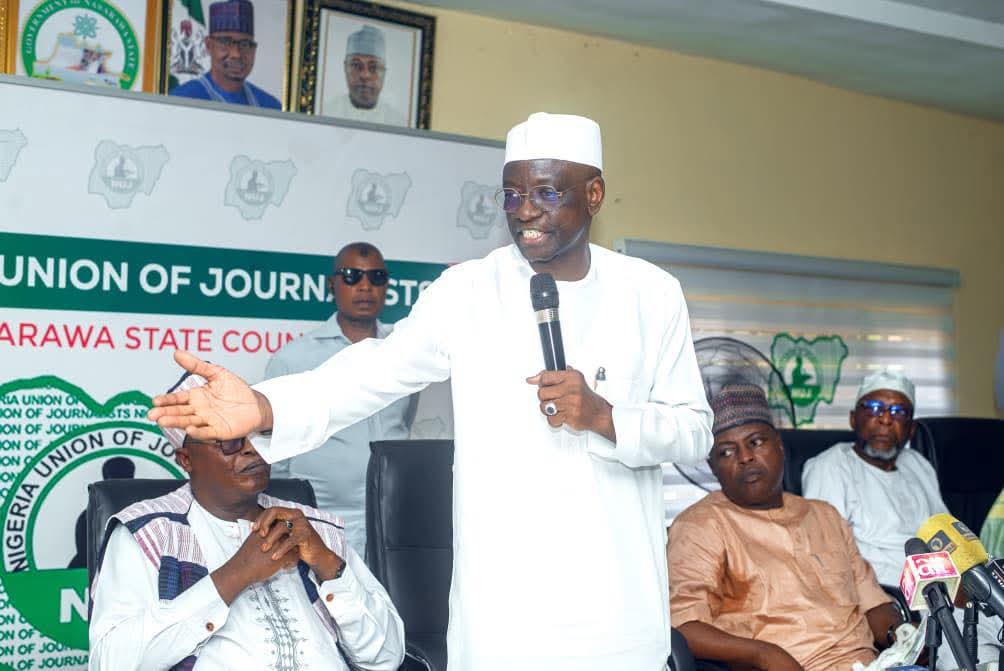
Last Sunday, Senator Ahmed Wadada Aliyu addressed a press conference to express his appreciation to Almighty Allah for His mercies. He also extended his gratitude to Governor Abdullahi Sule for finding him worthy of his trust, as well as to the good people of Nasarawa State for their unwavering support.
During the press conference, he further expressed profound appreciation to his fellow aspirants for their understanding and for maintaining unity and togetherness, regardless of their individual ambitions.
Wadada’s statement at the press conference should not be viewed as an ordinary political remark. Rather, it signaled that the 2027 Nasarawa race is taking a progressive turn that must not be seen as a do-or-die affair. This was reinforced by his warning to supporters to avoid all forms of insults and character assassination, as well as his appeal to fellow aspirants to unite and work together in the interest of Nasarawa State, emphasizing that “we have no other state than Nasarawa.”
Indeed, a key takeaway from the press conference was his deliberate effort to strike a unifying tone, beginning with his acknowledgment of President Bola Ahmed Tinubu, party stakeholders, fellow aspirants, and supporters. This appears to be a calculated move by Wadada to position himself as a political bridge-builder.
In a political environment with numerous aspirants vying for a single position, rivalry is inevitable. Therefore, Wadada’s call for unity among aspirants is both timely and necessary.
However, beyond this lies a more complex political reality.
With the public endorsement of Governor Abdullahi Sule, Wadada has effectively transitioned from being one among many aspirants to becoming the candidate others must now measure themselves against. While endorsements do not always guarantee victory, Sule’s backing carries significant strategic weight.
It is fair to say that Wadada is fast becoming the candidate to beat.
Why?
First, he occupies a rare space in the current political landscape, credibility without baggage. He stands out as a figure who is difficult to discredit. As electorates become increasingly sensitive to issues of integrity, opponents may struggle to weaponize claims against him.
Second, his appeal appears to cut across more than just party lines. He presents a formidable challenge not only to opposition forces but also to internal rivals. Simply put, Wadada is one aspirant capable of competing strongly on both fronts. This dual strength sets him apart.
Then there is the broader strategic calculation behind the governor’s decision.
Governor Sule’s endorsement is not incidental. In politics, such decisions are often driven by calculated efforts to preserve influence, ensure continuity, and secure electoral advantage. Supporting a candidate who is both credible and widely acceptable increases the chances of victory, an outcome that likely informed Sule’s choice of Wadada.
Additionally, factors such as purposeful leadership and inclusive development may have influenced the governor’s decision, as Wadada appears to align closely with these priorities. Other aspirants must now decide whether to rally behind Wadada or continue to pursue their individual ambitions.
One thing, however, is becoming increasingly clear:
With strong backing, clean record, and a growing perception of electability, Wadada has reshaped the dynamics of the race. Whether others accept it or not, the conversation in Nasarawa politics is beginning to revolve around one central question:
Is there anyone capable of beating Wadada?

