
By Rayyanu Bala
While travelling to Lafia along the Akwanga–Lafia highway on Saturday, I witnessed something that left me completely stunned.
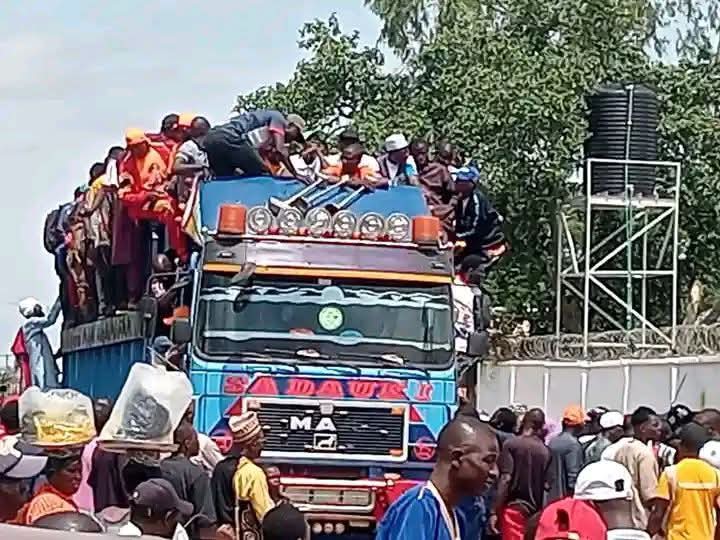
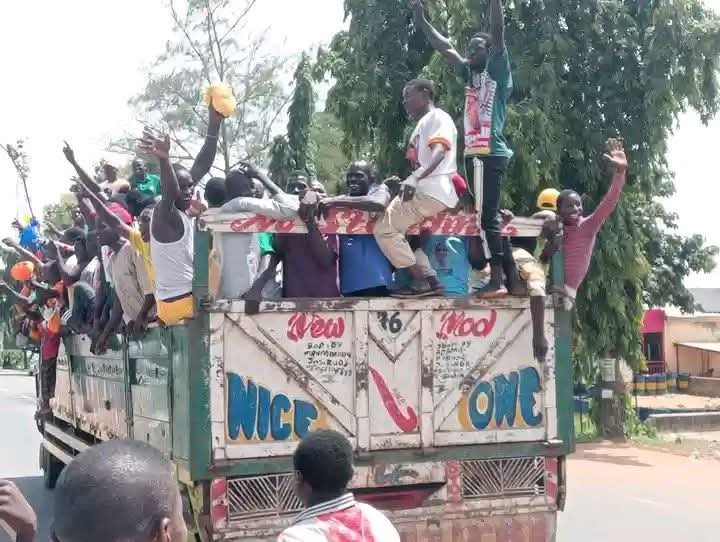
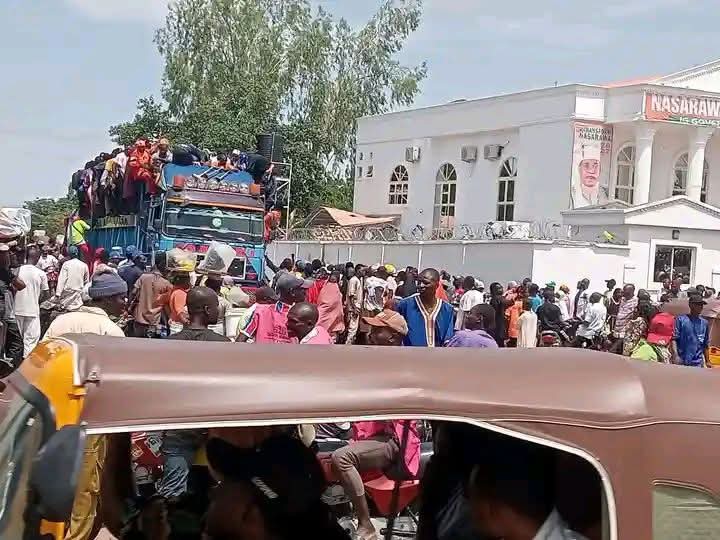
I saw some open lorries loaded with young people, singing and playing party songs as they made their way along the highway. At first, I wondered what was happening. Upon closer observation, I noticed that they were all wearing T-shirts bearing the name of former IGP Mohammed Abubakar Adamu.
Out of curiosity, I made enquiries and was told that they were heading to Gudi for a campaign rally.
The sight was deeply unfortunate and frankly, regrettable. Yes it is regrettable watching human beings being transported from one town to another in the open cargo compartment of a goods truck.
What makes the situation even more difficult to understand is that these are supporters of someone who once occupied the office of Inspector-General of Police, one of the most senior law-enforcement positions in Nigeria.
One would expect that a movement associated with someone who once stood at the very top of Nigeria’s law-enforcement structure would demonstrate an especially strong appreciation for the law, public safety and the dignity of citizens.
Instead, we are witnessing supporters being conveyed in an open lorry, exposed in the back of a vehicle designed primarily for carrying goods.
That is not just unfortunate. It is deeply regrettable.
Nigerian road-traffic law is not silent on this matter. Regulation 95 of the National Road Traffic Regulations 2012 generally restricts the carrying of persons in the goods compartment of a goods vehicle or trailer. Ordinarily, only the driver and two other persons seated in the driver’s cabin may be carried, unless the appropriate authority has issued a written permit allowing additional persons under specified conditions.
So when we see large numbers of people being transported in the open back of a normal goods truck, the obvious question is: where is the regard for the law?
But beyond the law, there is an even more basic question of humanity.
If these supporters truly have value to those organising their movement, why are they being transported like cargo?
People are not commodities.
They are fathers, mothers, sons, daughters, brothers, sisters and citizens whose lives are just as valuable as anyone else’s. Putting them in the open back of a goods vehicle for a long journey exposes them to unnecessary risks that responsible organisers should be trying to prevent.
And this is where the irony becomes particularly painful.
A former Inspector-General of Police is someone who spent years occupying a position at the heart of law enforcement. The office exists, among other things, to uphold the law and protect lives and property.
Therefore, seeing his supporters being moved in a manner that appears inconsistent with road-traffic regulations should concern everybody not simply his political supporters or opponents.
It should be a source of regret.
Political enthusiasm is understandable. Supporters will travel, mobilise and demonstrate their loyalty. But political loyalty should never mean that ordinary people must sacrifice their safety and dignity.
If an organisation has the resources and capacity to mobilise dozens of supporters from one town to another, surely it can make arrangements for appropriate passenger vehicles.
If they matter enough to be mobilised, they should matter enough to be transported safely.
And if the argument is that there are not enough buses, that should not become a justification for turning a goods truck into a passenger vehicle.
We should also be careful not to make this a partisan issue. The law should not suddenly become less important because the people involved support somebody we like or somebody we dislike.
Today it may be the supporters of a former IGP. Tomorrow it could be supporters of another politician.
The standard must remain the same.
There is nothing admirable about filling an open lorry with people and sending them down the highway. It is not a demonstration of political strength. It is a failure to appreciate the value of the very people whose presence is being used to demonstrate that strength.
And perhaps those organising these journeys need to ask themselves a very simple question:
Would they put their own family members in the back of that lorry for the same journey?
If the answer is no, then perhaps they should reconsider doing it to somebody else’s family.
The people standing behind you politically are not cargo.
If they truly have value, treat them as people. Give them dignity. Give them proper transportation. And, above all, obey the law.
It is particularly regrettable to see this happening to supporters of someone who once served as Nigeria’s chief law-enforcement officer. One would hope that, of all people, those within such a movement would understand that respect for the law must begin with the small things, including the way ordinary citizens are transported on Nigerian roads.

