
By Rayyanu Bala
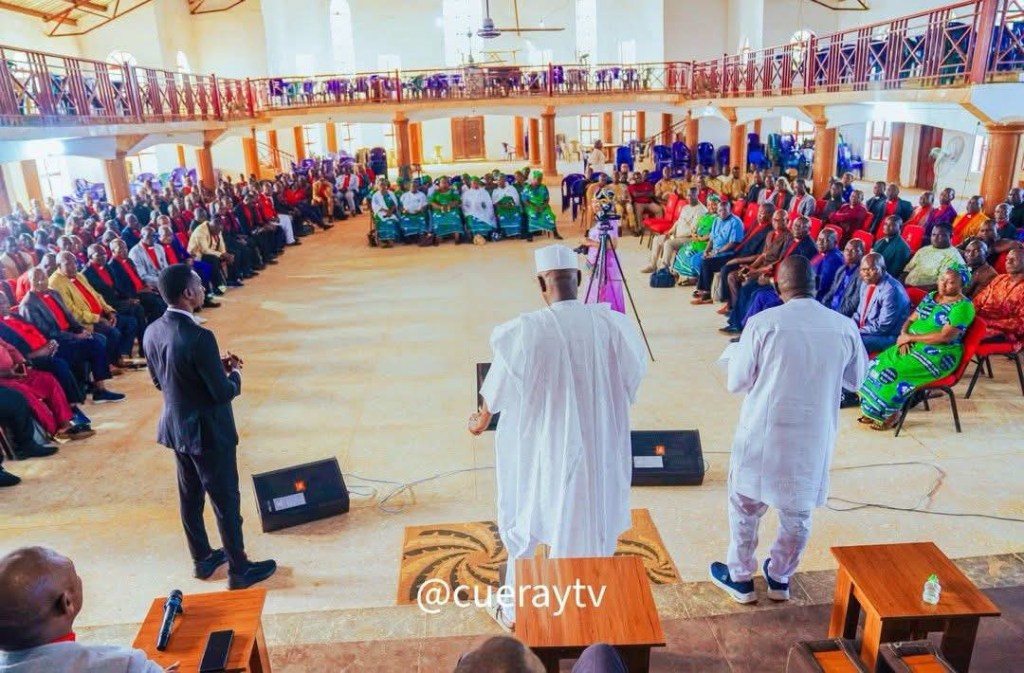
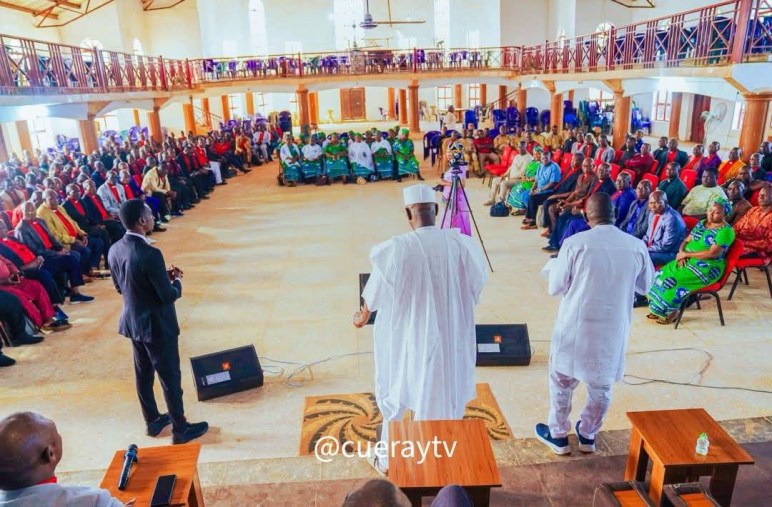
The appearance of Senator Ahmed Wadada Aliyu at the ERCC Church in Akwanga on Friday should not be turned into a political controversy. If anything, it should be seen for what it was: an opportunity for engagement, dialogue, and mutual respect.
Throughout his political career, Wadada has demonstrated respect for both Islam and Christianity. He has not, by his public conduct, shown himself to be someone who discriminates between the two major faiths. Many people can attest to the fact that he has maintained relationships across religious lines and has consistently interacted with people of different faiths.
So, why are we suddenly making his cap the subject of political debate?
The criticism of Senator Wadada for wearing a cap during a meeting at an ERCC facility appears, to many observers, to be less about religion and more about politics. There seems to be an attempt to use the incident to create a narrative that could turn Christians against his political aspirations ahead of the 2027 Nasarawa State governorship election.
But we should ask ourselves: is that really the kind of politics we want?
Wadada did not attend the ERCC premises to participate in a church service. He was there for a meeting. There is an important distinction between attending a religious service and visiting a church facility for an engagement or meeting.
Wearing a cap in that context does not automatically amount to disrespecting God, Christianity, or the church.
Respect for religion should certainly be encouraged, but we must also be careful not to manufacture religious offences where none exist simply because of political interests. Turning every religious setting into a battlefield for political arguments can only deepen suspicion and division among people who have lived together for generations.
Nasarawa State is a diverse society. Muslims and Christians have families, friendships, businesses, communities, and political relationships that go beyond religious boundaries. That relationship should not be sacrificed on the altar of political ambition.
If someone disagrees with Wadada’s political ideas, there are many legitimate issues to debate. His policies, competence, leadership record, vision for Nasarawa, and ability to govern should be the subject. Those are the issues that should determine whether or not voters support him in 2027.
But making a political issue out of whether a senator wore a cap during a meeting at a church does little to advance that conversation.
We should challenge ideas, not weaponise religion.
We should not see anything or interprete anything through a religious lens. Wadada should be judged by his character, and leadership, not by manufacturing controversies designed to create religious suspicion.
Nasarawa does not need politicians who divide people along religious lines. It needs leaders who can bring Muslims and Christians together and give everyone a sense of belonging.
So, let us be more careful.
Let us debate politics without dragging religion into every disagreement. Let us respect the church, respect the mosque, and respect the freedom of individuals to engage with one another across religious boundaries.
And above all, let us not allow politics to destroy the peaceful coexistence that our communities have worked so hard to maintain.
Let the church remain the church, let mosque remain mosque, politics remain politics, and let Nasarawa remain united.

